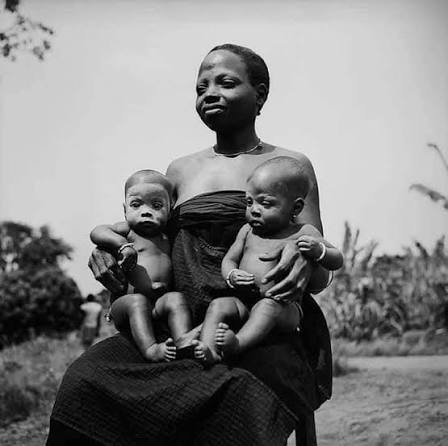
When Twins Were Killed at Birth: A Dark Chapter in Southeastern Nigeria’s History
In the southeastern regions of Nigeria—particularly among the Igbo and Ibibio communities—there was a time when the birth of twins was not celebrated, but feared. This practice, which existed before the widespread influence of colonial rule and Christian missionary work, reveals how deeply cultural beliefs can shape human behavior, even in ways that are difficult to comprehend today.
A Belief Rooted in Fear and Spiritual Interpretation
In these communities, twins were once seen as unnatural or spiritually troubling. The belief was that their birth signified an interference from the spirit world, something that disrupted the natural order of life.
As a result, when a woman gave birth to twins, she was often accused of having been involved with spirits or of bringing an “abomination” into the world. These interpretations were not fringe ideas—they were widely accepted within certain communities at the time.
The Consequences for Mothers and Children
The impact of these beliefs was devastating.
Newborn twins were frequently abandoned in forests, left to die because they were considered dangerous or cursed. In many cases, the mother herself was also subjected to rejection, shame, and social isolation. Rather than receiving care and support, she could be ostracized by her community for something entirely beyond her control.
What makes this history even more sobering is that it was not hidden or symbolic—it was a lived reality for many families.
The Turning Point: Missionary Intervention
This practice continued until the late 19th century, when Christian missionaries began arriving in the region. They strongly opposed the killing of twins and worked to change local perceptions through education, religious teaching, and advocacy for the protection of children.
Over time, these efforts contributed to the gradual abandonment of the practice. Communities began to reinterpret the birth of twins not as a curse, but as a natural and even special occurrence.
Remembering to Understand, Not to Judge
Looking back at this history is not about condemnation, but understanding. It reflects how fear, lack of scientific knowledge, and cultural interpretations can shape societal norms in powerful ways.
Today, twins are widely celebrated across Nigeria and beyond. In many Igbo communities, they are now seen as a blessing, not a burden—a complete reversal of past beliefs.
This transformation serves as a reminder of how societies can evolve, and how ideas once accepted as truth can change with time, exposure, and education. See other events in the archives: https://www.theprojectherald.com/january-15-2001/