Introduction
The Niger Delta Power Holding Company (NDPHC) has pledged to support the Lagos electricity market with an additional 1,500 megawatts (MW) of power supply in a bid to reduce the city’s persistent electricity deficit.
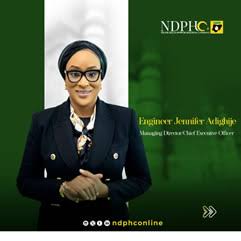
The announcement was made by the Managing Director and Chief Executive Officer of NDPHC, Jennifer Adighije, during a courtesy visit to the Lagos State Electricity Regulatory Commission (LASERC).
Plan to Address Lagos Power Shortage
Adighije stated that NDPHC is positioned to help bridge the significant power gap in Lagos, which currently receives about 1,000MW from the national grid despite an estimated demand of nearly 12,000MW.
She explained that the company has substantial unused generation capacity that could be deployed to improve electricity supply in the state.
According to her, NDPHC currently has about 2,000MW of stranded generation capacity that could be harnessed to strengthen the electricity market if proper infrastructure and investment conditions are in place.
NDPHC’s Generation Capacity
The NDPHC boss noted that the company owns one of the largest power generation assets in sub-Saharan Africa, with an installed capacity of about 4,000MW.
However, she revealed that only about 400MW to 500MW is currently being dispatched daily due to transmission and distribution constraints.
She emphasized that unlocking stranded capacity would significantly improve electricity supply, especially in high-demand regions like Lagos.
Investment in Power Infrastructure
Adighije also expressed NDPHC’s readiness to invest in transmission and distribution infrastructure in Lagos to ensure reliable power delivery.
She described the Lagos electricity market as commercially viable and attractive for long-term investment, adding that the company is now focused on projects with clear investment recovery pathways.
Lagos Government’s Response
In response, the Managing Director/CEO of LASERC, Temitope George, welcomed NDPHC’s commitment and reaffirmed the Lagos State Government’s readiness to collaborate with the company.
She noted that Lagos continues to face infrastructure gaps in its electricity network but expressed optimism that partnerships like this would improve supply reliability.
George also highlighted ongoing plans by the state to ensure some franchise areas eventually enjoy 24-hour electricity supply.
Conclusion
NDPHC’s pledge to inject an additional 1,500MW into Lagos’ electricity market represents a major step toward addressing the state’s long-standing power deficit. The collaboration with Lagos regulators is expected to strengthen infrastructure investment and improve electricity access for residents and businesses.