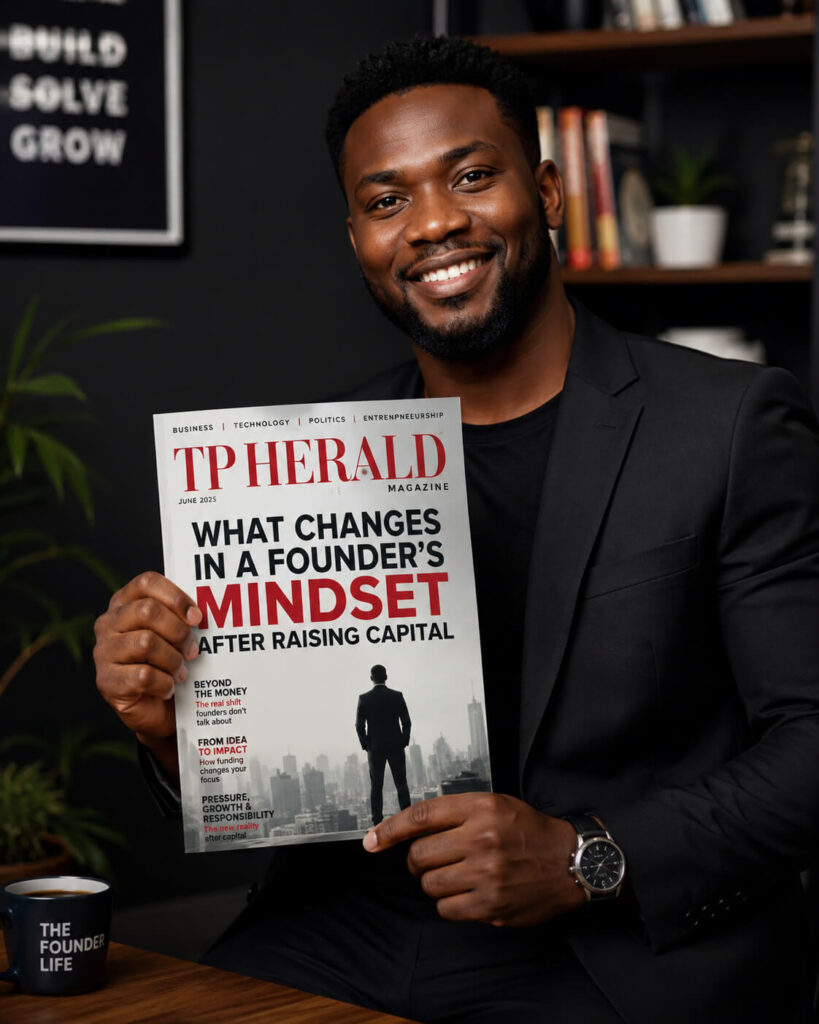
From Survival Mode to Responsibility Mode
Before funding, most founders are focused on survival:
- How to get the next customer
- How to pay basic bills
- How to keep the idea alive
But after raising capital, the mindset shifts.
Now it becomes:
“How do I manage what I’ve been trusted with?”
It’s no longer just about keeping the business alive — it’s about proving it can grow responsibly.
Money Stops Being the Main Problem
Before funding, money is the biggest limitation.
After funding, something interesting happens:
Money is still important — but now the bigger challenge is:
- How to use it properly
- How to avoid waste
- How to make it last long enough to show results
Founders quickly realize:
raising money is easier than managing it.
Pressure Becomes External, Not Just Internal
Before funding, pressure comes from within — the fear of failure.
After funding, pressure expands:
- Investors expect progress
- Metrics must improve
- Growth must be visible
- Reports become regular
For the first time, founders are accountable to people who didn’t just believe in the idea — they invested in it.
Decision-Making Becomes More Strategic
Early-stage founders often move fast and instinctively.
After raising capital, decisions become more structured:
- Every hire must be justified
- Every expense must have ROI
- Every product move must support growth
It’s less about “what feels right” and more about:
“What moves the numbers?”
Growth Becomes the Main Language
Before funding, success might mean building a product or getting early users.
After funding, success is measured in:
- Growth rate
- Customer acquisition
- Revenue milestones
- Market expansion
The conversation shifts from building something to scaling something.
Founders Start Thinking in Systems, Not Just Ideas
One major mental shift is this:
Before funding:
“I can do it myself.”
After funding:
“I need systems that do it without me.”
So founders start focusing on:
- Hiring structure
- Processes
- Automation
- Reporting systems
The business becomes less personal and more operational.
Risk Becomes More Calculated
Before funding, risk-taking is often emotional and experimental.
After funding, risk becomes more measured:
- What can we afford to lose?
- What will investors think?
- What impact will this have on runway?
It’s no longer about just trying things — it’s about choosing the right risks.
Identity Shift: From Builder to Steward
Perhaps the biggest change is psychological.
A founder moves from:
“I am building something”
to
“I am responsible for something others believe in.”
That shift changes everything — from how they speak, decide, and lead.
Final Thought
Raising capital doesn’t just change a startup’s finances — it changes the founder’s mind.
It introduces structure, pressure, accountability, and scale.
And in many cases, it marks the moment when a small idea stops being just a project — and starts becoming a real company.
#tpheraldmagazine