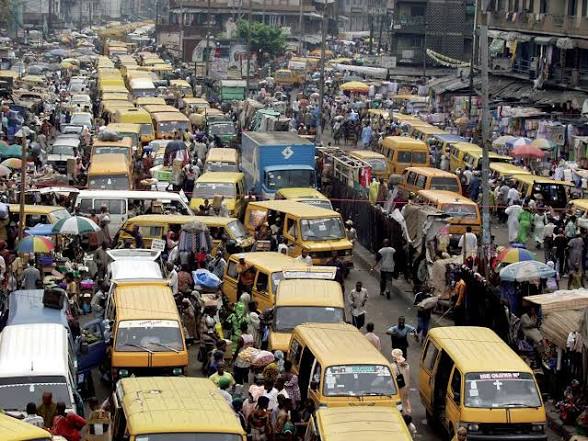
Lagos traffic has become one of those things people talk about almost daily, yet rarely pause to properly break down. For most commuters, the explanation seems simple: too many cars on too few roads. But when you look closely at how the city is structured and how it has grown over the years, the reality is more layered than that.
This is not just a traffic problem. It is a systems problem.
Lagos Didn’t Just Grow — It Expanded Faster Than Its Roads
One of the biggest drivers of congestion is the speed at which Lagos has expanded compared to its road infrastructure.
Areas like Lekki, Ajah, Ikoyi, Victoria Island, and large parts of the mainland were not originally designed for the volume of people and vehicles they now carry daily. What used to be lower-density residential or commercial zones have transformed into high-activity economic corridors.
Estates, malls, office complexes, and schools have multiplied rapidly, but the supporting road networks have not expanded at the same pace.
So what you get is simple: roads designed for a smaller city now serving a much larger one.
Road Capacity Is Quietly Becoming a Structural Limitation
A lot of Lagos roads are not necessarily “bad roads” in the usual sense. The issue is capacity.
In many corridors, the number of vehicles using the road far exceeds what the road was originally designed to handle. Once that threshold is crossed consistently, congestion stops being occasional and becomes routine.
You see this clearly during peak hours when even minor disruptions—like a broken-down vehicle or a small accident—can bring entire routes to a standstill.
It’s not always about road damage. It’s about overload.
Traffic Management Systems Are Still Catching Up
Another layer of the issue sits in traffic coordination.
In several busy intersections, traffic lights are either poorly synchronized or not fully optimized for current traffic volumes. In some cases, malfunctioning systems or inconsistent traffic control create unnecessary delays.
Where traffic systems are not intelligently coordinated, vehicles end up accumulating instead of flowing.
This is why two identical roads in different parts of the city can feel completely different in terms of movement efficiency.
Construction Projects Add Temporary Pressure (But It Adds Up)
Lagos is almost always under construction. New roads, repairs, expansions—it never really stops.
But while these projects are necessary, they often come with temporary lane closures, diversions, and partial road blockages.
Without strong alternative routing systems or real-time traffic management, these disruptions tend to spill into surrounding roads, creating ripple effects across entire districts.
So even “good development” can still create short-term gridlock.
Public Transport Is Improving, But Still Not Enough
Public transportation is one of the most important pieces of the Lagos mobility puzzle.
Systems like the Lagos Blue Line Rail and the Bus Rapid Transit (BRT) network were designed to reduce dependence on private vehicles and improve mass movement across the city.
However, adoption is still uneven. Many residents still rely heavily on private cars, minibuses, or informal transport systems due to convenience, coverage gaps, or timing limitations.
Until public transport becomes more predictable, more widespread, and more comfortable for daily commuters, road congestion will continue to carry most of the pressure.
The Hidden Cost: Time, Productivity, and Economic Loss
Traffic in Lagos is not just an inconvenience. It has real economic consequences.
Hours spent in traffic translate into:
- Reduced productivity for workers
- Higher fuel consumption and transport costs
- Delays in logistics and deliveries
- Increased stress and lower quality of life
For businesses operating in a fast-moving economy, these delays quietly affect efficiency and overall output.
Over time, this becomes a cost that is spread across the entire city economy.
So What’s Really Happening?
Lagos traffic is not caused by a single issue. It is the result of multiple systems interacting under pressure:
- Rapid urban expansion
- Outdated or overloaded road networks
- Inconsistent traffic management
- Ongoing construction disruptions
- Still-developing mass transit adoption
When all of these combine, congestion becomes less of a “traffic problem” and more of an urban infrastructure challenge.
Final Thought
As Lagos continues to grow as Nigeria’s commercial hub, mobility will remain one of its most critical challenges. The solution will not come from roads alone, but from a combination of transport systems, smarter urban planning, and stronger infrastructure coordination.
The city is not just dealing with traffic. It is dealing with the cost of growth happening faster than the systems designed to support it.