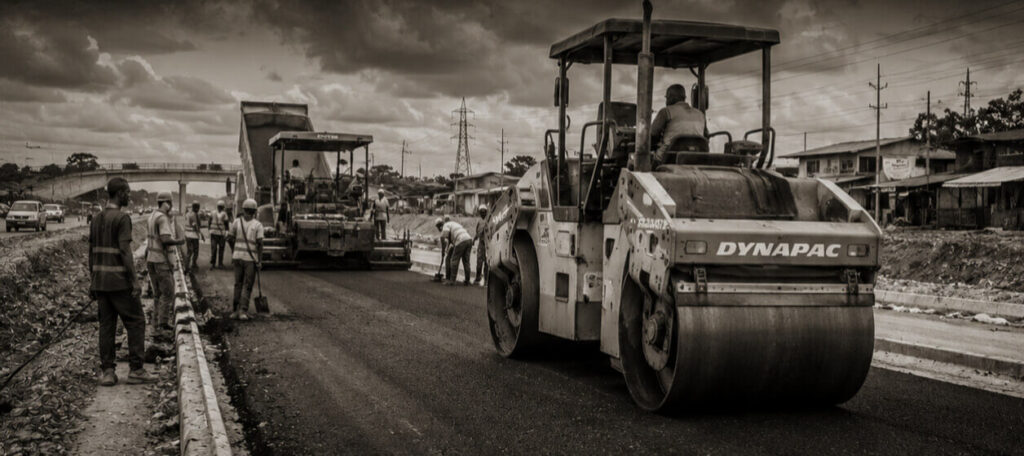
The Companies Building Nigeria’s Highways, Bridges and Urban Roads
For decades, road construction has remained one of Nigeria’s biggest development challenges.
Across the country, poor roads have affected transportation, trade, logistics, and even the cost of living. But in recent years, several construction companies have become major players in reshaping Nigeria’s infrastructure landscape.
From mega bridges to federal highways and urban road expansion projects, these firms are helping redefine how Nigerians move, do business, and connect cities.
But beyond the contracts and headlines, one question remains:
Who is actually doing the best work?
Julius Berger
Nigeria’s Most Recognised Construction Brand
When many Nigerians think about road construction, Julius Berger is usually the first name that comes to mind.
The company has handled some of the country’s most iconic infrastructure projects, including parts of the Lagos-Ibadan Expressway, the Second Niger Bridge, Abuja road networks, and several major bridges across Nigeria.
Julius Berger has built a reputation for:
- strong engineering quality
- durable construction
- large-scale execution
- premium infrastructure delivery
Its projects are often seen as some of the most professionally executed in the country. The company is also known for introducing advanced road rehabilitation technologies into Nigeria’s construction sector.
However, many Nigerians also see Julius Berger as one of the most expensive contractors in the industry, with projects sometimes taking years due to funding and government payment delays.
Still, in terms of reputation and execution quality, the company remains one of the strongest players in Nigeria’s infrastructure story.
CCECC
The Fast Growing Infrastructure Force
CCECC has become one of the most visible foreign construction companies operating in Nigeria.
The company has expanded rapidly through major federal and state infrastructure projects, especially in roads and rail transportation. It has also been linked to large-scale projects like sections of the Calabar-Itu Highway and the proposed Fourth Mainland Bridge partnership discussions in Lagos.
CCECC is often associated with:
- speed
- large manpower
- aggressive project expansion
- heavy infrastructure capability
Many Nigerians believe Chinese-backed construction firms have helped Nigeria accelerate infrastructure development faster than in previous decades.
At the same time, critics sometimes question long-term durability and maintenance culture surrounding some projects in the country, although those concerns often involve government maintenance systems as much as the contractors themselves.
Still, CCECC has positioned itself as one of the biggest infrastructure players in modern Nigeria.
Craneburg Construction
The Rising Nigerian Builder
Unlike older legacy firms, Craneburg represents the newer generation of Nigerian construction companies.
The company has gained visibility through urban road projects, drainage systems, and infrastructure development, especially in fast-growing cities.
What makes Craneburg interesting is how quickly it has entered conversations previously dominated by older multinational construction firms.
Many observers see the company as part of a new wave of indigenous contractors trying to compete at a larger national level.
Its projects are often described as:
- modern
- aggressive
- expansion-focused
- urban-development driven
Although the company is still building a longer legacy compared to firms like Julius Berger or RCC, its rapid rise shows how Nigeria’s construction industry is gradually opening space for newer players.
Reynolds Construction Company
One of Nigeria’s Oldest Construction Names
Reynolds Construction Company, widely known as RCC, has existed in Nigeria for decades.
The company has handled several federal highways and major road projects, including sections of the Lagos-Ibadan Expressway.
For many Nigerians, RCC represents one of the old pillars of road construction in the country.
Its long history gives it:
- institutional experience
- nationwide presence
- strong government project familiarity
However, compared to newer and more media-visible firms, RCC receives less public attention today despite remaining active in major infrastructure works.
Still, its role in Nigeria’s highway development over the years remains significant.
The Bigger Problem May Not Even Be Construction
One major debate Nigerians continue to have is whether the real issue is construction quality or poor maintenance culture.
Across social media and public discussions, many people argue that Nigeria often builds roads without maintaining them properly afterward.
Others believe planning, drainage systems, traffic management, and project continuity are equally important.
In reality, construction companies can build roads, but long-term durability also depends heavily on:
- maintenance
- traffic regulation
- drainage systems
- government funding
- urban planning
This is why some roads deteriorate quickly while others remain functional for years.
Nigeria’s Infrastructure Race Is Growing
From Lagos to Abuja, Port Harcourt, Kano, and other expanding cities, road construction is becoming one of the biggest parts of Nigeria’s economic development story.
Projects like the Second Niger Bridge, Lagos-Ibadan Expressway rehabilitation, Port Harcourt Ring Road, and new coastal highway developments show how infrastructure is increasingly becoming central to national growth conversations.
As competition increases among construction firms, Nigerians are paying more attention not just to who gets contracts, but to who delivers quality work that actually lasts.
And perhaps that is the biggest shift happening in Nigeria’s infrastructure sector today.
Not just building roads.
But building roads Nigerians can trust.
Read more news: https://www.theprojectherald.com/nigerias-growing-cities-and-the-pressure-on-transportation-infrastructure/