Long before crude oil became the backbone of Nigeria’s economy, groundnuts helped build the nation.
For decades, Nigeria was one of the world’s leading producers and exporters of groundnuts, commonly known as peanuts. The crop generated foreign exchange, created jobs, supported rural communities, and contributed significantly to government revenue.
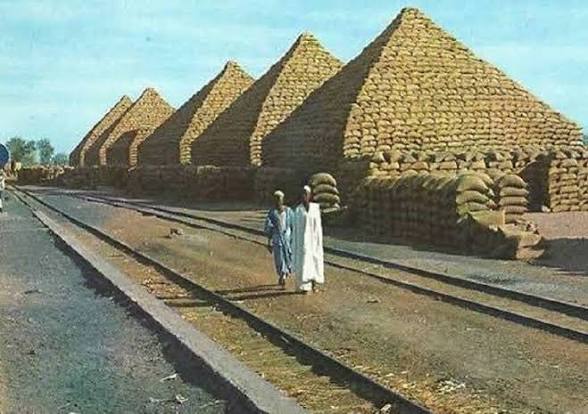
At the centre of this success were the famous Groundnut Pyramids of Kano—towering stacks of bagged groundnuts that became a symbol of prosperity and economic strength.
Today, those pyramids exist mostly in photographs and memories.
What was once one of Nigeria’s most celebrated agricultural success stories has gradually faded, leaving many to wonder how the country lost one of its most valuable industries.
The Golden Era of Groundnut Production
In the years before and shortly after independence, agriculture was the foundation of Nigeria’s economy.
Different regions specialized in various cash crops. The Western Region was known for cocoa, the Eastern Region for palm produce, and Northern Nigeria became famous for groundnut production.
Groundnuts thrived in the northern part of the country due to favourable weather conditions and vast agricultural land. Farmers produced millions of tonnes annually, supplying both local markets and international buyers.
The crop became a major source of export earnings and contributed significantly to economic growth.
By the 1950s and 1960s, Nigeria had established itself as one of the world’s leading groundnut producers. Large quantities were exported to Europe and other parts of the world, where they were processed into cooking oil, animal feed, confectioneries, and industrial products.
The Rise of the Groundnut Pyramids
Perhaps nothing represented Nigeria’s agricultural success more than the Groundnut Pyramids of Kano.
The pyramids were not monuments built for tourism. They were carefully arranged stacks of thousands of bags of groundnuts awaiting transportation and export.
Some pyramids contained up to 15,000 bags and stood several metres high. Visitors from within and outside Nigeria travelled to Kano to see them.
The pyramids became a powerful symbol of economic productivity and were featured on postcards, calendars, magazines, and promotional materials.
For many Nigerians, they represented a country that produced wealth through hard work, farming, and trade.
How Groundnuts Helped Build the Economy
Groundnut exports generated substantial revenue for regional governments.
The income funded infrastructure projects, schools, healthcare facilities, and public services across Northern Nigeria.
Thousands of people found employment across the agricultural value chain, from farming and transportation to processing and export.
The industry also supported local businesses and encouraged rural development at a time when agriculture was the nation’s primary economic driver.
Groundnuts were more than a crop—they were an engine of growth.
The Discovery of Oil and a Shift in Priorities
The story began to change in the 1970s.
As crude oil revenues increased, government attention shifted away from agriculture. Oil quickly became Nigeria’s largest source of foreign exchange, reducing the urgency to invest in traditional cash crops.
Many agricultural programmes received less attention, while rural infrastructure and support systems weakened.
The result was a gradual decline in production.
Farmers faced growing challenges, including inadequate access to financing, poor storage facilities, limited mechanisation, and declining government support.
As investment flowed into the oil sector, agriculture lost much of the strategic importance it once enjoyed.
Competition and Production Challenges
Nigeria was not the only country producing groundnuts.
Over time, countries such as India, China, and the United States increased production and improved efficiency through modern farming techniques and technology.
Meanwhile, Nigerian farmers struggled with low yields, inconsistent policies, climate-related challenges, and limited access to improved seedlings.
The country’s share of the global market began to shrink.
While groundnuts continued to be cultivated across many northern states, production no longer matched the scale that once made Nigeria a dominant exporter.
What Remains Today
Groundnuts remain an important crop in Nigeria.
Millions of Nigerians still consume and trade groundnut products, including groundnut oil, roasted groundnuts, peanut butter, and livestock feed.
The crop continues to support farmers and rural economies, particularly in northern communities.
However, the industry no longer occupies the position it once held in national economic planning.
For many young Nigerians, the Groundnut Pyramids are historical images rather than living symbols of economic activity.
Can the Industry Rise Again?
Agriculture experts believe the potential still exists.
Nigeria possesses vast arable land, a large domestic market, and a growing demand for agricultural products both locally and internationally.
With improved policies, investment in modern farming, access to financing, better storage facilities, and stronger export systems, groundnut production could once again become a significant contributor to economic growth.
The goal may not be to recreate the exact pyramids of the past, but to build a modern agricultural economy capable of competing globally.
More Than a Memory
The Groundnut Pyramids represented more than stacks of produce.
They symbolised an era when agriculture stood at the heart of Nigeria’s development strategy.
Their disappearance serves as a reminder of how economic priorities can change and how industries can rise and fall over time.
As Nigeria seeks to diversify its economy beyond oil, the story of the Groundnut Pyramids offers both a lesson from the past and a challenge for the future.
The question is no longer whether Nigeria once led the world in groundnut production.
The question is whether it can become an agricultural powerhouse again.
In another news: https://www.theprojectherald.com/category/news/business-news/