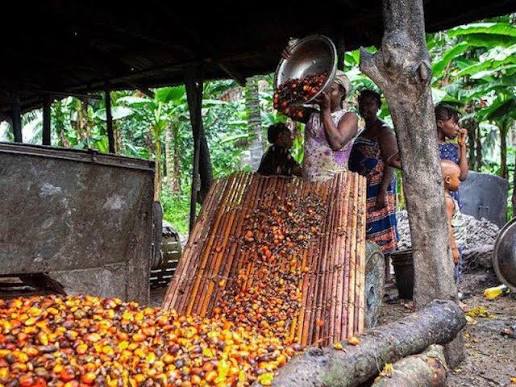
There was a time when Nigeria stood at the centre of the global palm oil industry.
Long before crude oil transformed the nation’s economy, palm oil was one of Nigeria’s most valuable exports. The country supplied international markets, generated foreign exchange, created jobs, and supported millions of livelihoods across rural communities.
Today, the story is very different.
Despite having suitable climate conditions and vast agricultural potential, Nigeria now imports significant quantities of palm oil to meet domestic demand. Countries that once looked to Nigeria as a major producer have overtaken it, turning palm oil into a multi-billion-dollar industry.
How did one of the world’s leading producers lose its position?
When Palm Oil Powered the Economy
Before independence and throughout the early years of nationhood, agriculture formed the backbone of Nigeria’s economy.
Among the country’s most important cash crops was palm oil.
The oil palm tree flourished naturally in Nigeria’s rainforest belt, particularly across the eastern and southern regions. Communities harvested palm fruits for local consumption and large-scale export.
Palm oil was used in food production, soap manufacturing, cosmetics, pharmaceuticals, and industrial products. Demand was strong both within Nigeria and internationally.
By the 1950s and early 1960s, Nigeria was one of the world’s largest producers and exporters of palm oil, accounting for a significant share of global supply.
The industry generated substantial revenue and contributed to economic development across many communities.
A Symbol of Agricultural Prosperity
Palm produce played a major role in financing regional development.
Revenue from exports helped fund schools, roads, healthcare facilities, public services, and other infrastructure projects.
The industry also provided employment for farmers, traders, processors, transporters, and exporters.
For many families, palm cultivation was more than an occupation—it was a pathway to economic stability.
Across villages and towns, the palm oil business supported local economies and strengthened rural development.
The Turning Point
The fortunes of the industry began to change in the 1970s.
As crude oil revenues increased, government priorities shifted.
Oil quickly became Nigeria’s dominant source of income and foreign exchange. Investment, attention, and policy support increasingly focused on the petroleum sector, while agriculture received less emphasis.
The consequences became visible over time.
Many plantations aged without proper replacement. Smallholder farmers received limited support, infrastructure deteriorated, and investment in processing facilities slowed.
While Nigeria’s production growth stagnated, other countries began making strategic investments in the industry.
How Malaysia and Indonesia Took the Lead
Perhaps the most remarkable aspect of Nigeria’s palm oil story is what happened elsewhere.
Decades ago, Malaysia and Indonesia obtained oil palm seedlings that originally came from West Africa.
Rather than treating palm oil as a declining sector, both countries invested heavily in research, plantation expansion, processing technology, export infrastructure, and industry development.
The results were dramatic.
Malaysia and Indonesia transformed palm oil into one of their most successful agricultural exports, becoming dominant players in the global market.
Today, they account for the majority of global palm oil production and exports.
Meanwhile, Nigeria fell behind.
What was once a leading producer became a country struggling to meet its own domestic demand.
Why Nigeria Now Imports Palm Oil
Several factors contributed to the decline.
Many plantations became old and less productive. Farmers often lacked access to improved seedlings, modern equipment, financing, and extension services.
Processing methods in many areas remained less efficient compared to international standards.
Rapid population growth also increased domestic demand for palm oil products.
As consumption rose faster than production, supply gaps emerged.
To bridge those gaps, Nigeria increasingly relied on imports.
The situation created a striking contrast: a country with abundant natural advantages purchasing a commodity it once exported to the world.
The Economic Cost
The decline has implications beyond agriculture.
Importing palm oil means spending foreign exchange that could otherwise remain within the economy.
Reduced production also limits opportunities for job creation, industrial development, and export earnings.
A stronger palm oil industry could support manufacturing, food processing, cosmetics production, and numerous small and medium-sized businesses.
Many experts believe the sector remains one of Nigeria’s most underutilised economic opportunities.
Can Nigeria Reclaim Its Position?
Despite decades of decline, industry stakeholders argue that the potential for recovery remains strong.
Nigeria still possesses favourable weather conditions, vast agricultural land, and a large domestic market.
Recent investments by private companies and agricultural entrepreneurs have demonstrated that productivity can improve with modern farming practices, quality seedlings, mechanisation, and better processing technology.
Government policies aimed at boosting local production have also renewed discussions about reducing dependence on imports.
While reclaiming global leadership may be difficult, significantly increasing domestic production is considered achievable.
Lessons from a Lost Advantage
Nigeria’s palm oil story offers an important lesson about economic transformation.
Natural resources alone do not guarantee long-term success.
Countries that continuously invest in innovation, infrastructure, research, and productivity often outperform those that rely on past achievements.
The decline of Nigeria’s palm oil industry was not caused by a lack of potential. Rather, it reflected changing priorities, insufficient investment, and missed opportunities over several decades.
Looking Ahead
As Nigeria searches for ways to diversify its economy beyond crude oil, agriculture is once again receiving attention.
The palm oil industry remains one of the sectors with the capacity to generate jobs, increase exports, strengthen rural economies, and support industrial growth.
The question is not whether Nigeria has the resources to compete.
The question is whether the country can make the long-term investments needed to transform a former strength into a future opportunity.
For a nation that once helped supply the world with palm oil, the journey from global leader to major importer is both a cautionary tale and a reminder of what is still possible.
Related news: https://www.theprojectherald.com/when-groundnut-pyramids-defined-nigerias-economy/