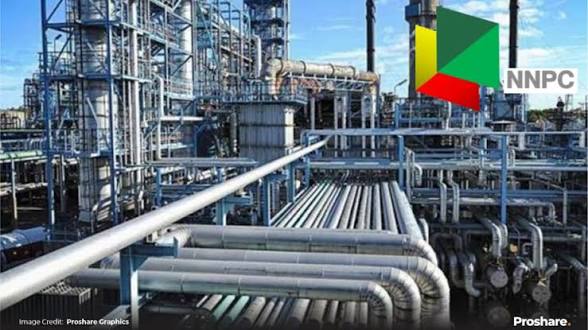
For decades, Nigeria’s state-owned refineries have represented one of the country’s most ambitious industrial assets and one of its most persistent economic challenges.
Billions of dollars have been committed to rehabilitation projects across the Port Harcourt, Warri, and Kaduna refineries. Yet in 2026, the central question remains unchanged: can Nigeria’s refining sector finally achieve sustainable commercial operations?
A New Strategy Emerges
The Nigerian National Petroleum Company Limited (NNPC) has shifted its approach to refinery rehabilitation.
In May 2026, NNPC signed a Memorandum of Understanding with two Chinese firms, Sanjiang Chemical Company Limited and Xingcheng (Fuzhou) Industrial Park Operation and Management Co. Ltd., to explore a technical equity partnership for the completion, operation, and maintenance of the Port Harcourt and Warri refineries. According to NNPC, the arrangement is intended to bring in technical expertise capable of delivering long-term operational performance rather than relying solely on traditional contractor-based rehabilitation.
The move signals a significant shift in policy. Rather than focusing exclusively on repairs, NNPC is now pursuing operational partnerships designed to improve refinery performance after rehabilitation is completed.
Why the Strategy Changed
The policy shift follows a series of internal reviews conducted by NNPC.
In February 2026, Group Chief Executive Officer Bashir Ojulari publicly acknowledged that the company’s refineries were operating below acceptable commercial standards and that NNPC lacked the capacity to run them profitably under existing arrangements. He noted that successful refinery operations require strong financing, competent engineering partners, and effective maintenance systems.
NNPC has also stated that previous attempts to restart facilities before completing rehabilitation did not produce the desired results and that a more sustainable operating model is required.
The Economic Stakes Are Enormous
Nigeria remains one of Africa’s largest crude oil producers, yet the country has historically depended heavily on imported refined petroleum products.
If fully functional, the Port Harcourt, Warri, and Kaduna refineries would have a combined installed capacity of approximately 445,000 barrels per day. Successful rehabilitation could strengthen domestic fuel supply, reduce import dependence, improve energy security, and create industrial activity across multiple sectors of the economy.
However, capacity figures alone do not guarantee success. The critical challenge is whether the facilities can operate efficiently and profitably over the long term.
The Dangote Factor
The refining landscape has changed dramatically since the commissioning of the Dangote Refinery.
According to industry reports, the facility is operating at approximately 650,000 barrels per day and has significantly altered Nigeria’s fuel supply dynamics. The refinery’s emergence has reduced immediate pressure on government-owned facilities while raising the benchmark for operational efficiency within the sector.
This has created what some industry observers describe as a new reality: state-owned refineries are no longer competing against imported fuel alone. They are now competing against a large-scale domestic refinery operating on commercial principles.
What to Watch Next
The most important development to monitor in 2026 is not another rehabilitation announcement but execution.
NNPC has set timelines for selecting technical partners and advancing the modernization of the Port Harcourt, Warri, and Kaduna refineries. The success of the strategy will ultimately be measured by sustained production, operational efficiency, and financial performance rather than rehabilitation spending alone.
For Nigeria, the refinery story has moved beyond construction and repairs. The focus is now on whether decades of investment can finally translate into commercially viable refining operations.
The answer could shape the future of Nigeria’s energy security, industrial development, and fuel market for years to come.
Read more: https://www.theprojectherald.com/mtn-nigerias-5g-rollout-a-project-herald-analysis/