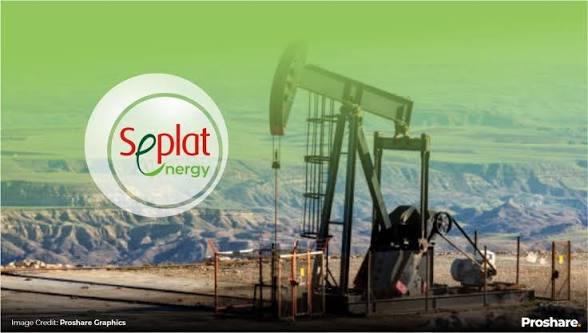
Nigeria’s oil industry has spent much of the last decade battling declining production, underinvestment, crude oil theft and the gradual exit of some international oil companies from onshore assets. While these challenges have weighed on government revenue and investor confidence, one Nigerian company is taking a different path.
Rather than retreating, Seplat Energy is expanding.
Its strategy goes beyond acquiring oil assets. The company is betting that better management, faster investment and a stronger focus on natural gas can unlock value that others left behind. If successful, the implications could extend far beyond Seplat’s balance sheet and help reshape the future of Nigeria’s energy sector.
A Strategy Built on Opportunity, Not Convenience
The defining moment in Seplat’s recent history came with the completion of its acquisition of Mobil Producing Nigeria Unlimited, formerly owned by ExxonMobil, in a deal valued at about $1.28 billion.
For many observers, the acquisition represented more than a corporate transaction. It signalled a broader shift in Nigeria’s oil industry, where indigenous companies are increasingly taking over mature assets from international operators that are focusing more on offshore projects.
Unlike companies that buy assets simply to increase reserves, Seplat’s approach has been to improve what already exists.
Many of the acquired wells had been sitting idle for years. Instead of embarking immediately on expensive new drilling campaigns, the company chose to restore production from existing infrastructure.
That decision has started producing results.
According to Seplat, it successfully returned 49 idle wells to production and plans to restore another 50 wells as part of its next growth phase. The restoration programme has added significant production capacity at a fraction of the cost of developing entirely new fields.
Growth Is No Longer Just About Oil
Perhaps the most important part of Seplat’s strategy is something many Nigerians rarely hear about.
Gas.
For decades, Nigeria has been described as a major gas nation that behaves like an oil nation. Despite having one of Africa’s largest natural gas reserves, the country still struggles with electricity shortages, limited industrial gas supply and inadequate infrastructure.
Seplat appears determined to change that equation.
The company continues to invest heavily in gas processing infrastructure, including the ANOH Gas Plant, while also expanding offshore gas capacity. These investments are expected to increase domestic gas supply for power generation and industrial use while supporting exports over the longer term.
This shift matters because the future of Nigeria’s energy economy may depend less on exporting crude oil and more on creating value from natural gas at home.
Gas powers factories.
Gas generates electricity.
Gas supports fertilizer production.
Gas creates jobs beyond the oil fields.
That makes Seplat’s gas investments strategically important for Nigeria’s broader economy.
The Bigger Picture for Nigeria
The company’s ambitions are substantial.
Seplat has outlined plans to invest up to $3 billion over the next five years, drill between 120 and 150 new wells, expand gas projects and increase working-interest production to more than 200,000 barrels of oil equivalent per day by 2030. It has also communicated a broader joint venture ambition that reaches much higher production levels as integration progresses.
For Nigeria, this matters for several reasons.
Higher production means increased government revenue through taxes and royalties.
It strengthens foreign exchange earnings at a time when the country continues to seek greater currency stability.
It creates demand for engineering services, logistics, marine operations, fabrication, maintenance and thousands of skilled jobs across the energy value chain.
Perhaps most importantly, it demonstrates that Nigerian-owned companies are increasingly capable of managing large and technically complex energy assets that were once dominated by multinational corporations.
The Challenges Ahead
Growth, however, will not come without obstacles.
Nigeria’s upstream sector continues to face oil theft, pipeline vandalism, regulatory uncertainty and ageing infrastructure.
Global oil prices also remain volatile, meaning even well-managed companies must navigate unpredictable market conditions.
There is also the growing global transition towards cleaner energy.
Although oil will remain important for decades, investors increasingly expect energy companies to balance production growth with environmental responsibility and lower carbon emissions.
Seplat’s emphasis on natural gas positions it more favourably than companies relying solely on crude oil, but execution will remain the deciding factor.
The Project Herald Perspective
Seplat’s strategy represents more than corporate expansion. It reflects an important transition in Nigeria’s energy story.
For years, conversations about the oil industry focused on declining output, delayed investments and the departure of international companies. Seplat is attempting to shift that narrative towards productivity, operational efficiency and long-term value creation.
The real measure of success will not simply be how many barrels the company produces.
It will be whether those investments help Nigeria earn more foreign exchange, power more industries, create more skilled jobs and strengthen energy security.
If Seplat delivers on its production targets while expanding domestic gas infrastructure, it could become a model for how indigenous companies can drive the next phase of growth in Nigeria’s oil and gas industry.
That would be a success not only for one company, but for the country’s wider economy.
Read more: https://www.theprojectherald.com/nnpcs-refinery-rehabilitation-plan-faces-a-defining-moment-in-2026/