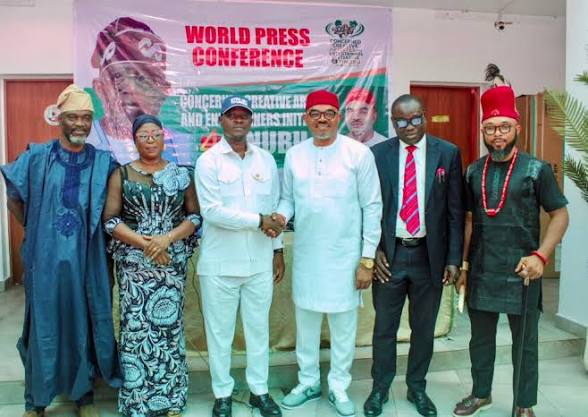
Stakeholders in Nigeria’s creative industry have expressed support for ongoing reforms aimed at strengthening the country’s creative economy, describing recent government initiatives as important steps toward empowering young talents, creating jobs, and expanding opportunities within the sector.
The stakeholders made their views known during a gathering of industry professionals, where discussions focused on the future of Nigeria’s creative economy and the role of government policies in driving growth across film, music, fashion, digital content, and other creative enterprises.
Many participants noted that Nigeria’s creative industry remains one of the country’s strongest cultural and economic assets, with the potential to contribute significantly to national development if supported by the right infrastructure, funding, and skills development programmes.
Focus on Talent Development
Former President of the Actors Guild of Nigeria (AGN), Emeka Rollas, said the creative industry requires more than talent to compete effectively on the global stage.
According to him, access to modern infrastructure, professional training, and enterprise support is essential for creatives seeking to build sustainable careers and businesses.
“Talent alone is not enough. Creatives require modern infrastructure to compete globally,” he said.
Rollas pointed to various capacity-building initiatives introduced under the administration of President Bola Tinubu, noting that thousands of young Nigerians have benefited from programmes focused on film production, fashion enterprise development, and other creative disciplines.
He said such investments in human capital development are necessary to equip young people with practical skills and improve the competitiveness of Nigeria’s creative sector.
Creative Industry Seen as Economic Driver
Stakeholders at the event also highlighted the growing importance of the creative economy as a source of employment and economic diversification.
They argued that with Nigeria’s youthful population and growing global influence in entertainment and culture, the sector has the capacity to generate significant revenue while creating opportunities for millions of young people.
According to industry leaders, sustained investment in skills development, technology, innovation, and infrastructure will be critical to unlocking the full potential of the sector.
Several speakers called for continuity in policies and programmes that support creatives, stressing that long-term growth can only be achieved through consistent commitment and collaboration between government and private sector stakeholders.
Addressing National Challenges
Rollas also spoke on the security and economic challenges facing the country, acknowledging the difficulties experienced by many Nigerians.
He noted that while the challenges remain significant, governments should be evaluated based on their willingness and determination to address them.
“While we acknowledge that our nation is currently facing significant security and economic challenges, we also recognize that no administration inherits a perfect society. Every government is judged not only by the challenges it faces but by the courage it demonstrates in confronting them,” he said.
The former AGN president expressed sympathy to families affected by insecurity across the country and urged citizens to remain hopeful.
Participants at the event observed a minute of silence in honour of a teacher recently killed in Oyo State and other Nigerians who have lost their lives due to insecurity.
Stakeholders concluded that continued support for the creative economy remains vital to job creation, youth empowerment, and Nigeria’s efforts to strengthen its position as a leading creative hub in Africa and beyond.
In another news: https://www.theprojectherald.com/nigerians-struggles-to-save-money-despite-working-full-tim-e/