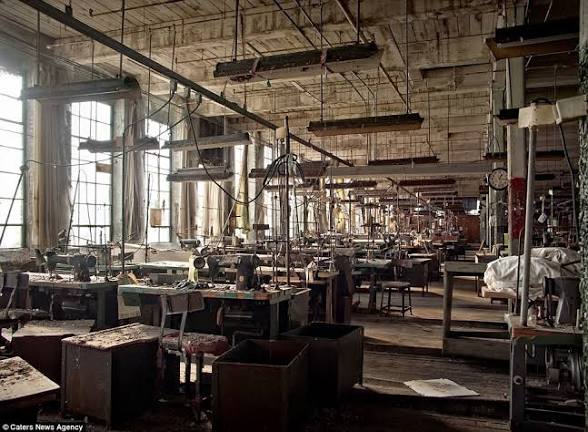
Nigeria’s industrial ambitions once stretched far beyond crude oil exports and imported goods. Decades ago, the country envisioned itself as one of Africa’s leading manufacturing powers — a nation capable of building its own vehicles, producing machinery locally, and creating large-scale industries that could compete globally.
Today, many of those ambitions remain unfinished conversations.
From abandoned factories to struggling assembly plants, Nigeria’s industrial story has become a symbol of both unrealized potential and renewed hope.
The Beginning of Nigeria’s Automobile Vision
Nigeria’s relationship with automobiles dates back to the early 1900s, when the first motor vehicles arrived during the colonial era. At the time, cars were seen as symbols of modernization and economic progress.
But it was after independence that the country began pursuing something much bigger: local manufacturing.
By the 1970s and 1980s, Nigeria partnered with international automobile companies to establish local assembly plants across the country. Major names such as Peugeot Automobile Nigeria, Volkswagen of Nigeria, Leyland Nigeria, and ANAMMCO became central to the nation’s industrial ambitions.
The goal was clear:
- reduce dependence on imported vehicles
- create industrial jobs
- transfer technical knowledge
- stimulate economic growth
- build a stronger local manufacturing ecosystem
For many Nigerians at the time, industrialization represented national progress.
Why the Dream Slowed Down
Over the years, however, many of those industries struggled to survive.
Economic instability, inconsistent government policies, foreign exchange pressures, weak infrastructure, and poor electricity supply created major obstacles for manufacturers. Import dependency also grew, making it difficult for local industries to compete with cheaper foreign products.
As oil revenues became more central to the economy, industrial diversification weakened.
Many factories either shut down completely or operated far below capacity, while Nigeria increasingly relied on imported goods for consumption.
For analysts, the decline of local manufacturing reflected a larger national challenge: the difficulty of sustaining long-term industrial policies across different administrations.
A New Generation Is Trying Again
Despite the setbacks, Nigeria’s industrial ambitions have not completely disappeared.
In recent years, indigenous automobile companies such as Innoson Vehicle Manufacturing and Nord Automobiles have emerged with renewed efforts to promote local vehicle production.
These companies are attempting to revive the idea that Nigeria can still manufacture products at scale rather than depend heavily on imports.
Industry observers say modern Nigerian manufacturers are drawing inspiration not only from Nigeria’s earlier industrial dreams, but also from countries like Japan and China, where local manufacturing became the foundation for broader economic transformation.
The Bigger Opportunity Beyond Cars
For many experts, the real opportunity may extend far beyond automobile assembly itself.
A strong local automobile industry can create opportunities across multiple sectors, including:
- auto parts manufacturing
- logistics and transportation
- engineering services
- battery and EV infrastructure
- software and mobility technology
- technical training and skilled labor development
As electric vehicles continue to reshape global transportation, some analysts believe Africa’s largest economy still has an opportunity to participate in the future of mobility — if the right infrastructure, policies, and investments are put in place.
What This Means for Nigeria’s Future
Nigeria’s industrial story is no longer just about factories that failed or assembly plants that struggled.
It has become a larger conversation about whether the country can finally move from being a consumption-driven economy to a production-driven one.
For a new generation of entrepreneurs, innovators, and manufacturers, the question is not only what went wrong in the past — but what can still be built in the future.
While many of Nigeria’s industrial dreams slowed over time, advocates say the vision itself never truly disappeared. Instead, it may now be entering a new phase led not only by governments, but by private builders determined to create locally once again.
As conversations around industrialization, innovation, and economic diversification continue, Nigeria’s automobile journey remains one of the clearest reflections of both the country’s past ambitions and its future possibilities.