Trade agreements are often discussed in terms of tariff reductions, export figures, and government policy. While these measures are important, they rarely answer the question that matters most to businesses and investors:
Where are the biggest commercial opportunities likely to emerge?
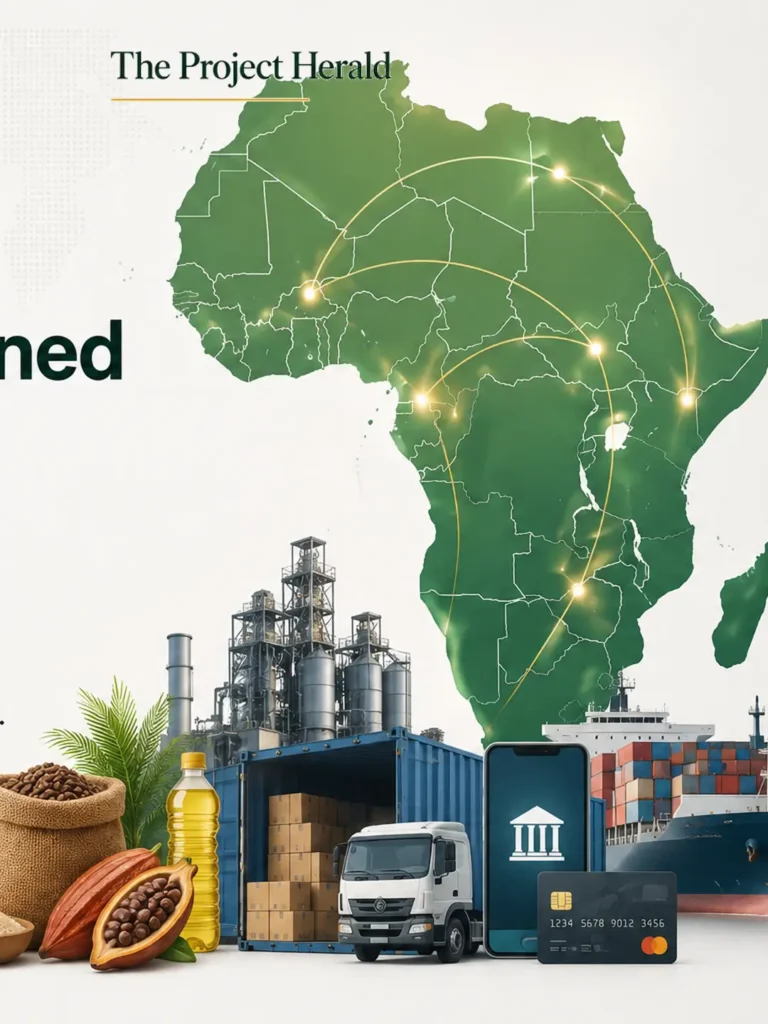
As Africa moves towards deeper regional trade integration through the African Continental Free Trade Area (AfCFTA), attention is gradually shifting from the agreement itself to the industries that stand to benefit from it.
The opportunity is not equally distributed.
Some sectors are naturally positioned to take advantage of larger regional markets because of the products they produce, the services they provide, or the demand they already serve across African borders.
Understanding where these opportunities exist is becoming increasingly important for investors, manufacturers, exporters, entrepreneurs, and policymakers.
Manufacturing Could Become One of the Biggest Winners
Regional trade generally benefits countries that can produce competitively at scale.
Manufacturing therefore occupies a central position within Africa’s integration agenda.
As tariffs are reduced and regional markets become more accessible, manufacturers gain the opportunity to sell beyond domestic demand. A company that previously served only one national market may gradually access customers across multiple African economies.
For Nigeria, this creates opportunities in sectors such as cement, food processing, consumer goods, pharmaceuticals, plastics, chemicals, building materials, packaging, and household products.
However, market access alone does not guarantee competitiveness.
Manufacturers must also contend with electricity costs, logistics efficiency, production quality, financing, and regulatory compliance. Regional integration expands market opportunities, but competitiveness ultimately determines who captures them.
Agro-Processing Has Significant Growth Potential
Agriculture has long been one of Africa’s largest economic sectors.
Yet much of the continent’s agricultural trade has historically centred on raw commodities rather than processed products.
Regional trade integration presents an opportunity to shift more value towards agro-processing.
Instead of exporting raw cocoa, cassava, fruits, sesame, ginger, or shea products, businesses can increasingly focus on processed foods, beverages, edible oils, packaged agricultural products, and industrial inputs that command higher value.
This transition supports industrialisation while creating additional employment across processing, packaging, logistics, quality assurance, and distribution.
For countries seeking to increase export earnings sustainably, exporting value-added products often generates greater economic benefits than exporting raw materials alone.
Logistics and Transport Could Experience Stronger Demand
Trade cannot expand without efficient movement of goods.
As regional commerce increases, demand is also likely to grow for freight forwarding, warehousing, trucking, shipping, customs brokerage, cold-chain logistics, and digital supply chain solutions.
In many respects, logistics becomes the infrastructure that enables regional trade to function.
Businesses capable of reducing delivery times, improving supply chain visibility, and lowering transportation costs may find themselves playing an increasingly important role within Africa’s integrated market.
Financial Services May Become Even More Strategic
Cross-border trade requires more than moving products.
Businesses also need efficient payment systems, trade finance, foreign exchange services, insurance, and working capital.
Banks, fintech companies, insurers, and payment service providers therefore stand to play an increasingly significant role as commercial activity expands across African markets.
Simplifying cross-border payments and reducing transaction costs could become as important to regional trade as improvements in transport infrastructure.
Digital Services Face Fewer Physical Borders
Unlike physical goods, many digital services can be delivered without crossing geographical borders.
Software development, business consulting, engineering services, financial technology, digital marketing, cybersecurity, education technology, professional services, and creative industries increasingly operate across multiple markets simultaneously.
As African businesses become more interconnected, demand for these services may continue to expand.
For knowledge-based businesses, regional integration represents not only a trade opportunity but also an opportunity to scale expertise across larger markets.
Mining and Industrial Inputs Could Benefit Indirectly
As manufacturing and infrastructure activity increase across Africa, demand for industrial minerals, construction materials, metals, and mining-related services may also rise.
This creates indirect opportunities for countries with significant mineral resources and processing capacity.
However, the greatest long-term value is likely to come not simply from extracting raw minerals but from expanding domestic processing and manufacturing capabilities before export.
Value addition remains one of the most important drivers of industrial development.
Regional Integration Rewards Competitiveness
One of the most common misconceptions about trade agreements is that they automatically increase exports.
In reality, regional integration creates opportunities—not guarantees.
Businesses that produce efficiently, maintain consistent quality, comply with standards, manage logistics effectively, and respond to market demand are generally better positioned to benefit.
Those structural advantages often matter more than tariff reductions alone.
For governments, this means improving infrastructure, strengthening institutions, simplifying trade procedures, and supporting industrial productivity remain just as important as signing trade agreements.
The Project Herald View
The greatest beneficiaries of Africa’s regional trade integration are unlikely to be defined by geography alone.
They will be the industries capable of producing competitively, adding value before export, meeting regional quality standards, and building efficient supply chains.
For Nigeria, manufacturing, agro-processing, logistics, financial services, digital industries, and value-added mining each present meaningful opportunities.
The challenge is no longer whether regional markets exist.
The challenge is whether businesses and policymakers can build the competitiveness required to serve them successfully.
Regional trade integration expands the market.
Competitiveness determines who captures it.
Read more news: https://www.theprojectherald.com/osun-mining-intelligence-framework-investors-communities-future-mining/