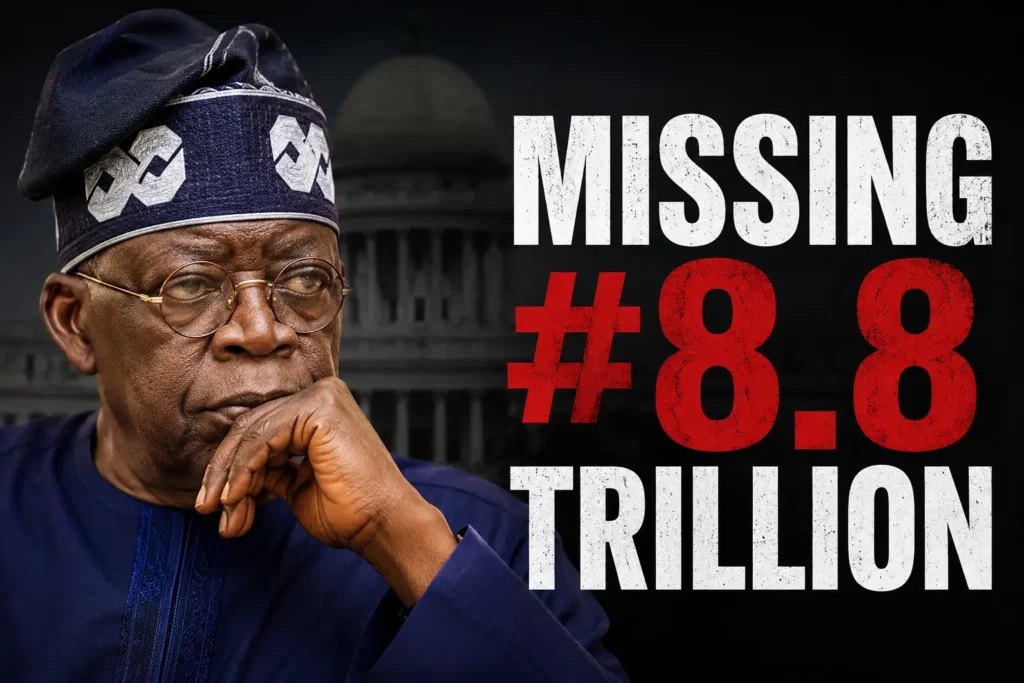
Nigeria’s fiscal reporting framework has come under renewed scrutiny following observations contained in the International Monetary Fund’s (IMF) 2026 Article IV Consultation, which highlighted approximately ₦8.8 trillion in government expenditure that was not reflected in official budget documentation.
The IMF estimated that the unrecorded expenditure represented about 2 percent of Nigeria’s Gross Domestic Product (GDP), prompting public debate over fiscal transparency, public financial management, and government accountability.
The findings have attracted significant political attention, with opposition figures calling for greater clarity regarding the reported discrepancy and urging the Federal Government to provide a detailed reconciliation of the expenditure.
Government Rejects ‘Missing Funds’ Narrative
The Federal Government has rejected suggestions that ₦8.8 trillion is missing.
Officials, including the Chairman of the Presidential Committee on Fiscal Policy and Tax Reforms, Taiwo Oyedele, have argued that the IMF’s observations relate to differences in fiscal reporting and accounting presentation rather than evidence of missing or diverted public funds.
According to the government, all expenditures remain within Nigeria’s constitutional budgeting framework, maintaining that the issue concerns how certain fiscal operations were reported rather than whether public funds were improperly managed.
Transparency Takes Centre Stage
The IMF’s observations have shifted public attention toward the broader issue of fiscal transparency.
Public financial reporting plays a critical role in helping investors, development partners, credit rating agencies, and citizens assess the credibility of government finances. While reporting discrepancies do not necessarily indicate financial misconduct, they can raise questions about the completeness, consistency, and accessibility of fiscal information.
Experts note that timely reconciliation of government accounts, independent audits, and transparent disclosure remain essential for maintaining confidence in public financial management.
Why It Matters
Nigeria is implementing wide-ranging fiscal reforms, including subsidy removal, tax reforms, and efforts to improve government revenue collection.
Analysts say these reforms are more likely to gain public support when accompanied by strong financial transparency and effective accountability mechanisms.
Clear and credible fiscal reporting also influences investor confidence, sovereign risk assessments, and the country’s ability to access financing on favourable terms.
Calls for Stronger Public Financial Management
The discussion has also renewed attention on the need to strengthen Nigeria’s public financial management systems.
Governance experts have identified measures such as improved digital treasury systems, stronger expenditure monitoring, enhanced implementation of the Treasury Single Account (TSA), independent auditing, and more effective legislative oversight as important steps toward improving fiscal accountability.
While debate continues over the interpretation of the IMF’s observations, analysts broadly agree that transparent reporting and timely reconciliation will be important in reinforcing confidence in Nigeria’s ongoing economic reform agenda.
Read more news: https://www.theprojectherald.com/nigeria-investigates-meta-google-x-ai-platforms/