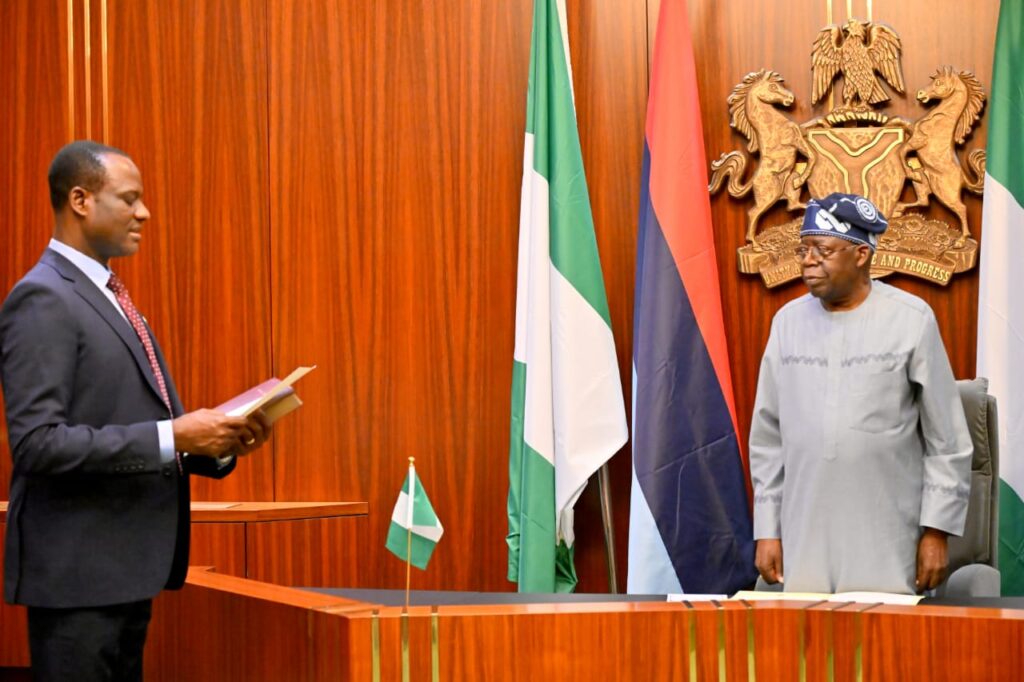
Finance Minister Taiwo Oyedele presented the Federal Government’s self-produced “Reform Scorecard” in Abuja on Wednesday, the administration’s own accounting of ₦30.64 trillion in incremental spending between June 2023 and December 2025. By the government’s breakdown, the largest single item was ₦9.39 trillion on wage adjustments and minimum-wage increases, followed by ₦9.37 trillion on external debt service — a cost the minister attributed largely to naira depreciation, since obligations once costing ₦460 per dollar now cost roughly ₦1,415. The government says ₦6.47 trillion went to strategic infrastructure, funded from a mix of subsidy-removal savings, incremental revenue, and ₦11.9 trillion in fresh borrowing, which it says accounted for 58% of the additional resources raised over the period.
Oyedele’s presentation also acknowledged costs directly: the Monetary Policy Rate has risen from 18.5% to 26.5% since May 2023, and petrol prices have moved from roughly ₦185/litre to between ₦1,100–1,400/litre under his own figures. He argued the counterfactual would have been worse — petrol could have become unavailable at the old official price while trading above ₦3,000/litre on the black market, in the government’s estimation, had the old subsidy regime continued. On the credibility side, the scorecard cites FX reserves rising to $52.5bn from roughly $35bn, stock market capitalisation growing from ₦31trn to approximately ₦150trn, and Nigeria’s October 2025 exit from the FATF grey list.
Oyedele described the scorecard as a “mid-course assessment,” not a final verdict on the administration’s economic programme — and it’s worth reading with that framing in mind: these are the government’s own figures on its own reforms, presented alongside its own counterfactual of what would have happened otherwise, not an independently verified account.
Catch up: https://www.theprojectherald.com/nigeria-wages-debt-servicing-n18-8tn-federal-spending-oyedele/