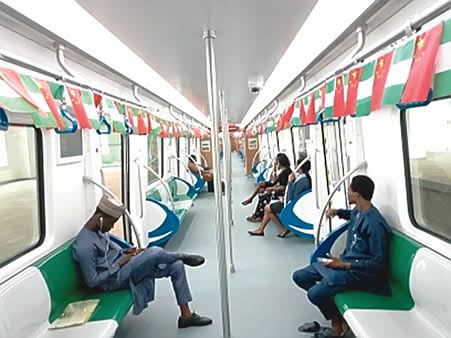
When the Abuja Light Rail project was commissioned in 2018, many Nigerians saw it as a major sign of progress.
For years, conversations around transportation in Nigeria had mostly focused on traffic, poor road networks, and underdeveloped public transit systems. So when the federal government unveiled a modern rail system in the nation’s capital, expectations were naturally high.
The project was presented as a solution that would improve movement within Abuja, reduce pressure on major roads, and modernize transportation in the city.
But years after its launch, opinions around the Abuja Light Rail remain mixed.
While some see it as a bold infrastructure investment with long-term potential, others believe the execution failed to match the vision behind the project.
How the Abuja Light Rail Project Started
The Abuja Rail Mass Transit project was originally conceived in the late 1990s as part of Abuja’s transportation master plan.
However, construction activities became more visible around 2007 after contracts were awarded to China Civil Engineering Construction Corporation (CCECC).
The first phase of the project reportedly cost over $800 million and was partly funded through loans from the Export-Import Bank of China.
The rail line covered about 45 kilometers with several stations connecting parts of the city to the Nnamdi Azikiwe International Airport.
On July 12, 2018, former President Muhammadu Buhari officially inaugurated the rail system for public use.
At the time, it was widely described as the first modern light rail system in West Africa.
The Original Vision Behind the Project
The goal of the Abuja Light Rail project was ambitious.
The government intended to create a transportation system that would:
- Reduce traffic congestion
- Improve urban mobility
- Provide faster airport access
- Encourage modern public transportation
- Support Abuja’s growing population
The project was also expected to position Abuja as a more modern and organized capital city.
For many Nigerians, it appeared to be the type of infrastructure development often seen in more advanced countries.
The Problems That Quickly Became Visible
Despite the excitement surrounding the launch, concerns began to emerge not long after operations started.
One of the biggest criticisms was limited accessibility.
Many residents complained that the rail routes did not adequately cover densely populated areas where daily commuters actually live and work.
Some observers also argued that the project focused heavily on airport connectivity instead of solving everyday transportation problems for ordinary residents.
There were also concerns about low passenger turnout.
Reports at the time showed that train operations were limited, with only a few daily trips running on certain routes.
In addition, several stations lacked strong integration with buses, taxis, and other transport systems, making movement difficult for passengers after leaving the train stations.
COVID-19 and the Long Shutdown
In 2020, train services were suspended during the COVID-19 pandemic.
While many public transportation systems around the world experienced temporary shutdowns during that period, what surprised many Nigerians was how long the Abuja Light Rail remained inactive.
For years, operations did not fully resume.
This raised further questions about maintenance, sustainability, operational planning, and whether the project had been properly structured from the beginning.
The long suspension also affected public confidence in the rail system.
Reopening and Renewed Public Attention
In 2024, the federal government reopened the Abuja Light Rail service under President Bola Tinubu’s administration.
The reopening included temporary free rides for commuters in an attempt to encourage public usage.
Around the same period, FCT Minister Nyesom Wike publicly expressed concerns about aspects of the project’s execution after inspection visits.
His comments renewed public conversations about the quality of planning, construction standards, and whether Nigeria truly maximized the huge investment made into the project.
Was the Abuja Light Rail a Failure?
Describing the Abuja Light Rail as a total failure may not be entirely accurate.
The project succeeded in introducing urban rail transportation into Nigeria’s capital and proved that large-scale rail infrastructure can be developed locally.
It also created transportation alternatives for some commuters and airport travelers.
However, many analysts believe the project was launched before enough supporting systems were fully ready.
Modern rail systems work best when they are properly connected to residential areas, bus networks, commercial centers, and pedestrian infrastructure.
In Abuja’s case, many Nigerians believe those supporting structures were either incomplete or insufficient at the time of launch.
There is also the issue of cost versus impact.
For a project worth over $800 million, public expectations were understandably high.
Many residents expected wider route coverage, more frequent operations, and stronger daily commuter usage than what was eventually experienced.
Lessons Nigeria Can Learn From the Project
The Abuja Light Rail project offers important lessons for future infrastructure development in Nigeria.
First, major transportation projects require long-term operational planning, not just construction.
Building infrastructure is one challenge. Sustaining and integrating it into everyday public use is another.
Second, public infrastructure works better when it is designed around actual commuter behavior and population movement.
Accessibility, route planning, affordability, and transport integration are critical to success.
Third, transparency and accountability remain important in large public projects, especially when foreign loans and significant public funds are involved.
Many Nigerians now expect future projects to place greater emphasis on practical impact rather than symbolic achievement alone.
Final Thoughts
The Abuja Light Rail project remains one of Nigeria’s most ambitious urban transportation investments in recent years.
It represented a strong vision for modern public transport, but the challenges surrounding execution, accessibility, operations, and long-term sustainability prevented the project from fully meeting public expectations.
Still, the project continues to hold potential.
If expanded properly, integrated with other transport systems, and managed more efficiently, the Abuja Light Rail could still become a more effective part of transportation within the Federal Capital Territory.
More importantly, the project serves as a reminder that successful infrastructure is not only about launching big projects, but also about ensuring they remain practical, accessible, and useful to the people they were built for.
Related post: https://www.theprojectherald.com/second-niger-bridge-impact-challenges-and-lessons/