For much of the past four decades, the direction of economic policy in many advanced economies seemed settled.
Governments sold state-owned enterprises.
Markets were expected to allocate resources more efficiently than public institutions.
Competition, privatization and deregulation became the defining principles of modern industrial policy.
On 16 July 2026, Britain moved in the opposite direction.
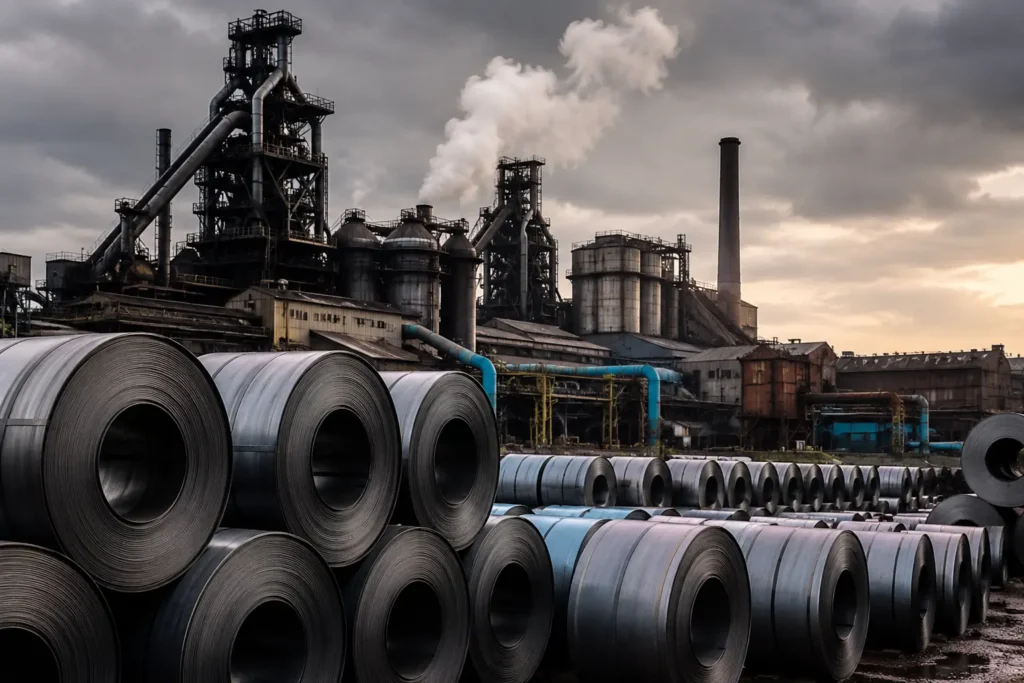
The UK government officially brought British Steel back into public ownership, marking one of the country’s most significant industrial interventions in recent years. While the decision was driven by the immediate challenges facing the company, its significance extends well beyond the future of a single steel producer.
It raises a much larger question.
Are governments entering a new era where strategic industries are once again considered too important to leave entirely to market forces?
That question matters not only for Britain, but for governments, businesses and investors around the world.
What Happened?
British Steel has faced years of financial pressure driven by intense international competition, high production costs and changing global demand.
The company operates some of Britain’s largest steelmaking facilities, supplying products used across construction, transport, manufacturing and critical national infrastructure.
As concerns grew over the company’s long-term viability, the UK government decided to take ownership rather than risk the loss of one of the country’s remaining large-scale steel producers.
Officials argued that maintaining domestic steelmaking capacity was no longer simply an economic issue.
It had become a matter of national resilience.
For thousands of workers, the decision provides greater certainty.
For policymakers, it preserves industrial capability that would be difficult and expensive to rebuild if lost.
But the implications extend far beyond employment.
Steel Is More Than Another Commodity
To many people, steel appears to be an ordinary industrial product.
In reality, it forms the foundation of modern economies.
Steel is used to build bridges, railways, ports, airports, power stations, factories, hospitals, commercial buildings, pipelines, ships and defence equipment.
Nearly every major infrastructure project depends on it.
Without reliable steel production, countries become increasingly dependent on overseas suppliers for materials essential to economic development and national security.
That dependence may appear manageable during stable periods.
It becomes far more concerning during geopolitical tensions, trade disputes or supply chain disruptions.
Recent global events have reminded governments that critical industries cannot always be rebuilt quickly once they disappear.
Why Governments Are Rethinking Industrial Policy
The British Steel decision reflects a broader change in thinking.
For decades, efficiency dominated economic policy.
Governments increasingly asked whether industries could operate more efficiently in private hands.
Today, another question is becoming equally important.
What happens if a strategically important industry disappears?
Around the world, governments are investing more heavily in sectors considered essential to long-term national competitiveness.
Semiconductor manufacturing.
Battery production.
Renewable energy.
Critical minerals.
Artificial intelligence infrastructure.
Pharmaceutical manufacturing.
Advanced defence technologies.
The common theme is resilience.
Countries are increasingly viewing these industries as strategic national assets rather than ordinary commercial businesses.
Britain’s decision suggests steel has now joined that list.
The Cost of Dependence
Globalisation has delivered enormous economic benefits.
It has reduced production costs, expanded international trade and connected supply chains across continents.
But it has also created new vulnerabilities.
The COVID-19 pandemic exposed weaknesses in global manufacturing networks.
Geopolitical tensions have demonstrated how quickly trade routes and critical supplies can become uncertain.
Conflicts and sanctions have reshaped international commerce.
These developments have changed how governments think about economic security.
Dependence on global markets remains valuable.
Complete dependence increasingly appears risky.
For many policymakers, maintaining at least some domestic industrial capability has become a form of national insurance.
A New Balance Between Markets and Government
Britain’s intervention should not necessarily be interpreted as a rejection of free markets.
Rather, it reflects an evolving balance.
Markets remain powerful drivers of innovation, investment and productivity.
However, governments are becoming more willing to intervene when industries are considered strategically essential.
The debate is therefore shifting.
It is no longer simply about whether governments should intervene.
It is increasingly about where that intervention should begin and where it should end.
Finding that balance will become one of the defining economic questions of the coming decade.
What This Means for Businesses
Business leaders should pay close attention.
Industrial policy is becoming an increasingly important competitive factor.
Government investment, subsidies, regulation and strategic partnerships now influence where factories are built, where capital flows and how supply chains are organised.
Companies operating in sectors considered strategically important may experience greater government support.
They may also face greater government scrutiny.
Political decisions are becoming more closely connected to business strategy than at any point in recent decades.
Understanding that relationship is becoming a competitive advantage.
What This Means for Investors
Investors are also entering a changing environment.
Traditional financial analysis often focuses on revenue growth, profitability and market demand.
Increasingly, another factor deserves attention.
Strategic importance.
Industries considered essential to national resilience may attract greater public investment, stronger regulatory protection and long-term policy support.
Those dynamics could influence investment decisions for years to come.
Economic fundamentals remain critical.
But geopolitics and industrial policy are becoming increasingly important parts of investment analysis.
Questions Worth Considering
Britain’s decision raises important questions that extend well beyond its borders.
Should governments own industries considered strategically essential?
How should countries balance market efficiency with national resilience?
Which sectors today are becoming too important to fail?
Where should governments draw the line between supporting industry and competing with private enterprise?
These are questions that will shape economic policy for years to come.
Project Herald Outlook
The nationalisation of British Steel is not simply the story of one struggling manufacturer.
It reflects a broader transformation in how governments increasingly think about economic resilience.
For decades, efficiency defined industrial policy.
Today, resilience is becoming equally important.
Countries are recognising that certain industries carry significance beyond commercial profitability.
They underpin national infrastructure, economic security and long-term competitiveness.
Whether this marks the beginning of a sustained return to state ownership remains uncertain.
What is becoming increasingly clear, however, is that governments are once again willing to play a more active role in protecting industries they believe are essential to the future.
The return of state ownership may not become the global norm.
But the return of strategic industrial policy already has.
Catch up: https://www.theprojectherald.com/uae-new-port-strategy/