- Record Revenue and Profit
- Bonny Island LNG Corridor
- Abuja's Arterial Roads
- Regional Expansion Outlook
- Opportunities for Suppliers
The Project Portfolio
The projects that define Julius Berger's commercial footprint
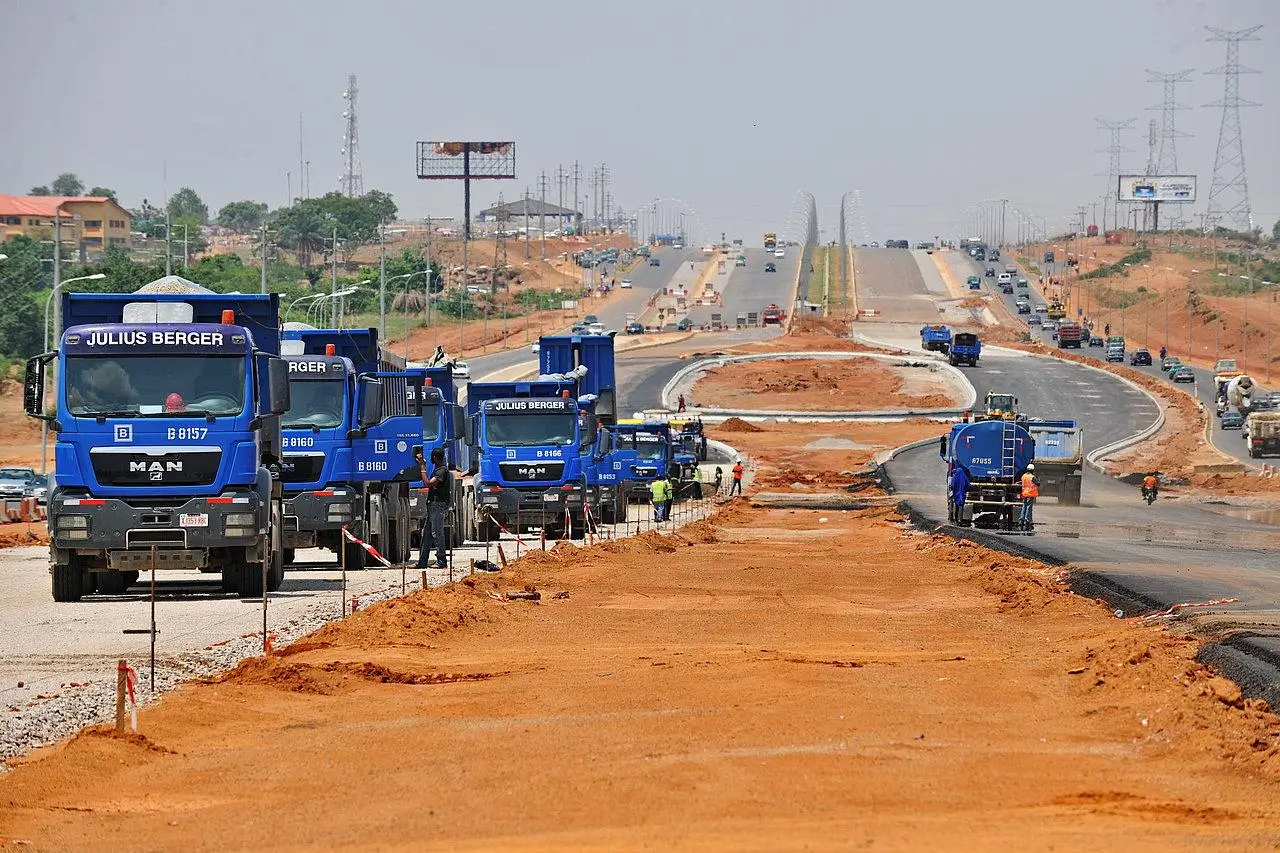
Julius Berger's current project base spans transport infrastructure, government and institutional buildings, and industrial and energy-related works — a spread that reflects the company's positioning as an integrated platform rather than a single-sector contractor.
Bodo–Bonny Road
A road connectivity project linking Bonny Island to mainland Rivers State, with Nigeria LNG contributing 50% of project financing — a working example of the private-sector-backed infrastructure model Julius Berger's management has pointed to as increasingly important going forward.
Location: Rivers State | Financing: 50% Nigeria LNG-backed
Arterial Road N5, Abuja
A 4.4-kilometre dual carriageway incorporating stormwater infrastructure, sewage lines, power and telecommunications conduits, street lighting, a river bridge and box culverts — illustrating how a single Julius Berger contract can generate demand across multiple engineering and supply-chain categories at once.
Scope: 4.4km dual carriageway, incl. river bridge & utility conduits | Location: Abuja
Buguma–Degema–Abonnema Road
Commissioned in 2026, this approximately 19.79-kilometre road included street lighting, drainage and the rehabilitation of seven existing bridges — the kind of connectivity project that reshapes access across the Niger Delta's riverine terrain.
Scope: ~19.79km, incl. 7 bridge rehabilitations | Status: Commissioned 2026
Opebi–Mende Link Road, Lagos
A 5.04-kilometre urban infrastructure project incorporating bridges, dual carriageways, pedestrian infrastructure and upgraded drainage, commissioned in 2026 as part of Lagos's continued urban corridor investment.
Scope: ~5.04km, incl. bridges & pedestrian infrastructure | Location: Lagos
Bonny Island & Nigeria LNG Infrastructure
A decades-long relationship rather than a single project, giving Julius Berger an unusual depth of experience within one of Nigeria's most strategically important energy and industrial locations — a foundation the Bodo–Bonny Road now extends by improving physical connectivity to the mainland.
Sector: Oil & Gas / LNG Infrastructure | Relationship: Long-standing
Geographic Spread
Rivers • Abia • Delta • Lagos • Abuja — a spread that gives Julius Berger simultaneous exposure to energy and industrial infrastructure in the Niger Delta, government and institutional development in Abuja, and urban infrastructure demand in Lagos.
The Financial Base Supporting Julius Berger's Next Phase
Capital & Financial Position
Julius Berger's project portfolio tells only part of the company's story. The other part is capital: the financial capacity required to execute large contracts, absorb working capital requirements, invest in equipment and subsidiaries, manage increasingly complex projects and return value to shareholders.
The company's 2025 results indicate a significant expansion in scale. Revenue increased sharply, profitability strengthened, and the group continued to maintain a substantial asset base — important indicators of its ability to participate in Nigeria's next infrastructure cycle.
2025: A Significant Expansion in Revenue
Julius Berger Nigeria reported ₦759.87 billion in Group revenue for 2025, compared with ₦566.71 billion in 2024 — an increase of approximately 34.1% in one year. The increase places Julius Berger firmly within the largest corporate participants in Nigeria's construction and infrastructure market by operating scale, occurring alongside a substantial improvement in profitability rather than being driven solely by higher contract volumes.
Profit attributable to the Group rose from approximately ₦15.51 billion in 2024 to ₦30.17 billion in 2025, almost doubling year on year, while profit before tax reached approximately ₦40.95 billion at the 2026 AGM — a 38.5% increase.
The Numbers at a Glance
| Financial Indicator | 2024 | 2025 |
|---|---|---|
| Group Revenue | ₦566.7bn | ₦759.9bn |
| Profit Attributable to Group | ₦15.5bn | ₦30.2bn |
| Total Assets | — | ≈₦1.08tn |
| Total Dividend | — | ₦6.8bn |
Revenue Growth Meets Profitability
A construction company's revenue can increase rapidly while margins remain under pressure from inflation, foreign-exchange movements, material costs, labour costs and project delays. Julius Berger's 2025 results instead showed a simultaneous improvement in earnings: revenue increased by about ₦193.2 billion year on year, while profit attributable to the Group increased by approximately ₦14.7 billion.
That performance suggests the company was not simply processing a larger volume of contracts — it was converting a greater portion of its operating activity into bottom-line earnings. For suppliers and contractors, this matters because financially stronger principal contractors generally have greater capacity to sustain large project execution, equipment deployment and procurement requirements.
Dividend, Capital Intensity & Diversification
Shareholders approved a total dividend payout of ₦6.8 billion, or ₦4.25 per share, at the 2026 AGM — relatively modest against the company's overall revenue and asset base, but understandable in the context of a capital-intensive business that must finance equipment, working capital and mobilisation ahead of realising a project's full economic benefit.
Julius Berger's approximately ₦1.08 trillion asset base provides an important foundation here, creating a direct relationship between capital expenditure, project execution capacity and future revenue generation. At the 2026 AGM, management also highlighted the integration of core construction activities with subsidiaries and diversification initiatives as part of its strategy for sustainable growth — relevant because construction revenue can be cyclical and heavily influenced by government capital expenditure, inflation and financing conditions.
Rather than treating subsidiaries as peripheral businesses, management has indicated they form part of the company's integrated growth strategy, creating the possibility of capturing more economic value within the group's own ecosystem — a structure worth monitoring alongside the main construction business.
The Financial Signal
Revenue growth of more than 34%, a near doubling of attributable profit and an asset base exceeding ₦1 trillion indicate a company operating at substantial scale. The more important question is how this financial capacity is deployed — not simply to generate larger revenue numbers, but to convert financial strength into a stronger project pipeline, improved execution capacity, deeper diversification and access to new markets.
TPH Capital Intelligence View
The critical issue going forward will be whether Julius Berger can translate its expanded capacity into higher-quality projects, stronger margins, diversified revenue and expansion beyond its traditional construction base. For investors, suppliers and strategic partners, the financial position makes Julius Berger more than a contractor to monitor — it is increasingly a large infrastructure platform whose capital position can influence the scale and type of projects it is capable of pursuing.
Where Julius Berger's Project Ecosystem Creates Opportunity
Commercial Intelligence
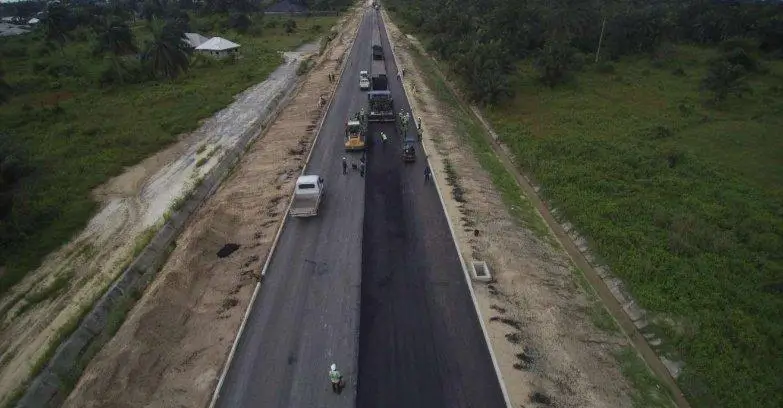
Julius Berger's significance to the Nigerian market extends beyond the contracts awarded directly to the company. Its large and diversified project portfolio creates a wider commercial ecosystem involving equipment manufacturers, material suppliers, specialist contractors, engineering firms, logistics providers, technology companies and professional service providers. The more useful question is not "what project is Julius Berger executing," but what economic activity, procurement demand and partnership requirements are likely to develop around those projects.
A Large Contractor Creates a Large Supply Chain
Major road and bridge projects can generate requirements for aggregates, asphalt, cement, steel, drainage components, electrical systems, lighting equipment, heavy machinery, geotechnical services, surveying, transport and specialised subcontracting. Building projects introduce mechanical and electrical systems, finishing materials, elevators, security systems, fire protection and HVAC, while industrial and energy-related projects require substantially more specialised equipment and technical services.
The Niger Delta & Industrial/Energy Exposure
The company's involvement in the Bodo–Bonny Road, its long history on Bonny Island, and projects across Rivers and neighbouring states place it within an environment where transportation infrastructure intersects with oil and gas, LNG, industrial activity, marine logistics and community development — creating layered demand across civil works, technical contracting, logistics and marine infrastructure.
The company's industry division provides civil works, design, engineering and procurement for plants, factories, oil and gas installations and power stations, and also undertakes turnkey EPCC work for power projects — placing it within sectors where procurement requirements tend to be technically specialised, from electrical infrastructure and automation to fabrication and environmental services.
Infrastructure Creates Secondary Markets
A new road can improve access to an industrial area. An industrial project can increase demand for logistics. A new bridge can change commercial traffic patterns. A major energy project can generate demand for supporting infrastructure and services. The value of Julius Berger's projects should therefore be assessed not only by their construction contract value but also by the economic activity they unlock around them — the project ecosystem effect that sits at the centre of The Project Herald's intelligence model.
Where Suppliers Can Position
Construction Materials • Heavy Equipment & Machinery • Electrical & Mechanical Systems • Engineering & Technical Services • Logistics & Transportation • Specialist Subcontracting • Technology & Digital Systems • Maintenance & Lifecycle Services
Commercial Readiness Matters
Not every Julius Berger-related project should be treated as an immediate commercial opportunity. A project can exist at several stages — announcement, design and planning, funding confirmation, tender activity, contract award, and mobilisation — and distinguishing between them is critical. A company that approaches a project too early may waste resources; a company that waits until a contract is fully mobilised may arrive after procurement decisions have already been made.
Being listed as a potential supplier does not guarantee selection either. Technical qualifications, pricing, delivery capacity, compliance, safety performance, financial strength, certifications, previous experience and relationship management can all influence procurement decisions — which is why commercial intelligence must go beyond simply publishing a tender notice.
TPH Intelligence Signal
Projects create procurement. Procurement creates suppliers. Suppliers create partnerships. Partnerships require capital. Capital enables projects. That interconnected cycle is where Julius Berger becomes particularly relevant to commercial intelligence — not simply a construction company profile, but a commercial node within Nigeria's infrastructure economy.
What Comes Next for Julius Berger
Strategic Outlook
Julius Berger enters the next phase of its development with three assets that have historically been difficult to replicate in Nigeria's construction market: scale, execution experience and institutional depth. The strategic question now is whether the company can convert those advantages into sustained growth while reducing its exposure to the structural risks associated with Nigeria's construction and infrastructure market.
Growth Drivers
Infrastructure spending remains the primary growth engine, particularly around roads, bridges, urban corridors and regional connectivity. But public-private partnerships could become increasingly important — the Bodo–Bonny Road, with Nigeria LNG contributing half its financing, demonstrates how private-sector capital can help bridge the gap left by conventional government budget allocations.
Energy and industrial infrastructure represent another growth avenue. The company's decades-long relationship with Bonny Island and Nigeria LNG gives it an unusual depth of experience within one of Nigeria's most important energy and industrial locations, and as physical connectivity to the island improves, its wider economic significance could increase — extending Julius Berger's exposure beyond road construction into future industrial, logistics, marine and energy-related developments.
Regional expansion is also part of management's stated direction, though entering another African market is fundamentally different from winning another Nigerian contract — it will depend on local knowledge, regulatory understanding, financing relationships and the ability to manage foreign-exchange and execution risk under different market conditions.
The Risks Behind the Growth Story
Inflation, foreign-exchange volatility, government funding constraints, project delays, political and regulatory change, intense competition, and rising execution complexity as projects move into difficult terrain or technically specialised sectors all remain structural risks. These do not eliminate the opportunity — they determine how effectively the opportunity can be converted into profitable growth. Diversification, too, will test management execution: the more Julius Berger expands into subsidiaries and new markets, the more capital allocation and operational integration discipline matter.
TPH Five-Year Intelligence Outlook
Major road, bridge, urban transport and public infrastructure projects will remain the company's principal source of project activity.
Oil and gas, LNG, power and industrial infrastructure could provide opportunities for higher-complexity engineering and procurement work.
Public-private partnerships and private-sector-backed infrastructure could become increasingly important as Nigeria seeks additional sources of project capital.
The performance of subsidiaries and any expansion beyond Nigeria will indicate whether Julius Berger can successfully broaden its earnings base.
The company's expanding project portfolio will continue generating opportunities for equipment providers, specialist contractors, engineering firms, technology companies, logistics operators and other qualified suppliers.
Final TPH Assessment
Julius Berger enters this phase from a position of strength: more than five decades of Nigerian operating history, an extensive project portfolio, established engineering and construction capabilities, and a financial platform that expanded substantially in 2025. But its greatest strategic asset may be the combination of these capabilities into a single, self-reinforcing cycle — a road connects an industrial location, an industrial location attracts capital, capital creates demand for infrastructure, infrastructure creates procurement, and procurement creates opportunities for suppliers and specialist contractors.
The strongest intelligence signal is that Julius Berger's next phase is likely to be determined not only by the projects it wins, but by how effectively it converts its project execution capabilities, financial strength and diversification strategy into a broader infrastructure platform. The opportunity is already visible. The next question is where the capital, projects and procurement demand move from here.