SASOL
Powering Industry. Transforming Molecules. Shaping Africa's Energy Future.
One of Africa's Industrial Giants
Few companies have shaped Africa's industrial landscape as profoundly as Sasol. From producing transport fuels to manufacturing the chemicals used in everyday products, the South African-headquartered company has evolved into one of the continent's most influential integrated energy and chemicals businesses.
Founded in 1950, Sasol has spent more than seven decades developing technologies that convert natural resources into fuels, chemicals and specialised industrial products that support manufacturing, mining, agriculture, healthcare, transport and consumer industries across the world.
Today, the company operates across more than 30 countries, serving customers in over 100 markets while remaining one of Africa's largest publicly listed industrial companies.
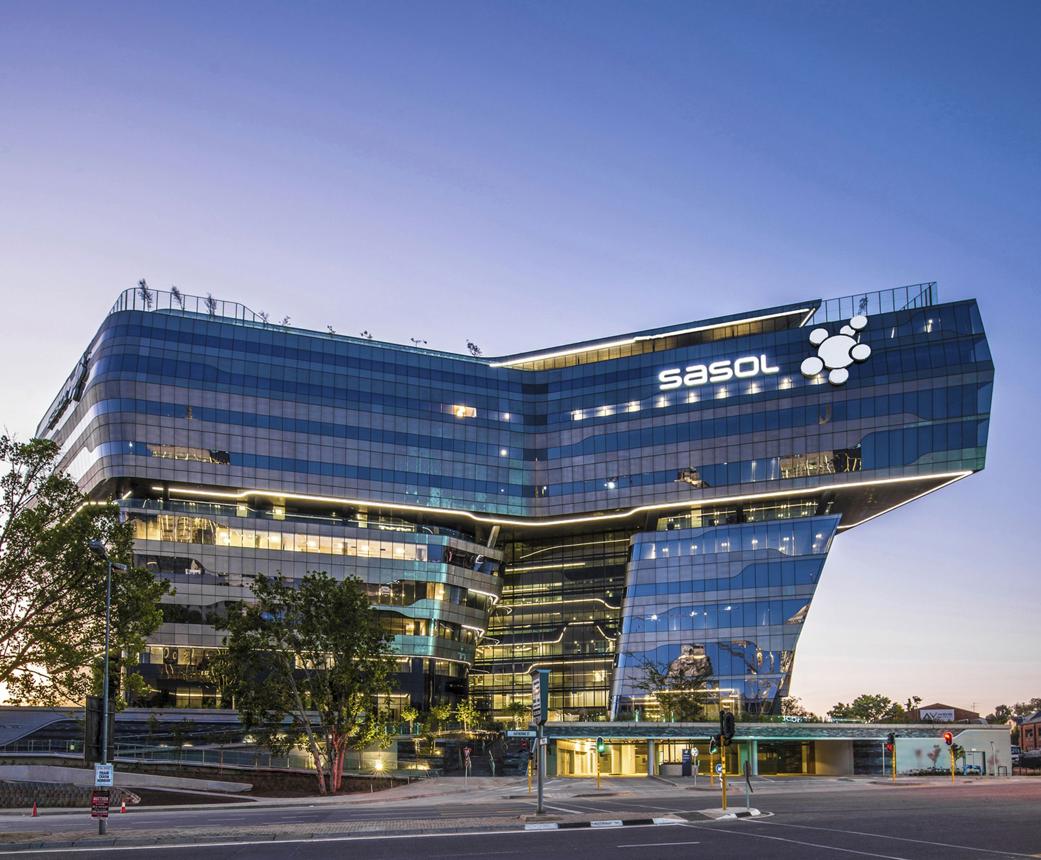
Company Snapshot
| Founded | 1950 |
| Headquarters | Sandton, South Africa |
| Industry | Integrated Energy & Chemicals |
| Listed On | Johannesburg Stock Exchange (JSE) & New York Stock Exchange (NYSE) |
| Operations | More than 30 countries |
| Products | Fuels, Chemicals, Low-Carbon Energy Solutions |
What Sasol Does
At its core, Sasol transforms carbon-based resources into products that power economies and enable industries to operate efficiently.
Its operations span the entire value chain — from sourcing feedstocks and processing them into fuels and chemicals, to delivering high-value products used in homes, factories and infrastructure projects worldwide.
Its portfolio includes:
- Petrol and diesel
- Aviation fuel
- Industrial chemicals
- Solvents
- Fertilisers
- Waxes
- Polymers
- Specialty chemicals
- Industrial gases
- Low-carbon energy solutions
These products are essential inputs for sectors including automotive manufacturing, mining, construction, packaging, pharmaceuticals, agriculture, consumer goods and infrastructure development.
A Global African Company
While deeply rooted in South Africa, Sasol has grown into a truly international business.
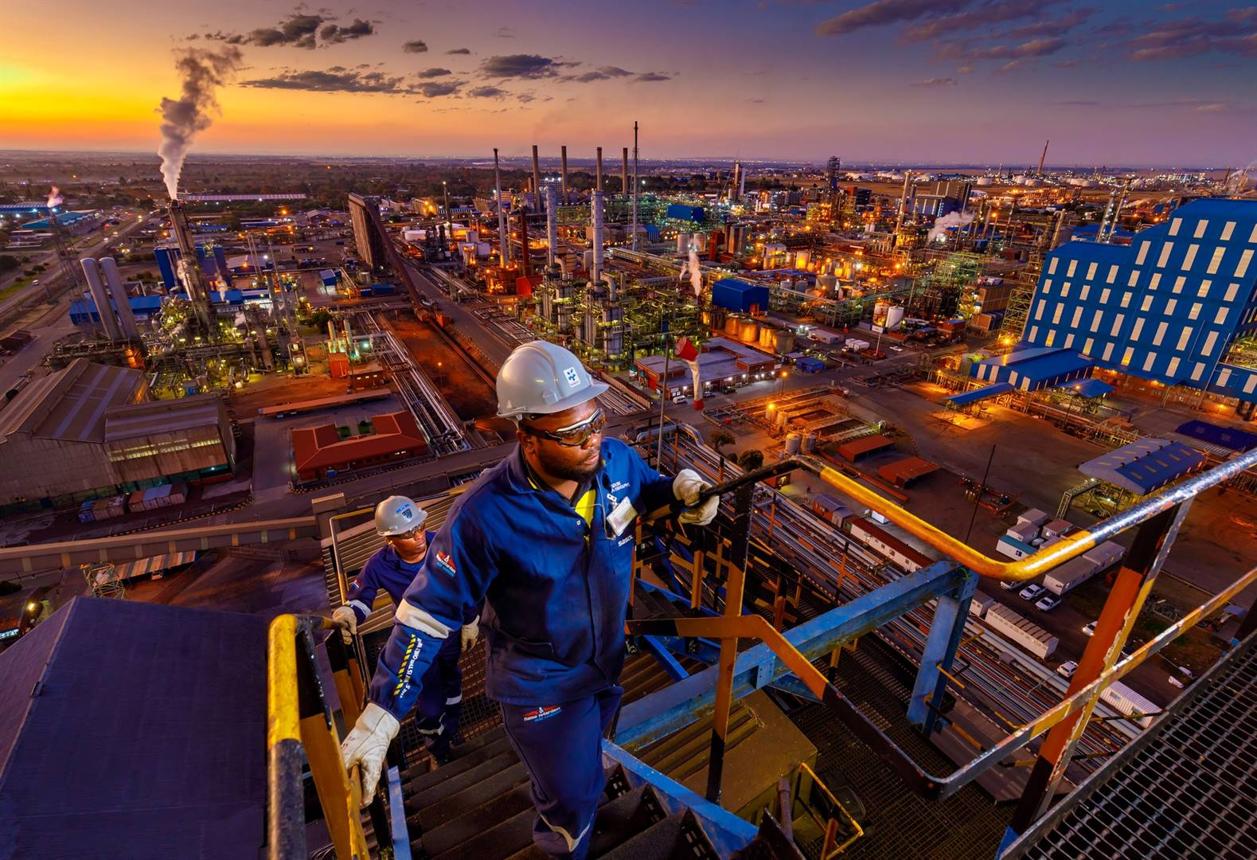
Its major production facilities are located in South Africa, Mozambique and the United States, while its commercial footprint extends across Europe, Asia, North America, Latin America and the Middle East.
This international presence enables the company to serve multinational manufacturers while strengthening Africa's position within global industrial value chains.
Why Sasol Matters
Sasol is more than an oil and chemicals company.
It represents decades of African engineering innovation, large-scale industrialisation and technological expertise. Through continuous investment in manufacturing, research and infrastructure, the company has become one of the continent's most strategically important industrial enterprises.
As industries increasingly seek cleaner production methods and more sustainable energy sources, Sasol is investing heavily in technologies designed to reduce emissions while maintaining reliable energy and chemical supplies for businesses worldwide.
Inside Sasol
Integrated Operations, Strategic Assets and the Technologies Driving Industrial Growth
An Integrated Business Model
Sasol is not simply a producer of fuels or chemicals — it operates an integrated value chain that spans resource extraction, processing, manufacturing, technology development and global distribution. This model allows the company to extract greater value from raw materials while maintaining tighter control over quality, efficiency and supply.
Its business is organised around two core pillars: Energy and Chemicals, supported by engineering, research, digital innovation and technology licensing.
The integration of these businesses enables Sasol to serve multiple industries from a single production ecosystem, reducing operational costs and creating resilience against fluctuations in individual markets.
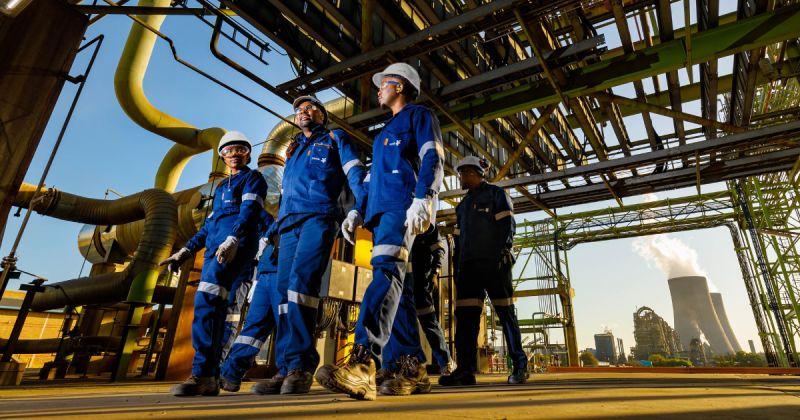
Business Segments
Energy
Sasol produces transport fuels, aviation fuel, diesel, petrol, liquefied petroleum gas (LPG), pipeline gas and electricity. The company also supplies industrial energy products to commercial customers across Southern Africa.
Through its integrated operations, Sasol plays a significant role in supporting energy security, particularly in South Africa and neighbouring markets.
Chemicals
The chemicals division manufactures hundreds of products used by industries around the world.
Its portfolio includes specialty chemicals, solvents, alcohols, polymers, surfactants, waxes and performance materials that serve sectors such as automotive manufacturing, construction, mining, agriculture, healthcare, packaging and consumer goods.
Rather than selling directly to consumers, Sasol's chemicals are the building blocks used by manufacturers to create thousands of everyday products.
Strategic Operations
Sasol's industrial footprint is anchored by several world-class production facilities.
Located in Mpumalanga, South Africa, Secunda is among the world's largest integrated synthetic fuels and chemicals complexes. The facility converts coal into liquid fuels and chemical feedstocks while supplying products to both domestic and international markets.
Sasolburg serves as one of the company's major chemical manufacturing hubs, producing industrial chemicals, polymers and speciality products that feed multiple manufacturing industries.
Natural gas produced in Mozambique provides an important feedstock for Sasol's energy and chemical businesses. Cross-border gas infrastructure also supports industrial customers and power generation within Southern Africa.
Located in Louisiana, the Lake Charles complex significantly strengthened Sasol's international chemicals business. The facility produces high-value chemical products supplied to customers across North America and global export markets.
Technology as a Competitive Advantage
One of Sasol's greatest strengths lies in its proprietary technologies.
Over decades, the company has developed expertise in converting coal and natural gas into liquid fuels and high-value chemicals through advanced processing technologies.
These capabilities have established Sasol as one of the world's recognised leaders in synthetic fuel production and industrial process innovation.
Alongside its manufacturing operations, the company continues to invest in research, digital technologies, automation and process optimisation to improve operational efficiency and product quality.
Global Market Reach
Although headquartered in Africa, Sasol's commercial footprint extends across Europe, Asia, North America, Latin America and the Middle East.
Its customers include manufacturers, mining companies, construction firms, chemical producers, automotive companies, consumer goods manufacturers and industrial processors.
This diversified customer base reduces dependence on any single market while strengthening Sasol's position within global industrial supply chains.
The Competitive Edge
Sasol's long-term competitiveness is built on several strategic advantages:
- An integrated energy and chemicals value chain.
- Decades of engineering and process innovation.
- Proprietary synthetic fuels technology.
- Large-scale industrial manufacturing capacity.
- A diversified international customer base.
- Strong technical expertise in energy and chemical production.
- Continuous investment in operational efficiency and digital transformation.
Together, these strengths have enabled Sasol to remain one of Africa's most influential industrial companies while adapting to changing global energy and manufacturing trends.
The Road Ahead
Decarbonisation, Capital Investment and the Commercial Opportunities Around Sasol
A Company at an Industrial Crossroads
Sasol is entering a defining period in its history.
For decades, its competitive strength has been built around an integrated model that relies heavily on coal, natural gas and large-scale industrial processing. But the global energy system is changing rapidly. Governments, investors and industrial customers are demanding lower-emission production, while South Africa is simultaneously seeking greater energy security and industrial competitiveness.
For Sasol, the challenge is therefore twofold: maintain the scale and reliability of its existing businesses while transforming the company for a lower-carbon industrial economy.
This transition is becoming one of the company's most important strategic priorities.
The Energy Transition
Sasol has committed to reducing the emissions intensity of its operations and is pursuing several pathways to achieve this.
The company is increasing its use of renewable electricity, improving energy efficiency and exploring technologies that can reduce its dependence on coal.
One of the most significant opportunities is green hydrogen.
Produced using renewable electricity, green hydrogen could eventually support cleaner industrial processes, sustainable fuels and chemicals production. Sasol's existing expertise in hydrogen, Fischer–Tropsch technology and large-scale industrial processing gives it a potentially significant role in developing this emerging value chain.
The company is also examining opportunities around sustainable aviation fuel and other lower-carbon products, positioning its technology base for markets where demand for cleaner alternatives is expected to grow.
Capital, Projects & Commercial Opportunities
Sasol's transformation is creating a broad ecosystem of potential commercial activity. The company's large industrial footprint requires continuous investment in infrastructure, engineering, maintenance and technology. Potential areas of opportunity include:
Plant upgrades, infrastructure development, engineering services and specialised construction.
Mechanical, electrical, instrumentation, inspection and maintenance services across major production facilities.
Solar power, wind generation, transmission infrastructure, energy storage and related services.
Industrial automation, process optimisation, artificial intelligence, cybersecurity and digital monitoring.
Emissions management, water treatment, waste management, environmental monitoring and rehabilitation.
Transportation, warehousing, industrial materials handling and specialised logistics.
Engineering consultancy, project management, environmental consulting, financial advisory and technical services.
For contractors, technology companies, manufacturers and investors, understanding Sasol's strategic direction can therefore provide an early view of where future commercial demand may emerge.
Investment Considerations
Sasol's scale provides significant advantages, but its transformation also presents material challenges.
The company remains exposed to commodity prices, energy costs, regulatory changes and the capital requirements associated with transforming large industrial assets.
Its coal-intensive operations also expose it to increasing pressure from climate policy and investors seeking lower-carbon businesses.
At the same time, Sasol's existing infrastructure, technical expertise and established customer relationships provide assets that could become increasingly valuable as the company transitions into cleaner energy and chemicals markets.
The central investment question is therefore not simply whether Sasol can maintain its existing business, but whether it can successfully transform its industrial capabilities into competitive businesses for the next generation of energy and chemicals demand.
Sasol Through The Project Herald Lens
For The Project Herald, Sasol represents more than a company to profile.
It is a strategic intelligence subject.
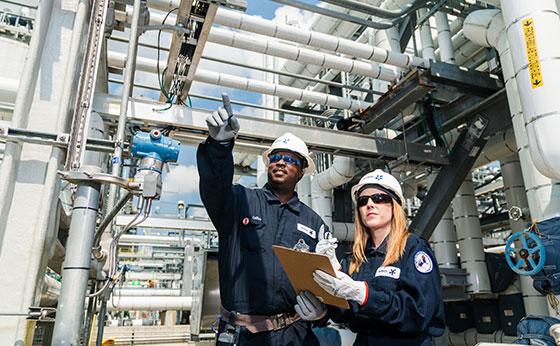
Its activities provide signals across several areas that matter to businesses and investors: energy security, industrial infrastructure, chemicals manufacturing, renewable energy, hydrogen, engineering procurement, capital expenditure and Southern Africa's broader industrial transition.
Tracking Sasol's announcements, procurement activity, investment decisions, partnerships and project milestones can therefore provide useful intelligence well beyond the company's own operations.
- For contractors, it can reveal potential project and procurement opportunities.
- For investors, it provides insight into capital allocation and the energy transition.
- For policymakers, Sasol's transformation offers a window into the practical challenges of decarbonising a major industrial economy.
- For businesses across its supply chain, changes in Sasol's investment priorities can signal where future demand may develop.
The Project Herald Intelligence — Why Watch Sasol?
| Industry: | Energy & Chemicals |
| Headquarters: | South Africa |
| Strategic Focus: | Energy, Chemicals, Industrial Transformation & Decarbonisation |
| Key Intelligence Areas: | Capital Projects • Renewable Energy • Hydrogen • Chemicals • Procurement • Industrial Infrastructure |
"Sasol's transition from a carbon-intensive integrated energy and chemicals company toward a lower-carbon industrial model could reshape its project pipeline, supplier ecosystem and capital requirements over the coming years."
For companies positioned around energy transition, engineering, infrastructure, technology and industrial services, Sasol is therefore a company worth watching.
The Bottom Line
Sasol's next chapter will not be defined solely by the fuels and chemicals it produces today, but by how successfully it converts its industrial scale, technology and infrastructure into opportunities within tomorrow's energy economy.