Johannesburg — 14 August 2026
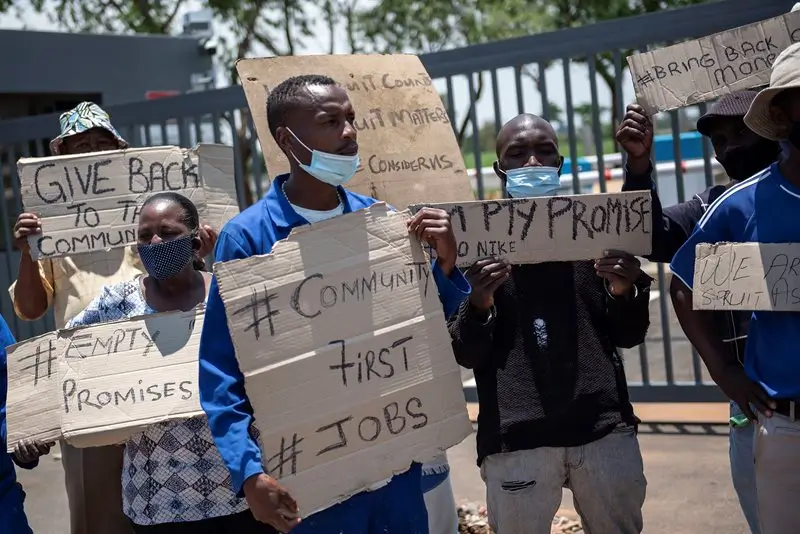
South Africa’s economy delivered one of its more contradictory weeks in recent memory: a headline unemployment rate that pushed further past the 30% mark, sitting alongside payment and tourism data suggesting the economy hasn’t stalled entirely — just isn’t translating activity into jobs.
The Number That Dominated
Statistics South Africa’s Quarterly Labour Force Survey put the official unemployment rate at 33.6% for the second quarter of 2026, up from 32.7% in the first quarter. The ranks of the unemployed grew by roughly 345,000 people to about 8.5 million, while the number of people actually in work fell by 16,000 over the same period.
KPMG South Africa’s lead economist, Frank Blackmore, framed the problem plainly: the country isn’t just failing to recover jobs lost in previous downturns — it isn’t generating enough underlying growth to create new ones in the first place. That distinction matters for how the numbers should be read. This isn’t a temporary setback from a single bad quarter; it’s a structural gap between the pace of economic expansion and the pace of population growth entering the labour market.
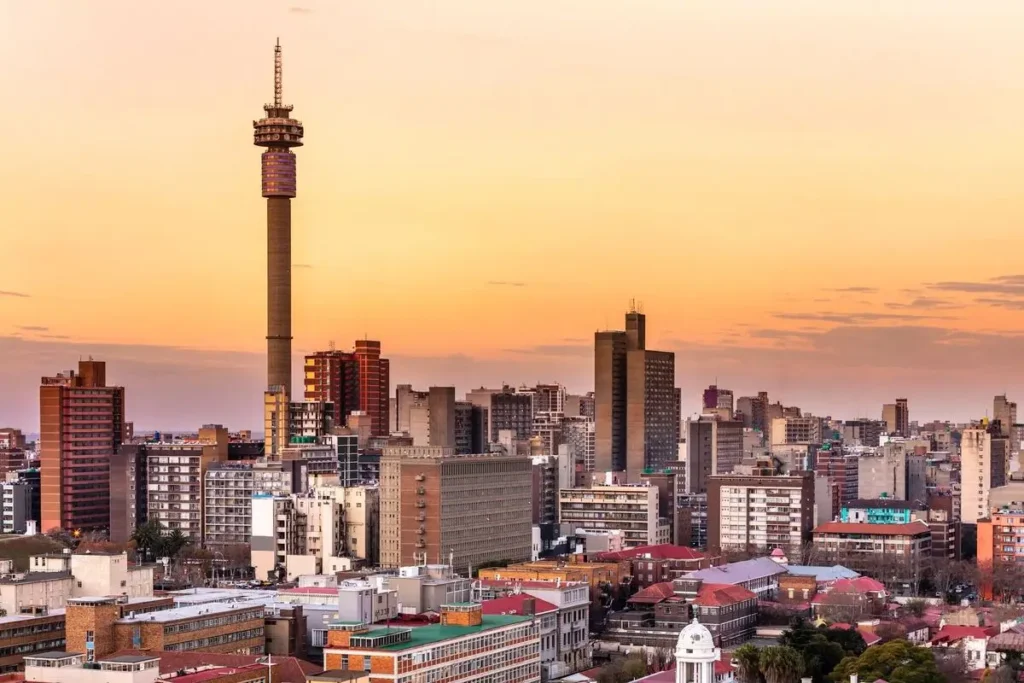
Johannesburg, South Africa
A Flicker of Momentum
Away from the unemployment print, a smaller but closely watched gauge told a slightly different story. The PayInc Economic Index — which tracks real payment flows across the economy rather than survey responses — climbed to 102.7 in July, recovering from declines in May and June and running 0.9% above where it stood a year earlier. Lower fuel prices over the month appear to have given households and businesses some breathing room.
Independent economist Elize Kruger cautioned against reading too much into a single month, however, noting that fuel prices remain exposed to international oil-market swings and that geopolitical uncertainty continues to weigh on the broader investment and hiring outlook.
Manufacturing Still Losing Ground
Manufacturing output fell 1.7% year-on-year in June, following a downwardly revised 4.4% decline in May. Food and beverage producers accounted for much of the drag, compounding a familiar list of constraints: high input costs, logistics bottlenecks, and soft domestic demand. On a seasonally adjusted quarter-on-quarter basis, output slipped 1.5% — enough that the sector likely subtracted from overall growth in the second quarter. Investec economist Lara Hodes noted the June figure beat consensus expectations of a steeper decline, but said it still points to a sector struggling to build real momentum. Confidence among manufacturers, measured by the Absa Manufacturing Survey, held at a weak reading of 31 for the quarter.
Mining’s Paradox: Higher Prices, Lower Output
Mining offered its own version of the same underlying story. The value of South Africa’s mineral sales jumped 27.2% year-on-year in June, driven heavily by the surge in gold prices — but actual mining production fell 4% over the same period, with platinum group metals, coal and iron ore among the biggest drags. Higher global commodity prices are lifting the rand value of what South Africa exports without the country necessarily digging up and shipping more of it — a gap that persistent rail capacity constraints do much to explain.
Tourism’s Slower-Burn Opportunity
Tourism offered a rare piece of unambiguously good news. South Africa welcomed a record 10.5 million international visitors in 2025, with the sector now estimated to support around 1.8 million direct and indirect jobs and contribute close to 9% of GDP. The emerging policy conversation is less about attracting more visitors and more about ensuring more of that spending reaches local businesses and communities — turning tourism into a steadier, year-round contributor rather than a seasonal spike.
The Bigger Question: What About AI?
Hanging over all of this is a slower-moving structural question: how artificial intelligence reshapes the employment equation from here. AI adoption promises real productivity gains for South African businesses, but productivity gains and job creation don’t automatically move together — a company that becomes more efficient can just as easily do more with fewer people as it can expand and hire. For an economy already 8.5 million people short on employment, which way that trade-off breaks will matter far more than the technology itself.
The Herald View
None of this week’s data points in a single direction, and that’s arguably the more honest picture of where South Africa’s economy actually stands. Payment activity is improving. Tourism is growing. Commodity export values are up. But manufacturing is still contracting, mining production remains capacity-constrained rather than demand-constrained, and unemployment keeps climbing regardless.
For businesses and investors tracking South Africa, the metric to watch over the coming months isn’t GDP in isolation — it’s whether investment is converting into actual production, whether production is converting into hiring, and whether the tentative signs of life in spending data can survive contact with a labour market that has shown little sign of turning yet.
Reporting drawn from Statistics South Africa’s Q2 2026 Quarterly Labour Force Survey, the PayInc Economic Index, the Absa Manufacturing Survey, and commentary from KPMG South Africa, Investec, and independent economists. Compiled by The Project Herald, 14 August 2026.
Read more news: https://www.theprojectherald.com/africas-biggest-capital-raises-to-watch-in-2026/