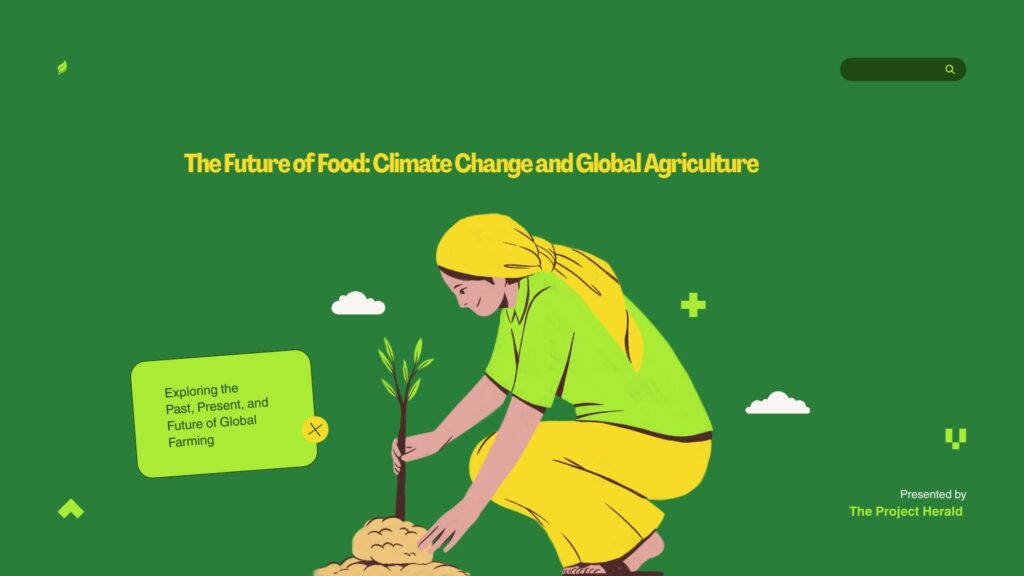
Climate change is often discussed in terms of rising temperatures, melting glaciers, and extreme weather events. However, one of its most significant impacts may be felt much closer to home: on the food people eat every day.
From coffee farms in South America to rice fields in Asia and wheat-producing regions in Europe, changing weather patterns are altering how food is grown, where crops can survive, and how much consumers ultimately pay at the market.
As global temperatures continue to rise, scientists, farmers, and policymakers are increasingly focused on a critical question: how will climate change reshape the future of food?
A Changing Climate for Agriculture
Agriculture has always depended heavily on stable weather conditions. Crops require specific combinations of temperature, rainfall, sunlight, and soil conditions to thrive.
Climate change is disrupting those conditions in many parts of the world. Heatwaves are becoming more frequent, droughts are lasting longer, and intense rainfall events are damaging farmland and reducing harvests.
These changes are making farming more unpredictable and increasing the risks faced by food producers.
In many regions, farmers are already adapting by changing planting schedules, switching crop varieties, and investing in new irrigation systems.
Why Food Prices Are Becoming More Volatile
When harvests decline due to extreme weather, food supplies often become tighter.
Lower production can lead to higher prices, particularly for staple foods that millions of people depend on daily. Climate-related disruptions can also affect transportation networks, storage facilities, and supply chains, further increasing costs.
As a result, weather events occurring thousands of kilometers away can influence food prices around the world.
Many experts believe climate change could become one of the most important long-term drivers of food inflation during the coming decades.
Coffee Faces an Uncertain Future
Coffee is among the crops most frequently cited in climate change discussions.
Coffee plants require specific temperature ranges and rainfall patterns. As temperatures rise, many traditional coffee-growing regions are becoming less suitable for cultivation.
Researchers have warned that some areas currently used for coffee production may experience declining yields in the future, forcing growers to move to higher elevations or adopt new farming methods.
For consumers, this could eventually mean higher prices and changes in global coffee supply.
Cocoa Production Under Pressure
Chocolate lovers may also feel the effects of climate change.
Cocoa production is concentrated in tropical regions that are particularly sensitive to changing weather conditions. Higher temperatures, irregular rainfall, and increased pest activity could affect yields in some of the world’s most important cocoa-growing areas.
Farmers are increasingly exploring climate-resistant farming techniques to protect production and maintain long-term sustainability.
Rice and Wheat Face Growing Risks
Rice and wheat are among the world’s most important staple foods, feeding billions of people every year.
Both crops are vulnerable to extreme weather. Prolonged droughts can reduce yields, while floods and excessive rainfall can damage crops before harvest.
Because these staples play such a central role in global food security, disruptions in production can have far-reaching economic and social consequences.
Governments and agricultural researchers are investing heavily in developing crop varieties that can better withstand heat, drought, and disease.
Fisheries and Seafood Are Changing Too
Climate change is affecting more than crops.
Rising ocean temperatures are altering marine ecosystems and changing the migration patterns of many fish species. Some fishing communities are finding that traditional fishing grounds are becoming less productive as species move to cooler waters.
Ocean acidification, caused by increasing carbon dioxide levels, is also creating challenges for shellfish and other marine organisms.
These changes could affect seafood availability and reshape fishing industries around the world.
The Rise of Climate-Resilient Crops
As environmental conditions become more challenging, interest in climate-resilient crops is growing.
Scientists are developing crop varieties that can tolerate higher temperatures, use water more efficiently, and resist pests and diseases. Farmers are also experimenting with alternative crops better suited to changing conditions.
Advances in agricultural technology, including precision farming and data-driven irrigation systems, are helping producers improve efficiency while reducing environmental impacts.
Technology’s Growing Role in Food Security
Technology is expected to play an increasingly important role in protecting global food supplies.
Artificial intelligence, satellite monitoring, weather forecasting, and biotechnology are providing farmers with new tools to manage risks and improve productivity.
Controlled-environment agriculture, including vertical farming and advanced greenhouse systems, is also gaining attention as a way to produce food in areas facing climate-related challenges.
While these solutions may not replace traditional farming, they could become important parts of future food systems.
What Consumers Can Expect
The effects of climate change on food will not be felt equally across all regions.
Some areas may benefit from longer growing seasons, while others may experience declining agricultural productivity. However, experts generally agree that food systems will become increasingly influenced by climate-related risks.
Consumers are likely to encounter changing food prices, shifts in product availability, and greater attention to sustainable food production.
Governments, businesses, and agricultural communities will face growing pressure to adapt to these new realities.
Feeding a Changing World
The challenge of feeding a growing global population while managing the impacts of climate change is one of the defining issues of the 21st century.
Food production systems have repeatedly adapted to changing conditions throughout history. However, the speed and scale of current climate changes present unprecedented challenges.
The decisions made today—regarding agricultural investment, technology, sustainability, and climate policy—will help determine whether future generations can enjoy secure, affordable, and reliable access to food.
As climate change continues to reshape the world’s farms, oceans, and food supply chains, the future of food is becoming one of the most important stories of our time.
More News: https://www.theprojectherald.com/the-global-shift-away-from-fossil-fuels-who-leads/