THE FAILURE FILE — ISSUE 001
The Night Macondo Failed: The Fire Was the Final Event
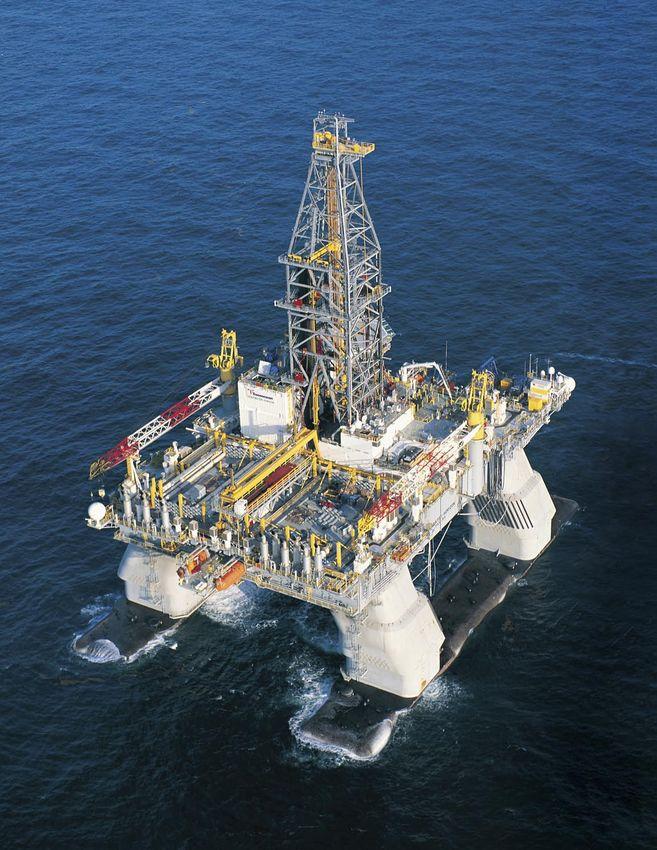
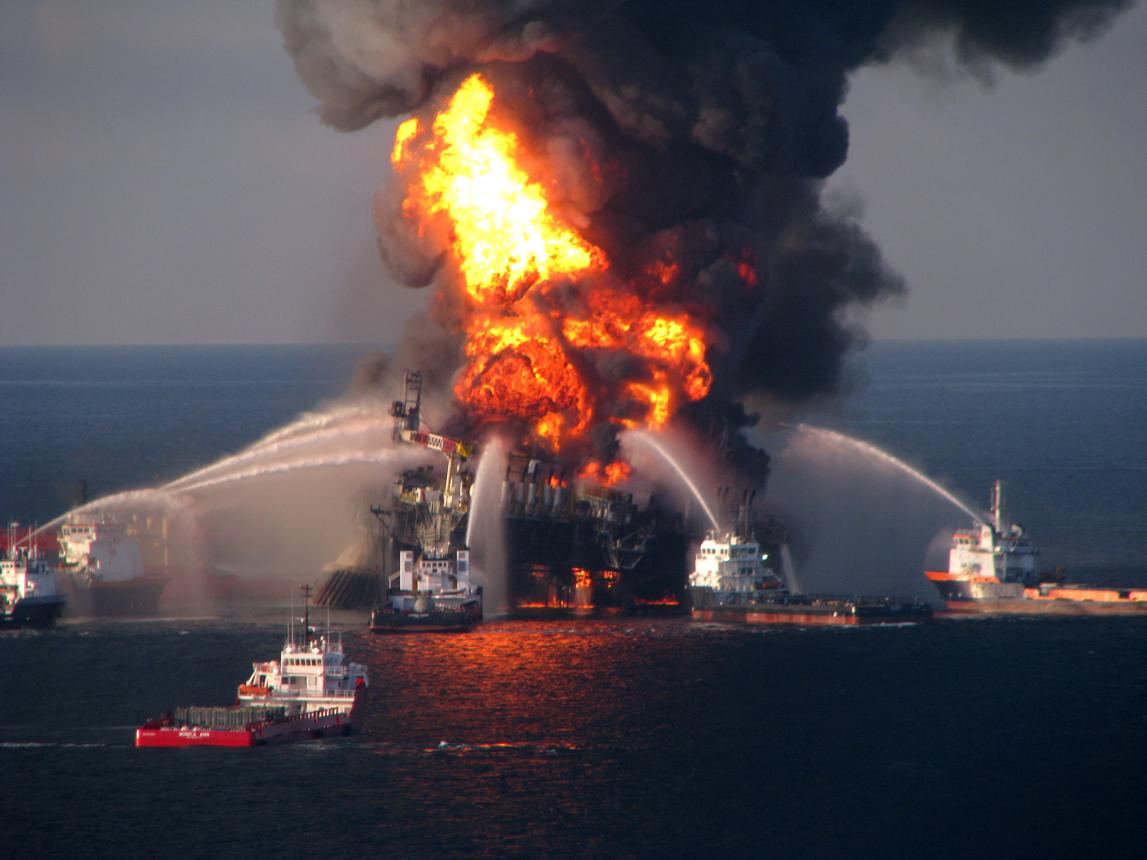
At approximately 9:49 p.m. on April 20, 2010, the Deepwater Horizon was engulfed by explosions.
The drilling unit had been operating on BP's Macondo well in the Gulf of Mexico. The operation was in its final stages of temporary abandonment after drilling had reached the hydrocarbon-bearing formation.
A Devastatingly Fast Sequence
The physical sequence was devastatingly fast. Formation fluids entered the well. The influx travelled upward. Hydrocarbons reached the rig. Gas escaped into areas where it could ignite. Explosions followed.
Eleven men were killed. Seventeen others were injured. The rig continued burning before eventually sinking on April 22.
The Macondo well, however, remained. It was now an uncontrolled source of oil and gas approximately 5,000 feet beneath the surface. For the next 87 days, the consequences of the original well-control failure continued to accumulate.
NOAA estimates that approximately 3.19 million barrels, or 134 million gallons, of oil entered the Gulf during the 87-day spill. More than 1,300 miles of shoreline were affected across five states.
More Than an Explosion Story
This is where the story becomes more complicated. It would be easy to tell Deepwater Horizon as an explosion story. A rig exploded. A blowout occurred. The BOP failed. Oil spilled.
But the official investigations revealed something much more consequential. The explosion was not an isolated mechanical event.
The National Commission identified a series of human, engineering and management failures. Among them were problems with the cement design, inadequate cement testing, temporary-abandonment decisions that reduced the well's margin of safety, an inadequately defined negative-pressure test, misinterpretation of that test, missed indications of the developing kick and an inadequate response after the blowout began.
The CSB examined the same disaster from the perspective of process safety. Its investigation found inadequate management of change, insufficient treatment of major-accident hazards, weak safety-performance indicators and excessive reliance on manual intervention during emergencies.
The two investigations point toward the same uncomfortable conclusion.
The disaster did not begin when the rig exploded. It began when the project accumulated more risk than its barriers could reliably absorb.
That is the central question of this issue:
How does a sophisticated, capital-intensive industrial project move from normal operation to irreversible failure without someone stopping it first?
The answer is not one decision. It is a chain. And the chain begins below the surface.
THE FAILURE FILE — ISSUE 001
11 Lives: The People Inside the System
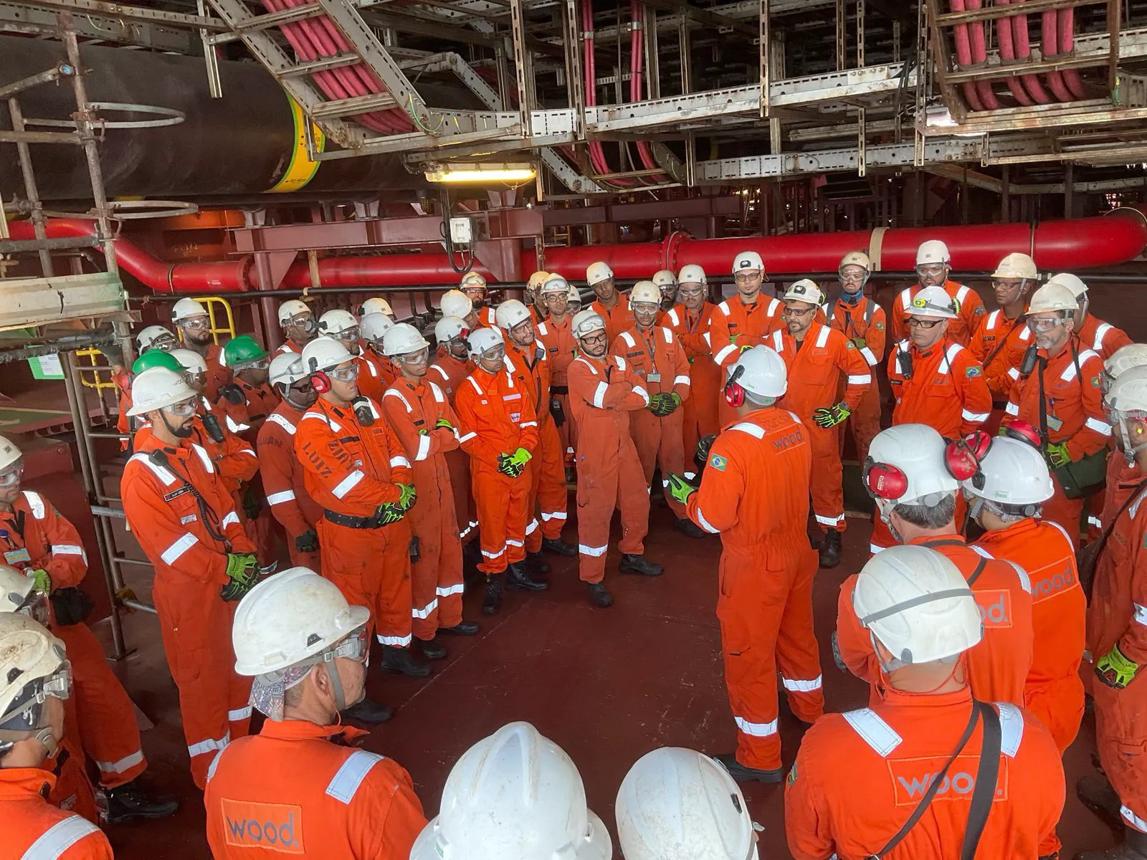
Before Macondo became an environmental disaster, a regulatory reckoning or a multibillion-dollar liability, it was a workplace. Eleven people went to work and did not return. Seventeen others survived with injuries.
That fact should remain at the centre of the story.
The Language That Creates Distance
Industrial investigations naturally move toward technical language: cement stability, pressure differential, well control, BOP shear capability, hydrocarbon migration, management of change, safety indicators. These terms are necessary because they explain how the accident occurred. But they can also create distance between the reader and the human consequence.
The workers on Deepwater Horizon were operating inside a complex industrial system designed to make drilling possible thousands of feet beneath the sea. They depended on the integrity of that system. They depended on the well being controlled. They depended on the crew recognising abnormal conditions. They depended on emergency equipment. They depended on the rig remaining a safe workplace.
And, ultimately, they depended on multiple layers of protection continuing to work when the normal operating assumptions broke down.
Why Major Accidents Are Different
That is what makes major-accident prevention different from ordinary workplace safety. A worker can follow a procedure correctly and still be exposed to a catastrophic event created somewhere else in the system.
A drilling crew can be competent. A contractor can be experienced. A piece of equipment can be certified. A company can report good personal-safety statistics. And yet the project can still contain a major-accident hazard.
The CSB later highlighted precisely this distinction when it examined the industry's emphasis on personal-safety metrics compared with indicators capable of revealing major process-safety risks.
That distinction matters because the ultimate safety objective is not simply to prevent workers from being injured by routine hazards. It is to prevent the entire system from entering a state in which dozens of people suddenly become exposed to an uncontrollable event.
The human tragedy of Macondo therefore cannot be separated from its engineering. The 11 deaths were the consequence of a system that failed to maintain control.
The Better Question
And that changes the question. Instead of asking only:
Who made the final mistake?
We should ask:
What conditions allowed the final mistake to become fatal?
That is a much harder question. It is also the question that matters most to future projects.
THE FAILURE FILE — ISSUE 001
The Well: Macondo Was a High-Value System Under Pressure
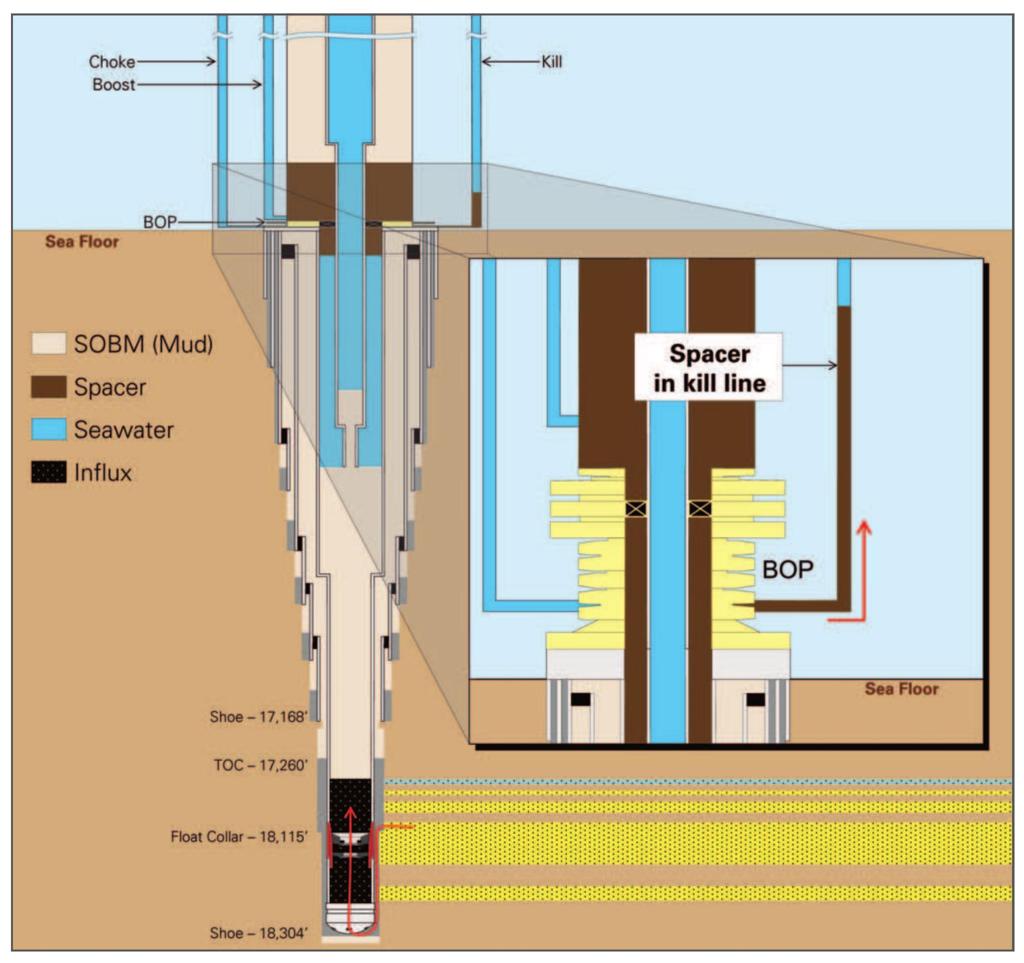
Macondo was not simply a hole drilled into the seabed. It was a temporary pressure-containment system.
The Deepwater Horizon was operating in approximately 5,000 feet of water, with the well extending much deeper beneath the seabed.
An Unforgiving Environment
The technical environment was unforgiving.
- The well had to withstand high pressures.
- Hydrocarbons had to remain isolated.
- Drilling fluid had to provide sufficient hydrostatic pressure.
- Cement had to establish reliable isolation.
- Casing had to remain structurally sound.
- The crew had to monitor the well.
- The BOP had to remain capable of emergency intervention.
And the entire system had to continue functioning while the project transitioned from drilling toward temporary abandonment.
Decisions That Interact
The complexity matters because each decision affected another part of the system. Changing the well configuration changed the pressure conditions. Changing the pressure conditions changed the demands placed on the barriers. Changing the barriers changed the importance of monitoring. Changing the sequence changed what the crew needed to understand.
This is one of the defining characteristics of major projects:
The risk is often created by interactions between decisions rather than by one decision considered in isolation.
A cement design might look reasonable on paper. A temporary-abandonment step might look reasonable on its own. A decision to remove drilling mud might appear operationally convenient. A pressure test might appear to confirm integrity. But when those decisions interact, the risk profile can change dramatically.
The National Commission's reconstruction found that BP's temporary-abandonment procedures called for removing drilling mud from the well before additional barriers had been established, increasing the well's vulnerability once the cement barrier failed.
This is important because the disaster was not simply about the presence of a weak barrier. It was about what the rest of the system was doing at the moment that barrier was challenged.
A strong safety architecture assumes that barriers can fail. A weak architecture assumes that because one barrier exists, the others will not be needed.
Macondo demonstrated the difference. The project had barriers. The problem was that the barriers did not form the resilient chain of protection that the operation required.
THE FAILURE FILE — ISSUE 001
One Well. Many Companies.: BP. Transocean. Halliburton.
Macondo was executed through an ecosystem of companies. BP was the operator of the well. Transocean operated the Deepwater Horizon drilling unit. Halliburton was responsible for the cementing operation. Other contractors and specialist companies formed part of the broader drilling and service environment.
Specialisation Does Not Divide Risk
That structure is normal in modern energy development. No major offshore operator performs every technical activity internally. Specialisation is economically rational. It allows operators to access drilling expertise, cementing technology, subsea equipment, engineering capability, marine services and specialised personnel without owning every capability themselves.
But the risk created by a project does not divide itself according to the commercial structure. The reservoir does not care who designed the cement. The pressure does not care which company employs the driller. The gas does not care which contractor owns the equipment. And the environmental liability does not stop at the edge of a service contract.
The Contractor Interface
This is why contractor management is one of the deeper lessons of Macondo. The National Commission described the disaster as involving an overarching management failure involving BP, Halliburton and Transocean, rather than identifying one isolated company as the sole cause.
The implication for modern projects is significant. A contract can transfer responsibility for performing a task. It does not necessarily transfer the consequence of failure. The operator still has to understand how contractor activities interact with the asset's overall risk.
That means project governance must go beyond:
Who was awarded the contract?
It must ask:
- Who understands the hazard?
- Who owns the barrier?
- Who verifies the barrier?
- Who receives the test result?
- Who has authority to reject the result?
- Who can stop the operation?
- Who escalates a disagreement?
- Who owns the consequence if the interface fails?
The most dangerous sentence in a complex project may be: "That is their responsibility."
Because responsibility can be fragmented while risk remains shared. Macondo showed what happens when the project is treated as a collection of contractual responsibilities rather than one integrated risk system.
The African Lens
The lesson is particularly relevant to Africa, where major offshore developments increasingly involve international operators, national oil companies, drilling contractors, international service companies and local subcontractors. The more complex the contractor ecosystem becomes, the more important the interfaces become.
THE FAILURE FILE — ISSUE 001
The Countdown: The Plan Kept Changing
The final days of Macondo were not governed by one fixed plan. The temporary-abandonment plan evolved.
The CSB found that the plan was changed five times during the week before the disaster and found no available documentation showing that appropriate management-of-change procedures or formal hazard assessments had been conducted for those changes.
Five changes in one week. No documented management-of-change procedure. No formal hazard assessment.
That finding goes to the heart of project governance.
Change Is Not the Problem
Projects change. They have to. A project that cannot adapt to new information will eventually fail for a different reason. The problem is not change itself. The problem is changing the system without fully understanding what the change does to risk.
- A sequence change can alter pressure exposure.
- A design change can affect a safety margin.
- A procurement substitution can change equipment reliability.
- A schedule change can create operational pressure.
- A change in contractor personnel can alter competence.
- A change in scope can invalidate an earlier hazard assessment.
- A change in operating conditions can make yesterday's procedure inappropriate.
Make Change Visible
The proper response is not to freeze the project. It is to make change visible. A robust management-of-change system should force the project to answer:
- What is changing?
- Why is it changing?
- Which assumptions are no longer valid?
- Which barriers are affected?
- What new hazards are introduced?
- What controls are required?
- Who approves the change?
- What evidence is required before execution?
The Dangerous Gap
At Macondo, the problem was that the operational plan changed faster than the formal risk-management system around it. That creates a dangerous gap. The project continues operating. The paperwork says the project is controlled. But the actual system has moved somewhere the original risk assessment never examined.
That gap is one of the most important forms of hidden project risk. It exists far beyond drilling. It appears in construction. In mining. In power. In LNG. In infrastructure. In manufacturing. In project finance.
Whenever the project changes, the risk model must change with it. Otherwise, management is controlling yesterday's project.
THE FAILURE FILE — ISSUE 001
The Barrier System: How the Well Was Supposed to Stay Contained
The basic objective of the Macondo well was straightforward:
Keep formation fluids inside the well.
Achieving that objective required multiple layers of protection.
Layers of Protection
- The cement was intended to provide isolation.
- The drilling fluid helped maintain pressure control.
- The casing and well architecture provided structural and pressure barriers.
- Monitoring systems were intended to identify abnormal conditions.
- Well-control procedures were intended to respond to an influx.
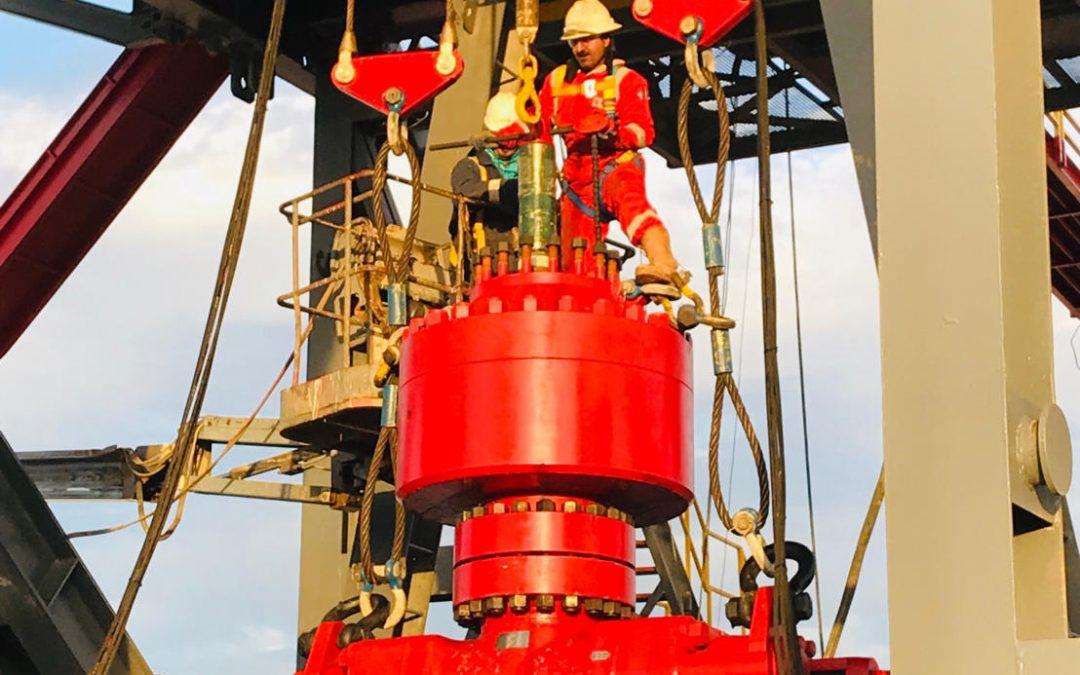
- The BOP provided emergency mechanical control.
- The rig's emergency systems existed to mitigate the consequences if hydrocarbons reached the surface.
What Is a Barrier?
This is what engineers mean when they talk about barriers. A barrier is not necessarily a piece of equipment. It can be hardware. Software. A procedure. A competent person. A test. A monitoring system. An organisational control.
The CSB's Macondo investigation explicitly treated safeguards as extending beyond physical equipment into operational and organisational elements.
The Dangerous Assumption
That matters because projects often make a dangerous assumption:
If the barrier exists, the risk is controlled.
Not necessarily. A barrier can be degraded. It can be bypassed. It can be misunderstood. It can be incorrectly configured. It can be unavailable. It can be technically incapable of handling the actual failure mode. It can depend on a person responding perfectly under pressure.
The real question is therefore not:
Do we have a barrier?
It is:
Can we demonstrate that the barrier will perform its safety function under the conditions in which it may be needed?
That requires evidence: inspection, testing, competence, independent verification, maintenance, clear ownership, and a defined response when the evidence is not satisfactory.
Macondo became possible because the project progressively lost confidence in the integrity of its barriers without fully recognising that it had done so.
The tragedy was not simply that one barrier failed. It was that the remaining barriers were not able to reliably stop the failure from progressing.
THE FAILURE FILE — ISSUE 001
The Cement: The First Critical Barrier
At the bottom of the well sat one of the most important pieces of the entire operation. Cement.
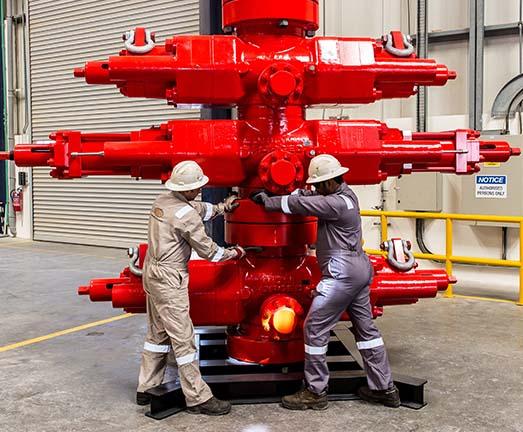
Its purpose was to isolate the hydrocarbon-bearing formation and prevent formation fluids from entering the well. The cement therefore had a safety function far beyond its material value. It was a barrier.
What the Commission Found
The National Commission concluded that the cement slurry used by BP and Halliburton was very likely unstable and found that BP and Halliburton did not adequately test the cement or review test results before pumping it.
The Commission also reconstructed the engineering circumstances that led to what it described as a "finesse" cement job. The project had encountered drilling difficulties. The well design had created constraints. The cementing programme had to work within those constraints. But the consequence of those decisions was that the reliability of the cement barrier became critical.
Where Technical and Commercial Decisions Meet
That is where technical and commercial decision-making meet.
- A project manager sees cost, schedule, technical feasibility and operational practicality.
- An HSE engineer sees barrier integrity and consequence of failure.
- A drilling engineer sees well architecture and pressure conditions.
- A contractor sees execution requirements.
- Senior management sees project delivery.
All of those perspectives are legitimate. The danger emerges when the project optimises the individual decision but fails to understand the combined consequence.
Cementing is a particularly useful example because it illustrates how a material that appears ordinary can become one of the most safety-critical elements of an enormous project. The cost of the cement is insignificant compared with the value of the well. The cost of testing is insignificant compared with the cost of losing the well. The cost of delaying the operation is insignificant compared with the cost of a major accident.
Yet project pressure can cause organisations to treat small operational decisions as if they exist separately from the larger risk system. Macondo demonstrates why they do not.
The real question was never simply:
Did the cement get pumped?
It was:
What evidence existed that the cement had created the barrier the project needed?
That question should have been decisive.
THE FAILURE FILE — ISSUE 001
The Test: The Negative-Pressure Test
A safety test is only as useful as the decision that follows it.
The negative-pressure test at Macondo was designed to determine whether the well was properly isolated. The operation created a controlled pressure condition intended to reveal whether formation fluids could enter the well.
The result was abnormal. That should have triggered a deeper investigation. Instead, the test was judged to have passed.
A Test Judged a Success
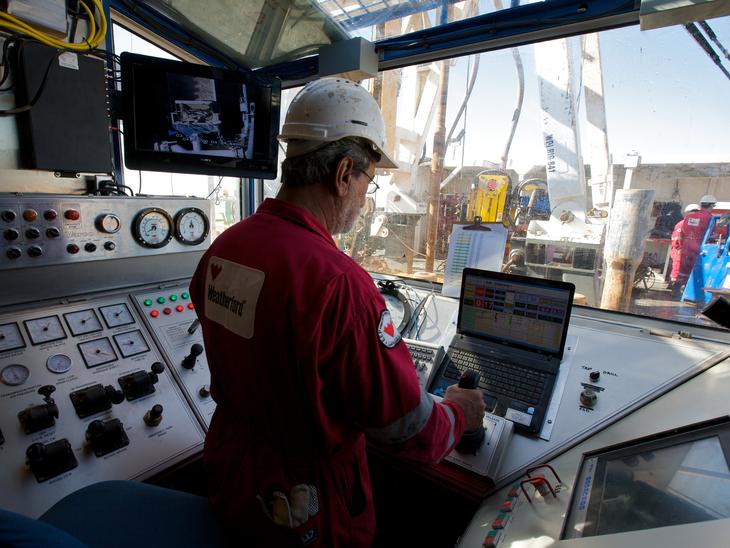
The National Commission concluded that the negative-pressure test indicated a cementing failure but was incorrectly judged a success because of insufficiently rigorous test procedures and inadequate training of key personnel.
The CSB later identified an even broader problem. There were no adequate written procedures defining how the negative-pressure test should be conducted, nor clear written criteria or safe limits for determining whether the test had succeeded.
That is an extraordinary weakness for a safety-critical test. Imagine a project spending billions of dollars developing an asset and then reaching a point where a critical test is performed without sufficiently explicit agreement on what constitutes failure.
That is not simply a testing problem. It is a governance problem.
Four Questions for Every Critical Test
What are we testing? The objective must be explicit.
What does pass look like? The acceptance criteria must be defined before the result arrives.
What does failure look like? Abnormal data must not become acceptable simply because the operation needs to continue.
Who can stop the job? A test is meaningless if nobody has authority to act on an adverse result.
The Pull Toward the Expected Result
Macondo demonstrates another important danger. When people expect a test to pass, ambiguous data can be unconsciously interpreted in the direction of the expected outcome. The human mind looks for explanations that preserve the working plan.
That is why safety-critical testing needs independence. The test must be designed to challenge the project, not confirm it. A good test is deliberately uncomfortable. It asks:
Prove that this barrier works.
And if the evidence does not prove it, the project stops.
That principle belongs everywhere: pressure testing, load testing, electrical testing, structural inspection, commissioning, software validation, fire-system testing, equipment certification. A test should never exist merely because the procedure requires a box to be ticked. Its purpose is to create a moment where the project is forced to confront reality.
At Macondo, reality was already beginning to contradict the plan. The organisation did not fully act on the contradiction.
THE FAILURE FILE — ISSUE 001
The Warning: The Data Were There
The most disturbing aspect of many major accidents is that the system often provides warnings before it fails. Macondo was no exception.
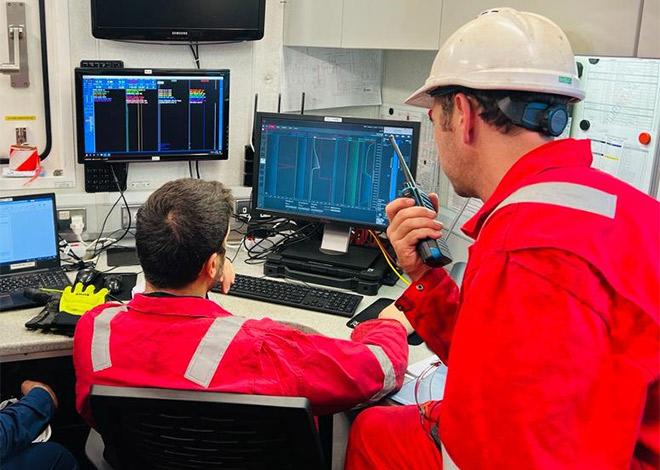
The National Commission found that the crew and mudloggers missed several signs of the developing kick during the last hour before the blowout.
The Last Window
This is important because a kick is a warning. It means formation fluid is entering the well. It does not automatically mean an explosion is coming. A kick can be detected. The well can be shut in. Pressure can be controlled. The influx can be circulated out. The operation can recover.
That is what makes the final hour so important. The disaster was not inevitable the moment hydrocarbons entered the well. There was still a window in which the system could have responded. But the window closed.
This is a recurring feature of major-project failures. There is often a period between the first abnormal condition and the irreversible event. That period is the project's last opportunity.
The organisation needs to recognise the signal. Interpret it correctly. Communicate it. Escalate it. And act. If any one of those steps fails, the warning may never become a decision.
Questions for Project Leaders
Macondo therefore raises a broader question for project leaders:
How does your organisation treat information that contradicts what management expects to see?
- Does the project investigate it? Or explain it away?
- Does the engineer have authority to challenge it?
- Does the contractor have a direct escalation route?
- Does the dashboard show it?
- Does the board know about it?
- Does the project have predetermined stop criteria?
The difference between a high-reliability organisation and a fragile organisation is often not the amount of information available. It is what happens when the information becomes uncomfortable.
A project that only rewards information confirming that everything is on schedule will eventually become blind to the signals that matter most.
The data at Macondo were not sufficient to save the project by themselves. Data never are. They needed interpretation. And interpretation needed a system capable of acting on bad news.
The project did not have enough of that when it mattered most.
The countdown was nearly over.
THE FAILURE FILE — ISSUE 001
The Last Hour: When a Well-Control Problem Became a Major Accident
The final hour aboard Deepwater Horizon illustrates how quickly the character of an industrial event can change.
A well-control problem is serious. A gas release on a drilling rig is something else entirely. The difference is the loss of containment.
From Pressure Management to Flammable Release
Once hydrocarbons begin moving from a controlled subsurface environment toward the rig, the project is no longer dealing solely with pressure management. It is dealing with a potential flammable release.
The National Commission's reconstruction identified several missed indications of the kick in the last hour before the blowout. The crew had opportunities to recognise that the well was flowing when it should not have been.
The critical failure was therefore not simply that hydrocarbons entered the well. The critical failure was that the project did not regain control before those hydrocarbons reached the surface.
That distinction is essential. A high-hazard project should be designed around the possibility that abnormal conditions will occur. The question is whether the system can recognise them while there is still time to intervene.
The Shrinking Margin of Time
Macondo demonstrates the shrinking margin of time. At the beginning, there were multiple options:
- Investigate the pressure.
- Stop the operation.
- Shut in the well.
- Confirm the flow.
- Re-establish control.
As the hydrocarbons moved upward, those options narrowed. Once gas reached the rig, the event became an emergency involving people, equipment and ignition sources. Once ignition occurred, prevention had failed. The project was now operating in the consequence-management phase.
Do the Systems Connect?
That transition is often underestimated. Management may have a well-control procedure. It may have an emergency response plan. It may have a fire plan. But the most important question is whether those systems connect.
- What happens between the moment the abnormality is detected and the moment emergency response takes control?
- Who makes the decision?
- What information reaches them? How quickly?
- What authority do they have?
- What automatic systems operate?
- What manual actions are required?
- What happens if the person expected to act is distracted?
The CSB concluded that hazard assessments at Deepwater Horizon relied too heavily on prompt, correct manual intervention during a blowout, describing reliance on human reaction alone during a highly distracting emergency as an unreliable safety layer.
A safety system should not depend on everyone making the perfect decision at the worst possible moment.
It should create enough redundancy that one mistake does not become a catastrophe. At Macondo, the system was running out of redundancy.
THE FAILURE FILE — ISSUE 001
The Blowout: When the Barrier Chain Broke
The physical sequence that produced the explosion can be described simply. Formation fluids entered the well. They travelled upward. The well began unloading. Mud and hydrocarbons reached the rig. Gas escaped. Ignition occurred.
But simplicity should not be confused with simplicity of cause.
The National Commission identified the blowout as the result of a series of failures rather than one isolated event. Its investigation identified the cement barrier, temporary-abandonment procedures, negative-pressure-test interpretation, missed kick indications and response to the blowout among the critical mistakes.
The Response After the Blowout
Once the blowout began, the operation moved into a new phase. The crew had to manage the flow.
The National Commission found that the crew did not immediately divert mud flow overboard and instead routed the flow through the mud-gas separator, a decision the Commission concluded may have increased the consequences.
This distinction is important. The purpose of an investigation is not to say:
If X had happened, everything would definitely have been fine.
Real industrial systems are more complicated. Instead, the investigation asks:
- What options existed?
- What were the consequences of each?
- What barriers were available?
- Which ones functioned?
- Which ones failed?
That is how project risk should be analysed.
Five Layers, Treated Separately
The blowout also demonstrates why prevention and mitigation must be treated as separate layers.
Prevention. Keep hydrocarbons from entering the well.
Detection. Recognise the influx.
Control. Shut in and regain control.
Containment. Prevent the release from reaching people and equipment.
Mitigation. If release occurs, prevent ignition and reduce consequences.
Macondo crossed through those layers. The project lost the ability to prevent the influx. It did not detect the influx early enough. It did not regain control before the hydrocarbons reached the surface. The final emergency barriers did not prevent catastrophe. And once the rig was lost, the environmental consequences expanded dramatically.
A component can fail without killing anyone. A system becomes catastrophic when there are not enough independent layers left to stop the failure.
That sequence matters because it demonstrates the difference between a failed component and a failed protection architecture.
THE FAILURE FILE — ISSUE 001
The BOP: The Last Mechanical Defence
The blowout preventer occupied a unique position in the Macondo system. It was the last major mechanical barrier capable of closing the well during the emergency.
That makes the BOP easy to misunderstand.
A Final Line of Defence
- A BOP is not supposed to compensate for poor well design.
- It is not supposed to replace good cement.
- It is not supposed to replace proper well monitoring.
- It is not supposed to compensate for a crew failing to recognise a kick.
It exists as a final line of defence. That distinction became painfully important on April 20.
What the CSB Found
The CSB's detailed investigation found that the BOP failed to seal the well during the emergency. It identified drill-pipe buckling as a critical mechanism that interfered with the blind shear ram's ability to cut and seal the pipe.
The investigation also identified safety-critical equipment problems that existed before the emergency. The CSB reported multiple wiring and battery problems in the BOP's subsea control system and found deficiencies in testing and management of emergency systems.
Safety-Critical Equipment Is Different
That produces a critical management lesson. Safety-critical equipment cannot be managed according to the same logic as ordinary equipment.
If a light fails, the operation may continue. If a convenience pump fails, there may be another. If the final emergency barrier fails, the consequences can be completely different.
Safety-critical equipment therefore requires:
- defined performance standards;
- specific inspection regimes;
- testing against the actual failure mode;
- documented degradation;
- independent verification;
- clear ownership;
- and management visibility.
The question is not:
Was the BOP maintained?
It is:
Was the BOP capable of performing its critical safety function under the conditions of the credible emergency?
That is a much higher standard. Macondo demonstrated why. The equipment existed. It was installed. It had a defined function. But the actual failure conditions exposed weaknesses that were not adequately understood.
This is one of the most powerful lessons in safety engineering:
A safety barrier must be tested against reality, not merely against the specification.
THE FAILURE FILE — ISSUE 001
The Fire: When the Technical Failure Became a Human Catastrophe
At this point, the technical chain became a human disaster. Hydrocarbons had escaped from the well. Gas had reached the rig. Ignition occurred. The Deepwater Horizon was engulfed.
The workers aboard were suddenly confronted with an event that had moved far beyond ordinary operational control.
Preventable Does Not Mean Predictable
The National Commission concluded that the blowout and explosion were preventable. That word matters. Preventable does not mean predictable in every detail. It means there were opportunities within the system to avoid the outcome.
A major accident is rarely a single moment when somebody could have pressed one button and saved everyone. Prevention usually exists as a series of opportunities:
- The well design could have been different.
- The cement could have been more robustly evaluated.
- The temporary-abandonment sequence could have maintained more protection.
- The negative-pressure test could have been treated differently.
- The kick could have been recognised earlier.
- The well could have been shut in.
- The flow path could have been handled differently.
- The BOP could have had greater emergency reliability.
Defence in Depth, or Defence in Theory
Each opportunity matters. But the most important lesson is that the opportunities are interconnected. If one barrier fails, the next must still work. If the next fails, another must remain. That is the philosophy behind defence in depth.
Macondo shows what happens when defence in depth becomes defence in theory.
The workers were not killed because one safety rule was missing. They were killed because the project entered a condition where several protective layers failed to prevent escalation.
The explosion therefore deserves to be understood as the endpoint of a process. The fire was not the beginning of the accident. It was the moment the accumulated risk became physically visible.
For the 11 Men Who Died
For the workers, there was no distinction between engineering failure and organisational failure. The consequences were immediate. For the rest of the world, the distinction became important only afterward.
Investigators would spend years reconstructing the decisions. Regulators would redesign the offshore safety system. Companies would revise procedures. Investors would calculate the financial exposure. But for the 11 men who died, the chain ended that night.
That is why every discussion of process safety should ultimately return to its purpose. Not compliance. Not statistics. Not reputation.
People going home.
THE FAILURE FILE — ISSUE 001
April 22: When the Rig Went Down
Two days after the explosions, Deepwater Horizon sank. The rig was gone. The well was not.
That distinction transformed the incident from an offshore rig catastrophe into a prolonged environmental emergency.
A Response Without the Rig
The Macondo well was approximately one mile beneath the ocean surface. Oil and gas continued to flow. Responders now faced an extraordinary problem: control a high-pressure subsea release without the drilling unit that had originally provided the surface operating environment.
The accident had effectively destroyed the platform needed to manage the emergency.
A Lesson in Contingency Planning
That is one of the most important lessons for contingency planning. Projects often prepare for equipment failure by assuming that the wider system remains intact. But major accidents can remove the infrastructure needed to respond.
- A fire can make a control room inaccessible.
- A structural failure can destroy emergency equipment.
- A flood can remove electrical systems.
- A cyberattack can disable monitoring.
- A vessel can become unavailable.
- An explosion can destroy the very equipment intended to contain the explosion.
Good emergency planning therefore has to ask a second-order question:
What happens if the thing we depend on to manage the emergency is itself lost?
A Race Against Time
The Deepwater Horizon response became a race against time. The source was deep beneath the water. The oil was spreading. The environmental footprint was expanding. The public and political pressure was increasing. Scientists were trying to understand the behaviour of oil in the water column. Engineers were trying to develop methods to cap or contain the well.
The response became an enormous technical, logistical and organisational operation. NOAA's records show that the well continued to release oil and natural gas continuously and uncontrollably for 87 days before it could finally be capped.
From Asset to Liability
The sinking therefore changed the economics of the disaster. The project had lost an asset. But it had also created a liability that continued generating consequences without producing any commercial output. The well was no longer an energy-development asset. It had become a source of cost.
That is an important distinction for project finance. A project can move from:
asset → impaired asset → liability
much faster than financial models typically assume. Macondo showed how quickly that transition can occur.
THE FAILURE FILE — ISSUE 001
87 Days: The Spill That Became a National Crisis
For 87 days, the Macondo well remained uncontrolled.
NOAA estimates that approximately 3.19 million barrels, or 134 million gallons, of oil entered the Gulf. The cumulative surface-oil footprint over the course of the spill reached approximately 43,300 square miles, while more than 1,300 miles of shoreline were affected.
Duration Changes the Category
The duration is as important as the volume. One day of uncontrolled release is an emergency. Eighty-seven days is a different category of event.
Every additional day created more exposure. More oil entered the environment. More shoreline was threatened. More businesses were affected. More response resources were deployed. More claims emerged. More political pressure developed. More scientific uncertainty had to be managed.
The disaster became self-expanding.
Consequences That Keep Generating Themselves
This is one of the characteristics of low-probability, high-consequence risk. The initiating event may be brief. The consequences continue generating themselves.
- A construction defect may require years of remediation.
- A dam failure can create long-term environmental damage.
- A mine collapse can affect production for years.
- A major pipeline rupture can create regulatory and community consequences long after the line is repaired.
The risk is therefore not simply the cost of the initial incident. It is the duration of the consequence.
A Due-Diligence Question
This should be a central question in project due diligence:
If the worst credible event occurs, how long does the project remain economically impaired?
- A project with six months of financial resilience is different from one with five years.
- An operator with strong emergency capability is different from one dependent on external intervention.
- A regulator with specialist response capability is different from one that has to build capacity after the event.
- An insurer with appropriate limits is different from one whose coverage is inadequate for the actual consequence envelope.
Macondo demonstrated the value of asking those questions before the emergency. Because after the event, the project has no opportunity to revise its assumptions.
The clock is already running.
THE FAILURE FILE — ISSUE 001
The Gulf Bill: Environmental Damage Did Not Stop at the Water
The oil spill became an ecological disaster across the Gulf.
NOAA's assessments describe impacts across deep-sea ecosystems, coastal habitats, fish, birds, sea turtles and marine mammals. Scientists have continued studying and monitoring the consequences years after the well was capped.
A Spill Is Not Just a Surface Layer
That persistence is significant. An oil spill is not simply a visible layer floating on water.
- Oil moves. It disperses.
- Some components evaporate.
- Some remain in the water column.
- Some reach the seabed.
- Some accumulate in sediments.
- Some enter biological systems.
- Some reach marshes and shorelines.
The environmental system therefore becomes part of the accident's consequence chain.
When the Economic System Follows
And once the environment is affected, the economic system follows.
- Fishing activity can be disrupted.
- Tourism can be affected.
- Coastal businesses can lose revenue.
- Government agencies can incur response costs.
- Restoration obligations can extend for decades.
- Communities can experience long-term uncertainty.
The commercial lesson is fundamental:
Environmental risk is not separate from business risk. It is a transmission mechanism.
The Transmission Chain
A technical failure creates environmental damage. Environmental damage creates regulatory obligations. Regulatory obligations create financial exposure. Financial exposure affects investors. Investor confidence affects capital. Reputation affects future opportunities. The chain continues.
Compliance Is Not Resilience
This is why major-project investors increasingly need to understand the difference between:
ordinary environmental compliance
and
major environmental consequence risk.
A permit may demonstrate that the project meets regulatory requirements. It does not demonstrate that the project is financially resilient to a catastrophic event. That is a different question.
Macondo therefore belongs in the financial-risk conversation. The environmental damage was not merely something that happened outside the company. It became part of the company's economic reality.
THE FAILURE FILE — ISSUE 001
The $61.6 Billion Reckoning: When Safety Reached the Balance Sheet
The financial consequences of Deepwater Horizon became enormous.
In 2016, BP disclosed that it had reached a point where it could reliably estimate the remaining material liabilities from the incident and reported cumulative pre-tax charges of approximately $61.6 billion.
That number is the clearest demonstration that major-accident risk eventually reaches capital. The original failure was technical. The ultimate consequences were financial.
The Chain Between Failure and Capital
Between those two points sat an enormous chain:
blowout → loss of life → loss of rig → oil spill → environmental damage → response costs → claims → restoration → regulatory penalties → settlements → legal liabilities → reputational damage → capital consequences.
More Than the Settlement
The U.S. Department of Justice announced a $20.8 billion civil settlement with BP in 2015, including Clean Water Act penalties, natural-resource damages and other claims by federal and state governments.
But the settlement did not represent the entire economic consequence. There were other costs: claims, response, remediation, legal expenses, compensation and operational consequences.
Safety Performance Is Asset Performance
The larger lesson is that safety performance is part of asset performance. An offshore project does not have two separate systems called "operations" and "safety." There is one system.
A safety failure can become a production failure. A production failure can become a financing problem. A financing problem can become a balance-sheet problem.
This is why investors should not treat HSE as a compliance appendix. The right question is:
How much of the project's value depends on the assumption that major safety barriers will continue to work?
The answer is almost always: a great deal.
That is the hidden connection between safety and capital. The stronger the barrier system, the more credible the asset. The weaker the barrier system, the more fragile the economic value.
Macondo made that relationship impossible to ignore.
THE FAILURE FILE — ISSUE 001
The Investigation: There Was No Single Failure
One of the most important things about the official investigations is what they did not conclude. They did not reduce Macondo to one bad employee. They did not reduce it to one broken machine. They did not reduce it to one company.
They reconstructed a system.
Eight Mistakes, and a Deeper Layer
The National Commission identified eight key mistakes in its reconstruction, including the flawed cement design, inadequate cement testing, temporary-abandonment procedures, inadequately detailed procedures, misinterpretation of the negative-pressure test, missed kick indications and the response to the blowout.
The CSB examined another layer. Its work found weaknesses in:
- management of change;
- major-accident hazard assessment;
- process-safety indicators;
- organisational learning;
- safety-critical equipment management;
- emergency response;
- reliance on human intervention.
Safety Systems That Were Not Effective Enough
The significance is enormous. The disaster was not produced by an organisation that had no safety systems. It was produced by an organisation whose safety systems were not sufficiently effective at preventing a particular category of catastrophe.
That distinction matters. Most organisations have procedures. Most have audits. Most have training. Most have safety departments. Most have emergency plans. Most have contractor-management systems.
The existence of those systems does not prove that the organisation is resilient. The real question is:
What happens when reality contradicts the system's assumptions?
The Assumptions That Stacked Up
Macondo exposed multiple assumptions.
- That the cement would isolate the well.
- That the test indicated success.
- That the well was not flowing abnormally.
- That the crew would detect the influx.
- That the emergency systems would function.
- That human intervention would be sufficient.
Each assumption reduced the perceived urgency of the next barrier. That is how complex systems become fragile. Not because everyone believes the project is risk-free. But because each person assumes that the next layer will compensate for the weakness in the current one.
Eventually, there is no next layer.
THE FAILURE FILE — ISSUE 001
HSE Intelligence: Safety Is Not a Number
One of the deepest lessons of Macondo concerns the way companies measure safety.
Organisations naturally measure what is easy to count: recordable injuries, lost-time injuries, days away from work, near misses, safety observations, training hours. These indicators matter. But they do not necessarily tell management whether a major accident is becoming more likely.
What Transocean Measured
The CSB found that Transocean's safety performance system focused significantly on personal-safety metrics, while the major-accident hazards that ultimately mattered at Macondo were not adequately represented.
That creates a dangerous possibility. A company can report excellent safety statistics while its major-hazard barriers deteriorate. Imagine a project with:
- zero lost-time injuries but three overdue inspections on safety-critical equipment.
- excellent contractor safety statistics but increasing management-of-change deviations.
- zero recordable incidents but repeated abnormal pressure events.
Which project is safer? The answer is obvious. The first set of numbers tells us what happened to people yesterday. The second tells us something about what could happen tomorrow.
That is the difference between lagging indicators and leading/barrier indicators. A mature project needs both.
Six Questions for HSE Intelligence
Personal safety. What injuries have occurred?
Process safety. What hazardous releases or loss-of-containment events have occurred?
Barrier health. Are safety-critical barriers functioning?
Management health. Are risk assessments, MOC actions and corrective actions being completed?
Human factors. Are fatigue, competence, workload and stop-work issues being managed?
Emerging risk. Are abnormal conditions becoming more frequent?
The purpose of HSE intelligence is therefore not to create more dashboards. It is to reveal deterioration before the accident.
The most valuable safety metric may be the one that makes management uncomfortable early enough to do something about it.
Macondo demonstrates why. By the time the explosion becomes the metric, the organisation has already lost the opportunity to prevent it.
THE FAILURE FILE — ISSUE 001
The Barrier Ledger: Know What Is Supposed to Protect You
The central question in major-accident prevention is deceptively simple:
What stops this project from becoming a catastrophe?
The answer should never be one thing.
Answers That Signal a Problem
- If the answer is "The BOP will stop it," the project has a problem.
- If the answer is "The operator will notice," the project has a problem.
- If the answer is "The procedure says what to do," the project has a problem.
- If the answer is "The contractor is responsible," the project has a problem.
A resilient project uses layers. Consider the Macondo chain.
Eight Barriers
Barrier 1 — Well Design. The well must be designed so that pressure and formation fluids can be controlled.
Barrier 2 — Cement. The cement must provide reliable isolation.
Barrier 3 — Drilling Fluid. The fluid system must maintain sufficient hydrostatic pressure.
Barrier 4 — Monitoring. The crew must recognise abnormal flow and pressure.
Barrier 5 — Well Control. Procedures must allow the influx to be controlled before it becomes a blowout.
Barrier 6 — BOP. The emergency mechanical system must be capable of closing the well.
Barrier 7 — Emergency Response. If hydrocarbons reach the rig, ignition and escalation must be prevented.
Barrier 8 — Environmental Containment. If the well is lost, the project must still have the capability to contain the release.
Management Itself Is a Barrier
Macondo demonstrates what happens when these barriers are treated as separate technical items instead of one protection architecture.
The CSB's investigation emphasised that safeguards extend beyond physical equipment to include operational and organisational elements. That means management itself is a barrier. Competence is a barrier. Communication is a barrier. Testing is a barrier. Independent verification is a barrier.
A safety-critical barrier therefore deserves the same seriousness as any other critical project asset. It should have an owner, a performance standard, an inspection regime, a test regime, a failure criterion, a backup, and a management process for degradation.
This is what we can call the Barrier Ledger.
Not simply:
"Do we have the equipment?"
But:
"Can we prove the protection still exists?"
That distinction should sit at the centre of every major energy project.
THE FAILURE FILE — ISSUE 001
The Human-System Problem: People Make Decisions. Systems Shape Them.
It is tempting to explain accidents through individual mistakes. Someone misread the pressure. Someone misunderstood the test. Someone missed the warning. Someone failed to respond.
But human beings do not make industrial decisions in isolation. They operate inside systems.
What the System Determines
- It determines what information is available.
- It determines what procedures exist.
- It determines whether those procedures are clear.
- It determines whether the person has authority to stop the job.
- It determines whether bad news travels upward.
- It determines how schedule pressure is managed.
- It determines how contractor disagreements are resolved.
- It determines how deviations are treated.
The CSB found that major-accident hazard assessments on Deepwater Horizon relied too heavily on prompt and correct manual intervention by the rig crew. That is a powerful warning. A project should not be designed around the assumption that humans will always behave perfectly under extreme pressure.
When a Competent Person Is Uncertain
The better question is:
What happens when a competent person is uncertain?
- Does the system stop? Or does it encourage continuation?
- What happens when two experienced people disagree? Does the project escalate? Or does the more senior person simply decide?
- What happens when a test produces an unexpected result? Does the operation pause? Or does the team find a plausible explanation?
- What happens when schedule pressure increases? Does safety authority increase? Or does production pressure quietly become stronger?
What Safety Culture Actually Looks Like
This is what safety culture actually looks like. Not posters. Not slogans. Not speeches. It is the behaviour of the organisation when safety becomes inconvenient.
A company can say "Safety comes first." The real test is what happens when safety costs money. If a project stops a $100 million operation because a safety-critical test is inconclusive, management has demonstrated something. If it continues because the test is inconvenient, management has demonstrated something else. Culture is visible in those decisions.
Macondo therefore belongs in leadership education because the deepest issue was not simply whether workers knew what to do. It was whether the system around them created enough time, information, authority and redundancy for them to succeed.
A resilient organisation does not eliminate human error. It designs the system so that human error does not automatically become catastrophe.
THE FAILURE FILE — ISSUE 001
Contractor Intelligence: The Risk Between Companies
Every major project has interfaces. The operator interfaces with the drilling contractor. The drilling contractor interfaces with service companies. The service companies interface with equipment suppliers. Engineering teams interface with construction teams. Procurement interfaces with operations. Finance interfaces with project delivery. Regulators interface with the operator.
And every interface creates a potential information gap.
Interface Competence
The Macondo investigation demonstrated why this matters. BP understood the project from the operator's perspective. Transocean understood the rig and drilling operation. Halliburton understood the cementing work. But the disaster developed through the interaction of those activities.
That means contractor management cannot stop at procurement. A company can award the best contractor in the market and still have a dangerous project. Why? Because the problem may not be contractor competence. It may be interface competence.
Six Questions for Every Interface
Who knows? Who has the information?
Who decides? Who has the authority?
Who verifies? Who independently checks the work?
Who escalates? Who communicates the warning?
Who stops? Who can suspend the operation?
Who owns the consequence? Who bears the consequence if the interface fails?
Outsourcing Safety-Critical Work
Those questions are particularly important when safety-critical work is outsourced.
- If cement design is performed by a specialist, the operator still needs sufficient competence to challenge the design.
- If a drilling contractor operates the rig, the operator still needs visibility into well-control performance.
- If an equipment supplier provides a safety-critical component, the project still needs evidence that the component is fit for its actual duty.
This is not about distrusting contractors. It is about recognising that commercial contracts divide tasks more easily than they divide risk.
For project owners, contractor intelligence should therefore become part of the project-risk model. Not simply:
Who is the contractor?
But:
How does this contractor change the risk profile of the project?
That is a much more useful question.
THE FAILURE FILE — ISSUE 001
Regulatory Failure: The System Around the Project Matters
Major accidents rarely occur entirely inside corporate boundaries. The regulatory environment matters.
Before Macondo, offshore safety regulation in the United States was structured differently. After the disaster, the regulatory system was significantly reorganised.
A New Institution
The Bureau of Safety and Environmental Enforcement, BSEE, was established in 2011 as part of a broader restructuring of federal offshore management, separating safety and environmental enforcement from resource-management functions.
The change reflected a larger recognition:
Offshore safety required specialised institutional capability.
The response did not stop at reorganising agencies. The United States strengthened requirements around Safety and Environmental Management Systems, well control, BOPs and emergency containment. BSEE's post-Macondo framework placed greater emphasis on safety management and safety-critical equipment.
A Lesson for Developing Energy Markets
This is an important lesson for developing energy markets. Regulation cannot remain static while projects become more complex. A regulator overseeing shallow-water operations may need very different capabilities when projects move into deeper water. A regulator supervising conventional wells may need new expertise when operators introduce more complex subsea systems.
A regulator approving offshore developments needs to understand not only environmental permitting but:
- well integrity
- process safety
- BOP technology
- emergency response
- contractor systems
- major-accident hazards
- containment capability.
The deeper the project moves offshore, the more sophisticated the regulator must become.
More Than Paperwork
And regulation must do more than verify paperwork. A safety-management system can exist on paper while the real operating culture is very different. The regulator therefore needs evidence: inspection, data, independent verification, technical competence, enforcement authority, and the ability to challenge the operator.
The lesson from Macondo is not that regulation can prevent every accident. It is that regulation must create an environment in which major risks are visible, challenged and controlled before they become catastrophic.
THE FAILURE FILE — ISSUE 001
The Reckoning: What Changed After Macondo
Macondo did not end with the well being capped. It changed the offshore industry's regulatory and operational environment.
What the Reforms Introduced
- The United States introduced stronger requirements for well-control operations and BOP systems.
- Safety and Environmental Management Systems became a central component of offshore safety management.
- Inspection and enforcement capabilities were strengthened.
- Subsea containment capability became a major focus.
The purpose of these reforms was not simply to create more rules. It was to change the philosophy of offshore safety.
A More Mature Risk Model
The old assumption could be summarised as:
Prevent the accident.
The post-Macondo philosophy became broader:
Prevent the accident, detect deterioration, maintain safety-critical barriers and prepare to contain the consequences if prevention fails.
That is a more mature risk model. It recognises that complex systems can fail. It therefore designs for failure as well as success.
BSEE's post-Macondo requirements strengthened the management of well-control and safety-critical systems and introduced additional expectations around containment capability.
Compliance Versus Assurance
This is particularly important for emerging offshore markets. A regulator should not ask only "Does the operator have a safety plan?" It should ask "What evidence demonstrates that the safety plan works?"
- Not "Does the operator have emergency procedures?" But "Has the operator demonstrated its emergency capability?"
- Not "Is the BOP certified?" But "Can the operator demonstrate that the BOP is capable of performing its critical function under credible emergency conditions?"
- Not "Does the contractor have an HSE policy?" But "How does that contractor manage the specific major hazards of this project?"
That is the difference between compliance and assurance. Compliance asks whether requirements have been met. Assurance asks whether the system is actually capable of preventing catastrophe.
Macondo pushed offshore regulation toward the second question.
THE FAILURE FILE — ISSUE 001
The Investor's View: Safety as Financial Intelligence
For an investor, Deepwater Horizon should not be filed under "HSE." It belongs under asset risk.
An offshore development is an economic system. Its value depends on the assumption that the project can operate safely and continuously enough to produce the expected return.
Beyond the Headline Metrics
That means the investor should examine more than reserves, production, CAPEX, OPEX, IRR, NPV, debt, equity, offtake and schedule. The investor should also examine:
Major-accident risk. What events could destroy the asset or interrupt production?
Barrier health. What systems prevent those events?
Contractor risk. Who performs safety-critical work?
Equipment age. Which critical systems are approaching the end of their design or maintenance life?
Management of change. How frequently is the project departing from its original design assumptions?
Emergency capability. What happens if the primary response fails?
Regulatory capability. Can the regulator independently challenge the operator?
Liability. Which liabilities survive a sale, refinancing or restructuring?
Safety Performance Is an Asset-Quality Indicator
These questions are financial questions. Suppose an offshore development has a projected return of 20%. If a major accident could suspend production for years, trigger massive liabilities and destroy financing assumptions, the project's real risk-adjusted value is not captured by the headline IRR.
That is the lesson Macondo adds to investment analysis.
Safety performance is an asset-quality indicator.
A strong safety system reduces the probability and consequence of catastrophic impairment. A weak safety system increases the project's tail risk.
The Tail Risk Problem
This is especially important for infrastructure and energy investors because catastrophic risk is often underrepresented in conventional models. Models are good at expected outcomes. They are less comfortable with extreme outcomes. But extreme outcomes can determine whether an investment survives.
That is why serious capital providers need both financial modelling and risk intelligence.
The numbers tell you what the project could earn. The barriers tell you whether the project can survive.
THE FAILURE FILE — ISSUE 001
The African Offshore Moment: Why Macondo Matters to Africa Now
The relevance of Macondo to Africa is not that African projects will repeat the same accident. That would be an unnecessarily simplistic conclusion.
The relevance is that Africa is entering a period in which offshore energy projects can become increasingly important to national economies, international investors and regional industrial development.
What Offshore Projects Require
- Offshore projects require capital.
- They require specialised vessels.
- They require drilling contractors.
- They require subsea engineering.
- They require logistics.
- They require fabrication.
- They require insurance.
- They require regulatory expertise.
- They require local content.
And above all, they require institutions capable of governing increasingly complex technical systems.
A National Economic Issue
The economic stakes can be enormous. For an oil-producing country, an offshore project can influence government revenue, foreign exchange, energy security, employment, local suppliers, infrastructure, foreign investment and industrial development.
That makes major-accident risk a national economic issue. A catastrophic offshore event does not remain inside the project. It can affect the state, the regulator, the national oil company, local communities, fisheries, coastal infrastructure, investors, banks and insurance markets.
Institutional Capacity Alongside Technical Capacity
The lesson from Macondo is therefore broader than "improve HSE." The lesson is:
Build institutional capacity alongside technical capacity.
- If a country can attract a billion-dollar offshore project but cannot independently evaluate its major-accident hazards, it has built only part of the investment ecosystem.
- If it can award a drilling contract but cannot verify safety-critical equipment, another capability gap exists.
- If it can approve a field development but cannot manage a worst-case offshore emergency, another gap remains.
Africa's opportunity is therefore not merely to develop offshore resources. It is to develop them with world-class project governance.
That is what serious capital increasingly looks for.
THE FAILURE FILE — ISSUE 001
Africa's HSE Intelligence: From Compliance to Commercial Intelligence
The African lesson from Deepwater Horizon can be turned into a practical project framework.
Before Financial Close
Identify the major-accident scenarios. Do not finance the project without understanding what could destroy its value.
Before Contract Award
Examine the contractor's actual safety performance. Look beyond certificates. Review incidents, near misses, barrier failures, corrective-action history, competence and equipment integrity.
Before Mobilisation
Verify that safety-critical equipment is ready. Verify personnel competence. Verify emergency arrangements. Verify interfaces.
During Execution
- Monitor barrier health.
- Track abnormal operating conditions.
- Track management-of-change activity.
- Track overdue safety-critical maintenance.
- Track repeated deviations.
- Track unresolved audit findings.
Before Major Decisions
Reassess risk whenever scope, schedule, equipment, design or operating conditions change.
For Investors, Regulators and Boards
For investors: treat HSE capability as part of commercial due diligence.
For regulators: test the integrity of the operator's safety-critical systems, not simply its paperwork.
For boards: ask management:
- What could kill someone?
- What could destroy the asset?
- What could create an uncontrolled release?
- What barriers prevent that?
- What evidence proves those barriers are healthy?
That final question is the most important. Because an organisation can tell the board that the system is safe. Evidence has to demonstrate it.
Reporting Versus Intelligence
This is what makes HSE intelligence different from HSE reporting. Reporting says: Here is what happened. Intelligence asks:
What does what happened tell us about what could happen next?
That is a much more valuable function. And it is one Africa's rapidly developing offshore sector will need.
THE FAILURE FILE — ISSUE 001
The Project Herald Intelligence Framework: Reading Project Risk Before Failure
The Deepwater Horizon story offers a useful way to think about major-project intelligence.
A project announcement tells the market what someone intends to build. An intelligence system asks what could prevent that intention from becoming a functioning asset. That distinction is at the heart of The Project Herald.
Project
What is actually being developed? What stage has it reached? What remains between announcement and execution?
Capital
Who is funding it? What is the financing structure? What happens if the schedule slips? What happens if CAPEX increases? What happens if the asset cannot operate as planned?
Contractors
Who controls the critical work? Which responsibilities cross company boundaries? Where could information be lost?
Procurement
Which equipment is critical? Who supplies it? What happens if it fails? What happens if it is delayed? What happens if the specification changes?
HSE
Which barriers protect the project? How are they verified? Which are degraded? What leading indicators reveal deterioration?
Policy
What regulatory framework governs the project? Is the regulator capable of supervising the technology? Could future regulation change the economics?
Commercial Consequence
What happens to revenue if the project stops? What happens to debt? To insurance? To suppliers? To government revenue?
Opportunity
Where does commercial opportunity emerge? New contractors. New suppliers. New financing. New technology. New compliance requirements. New insurance. New engineering services. New infrastructure.
That is the intelligence layer beneath project news.
A Network, Not a Well
Deepwater Horizon demonstrates why it matters. The well itself was only one component. The real project was a network of engineering, capital, contractors, procurement, regulation, people, risk, environment and finance. A weakness in one part could eventually affect the whole.
That is how The Project Herald should read major developments. Not simply What happened? But:
- What does it mean?
- Who is exposed?
- Who benefits?
- What happens next?
- What could stop it?
- Where is the opportunity?
And, most importantly:
What is visible before the market fully recognises it?
Macondo teaches us that failure can also be intelligence. If we know how to read it.
THE FAILURE FILE — ISSUE 001
The Last Word: The Failure Before the Fire — The Accident Was the Final Event
Deepwater Horizon is remembered because the world saw the fire. But the fire was not the beginning. It was the end of a chain.
The Chain
A well-design decision. A cement decision. A temporary-abandonment decision. A test. A pressure reading. An interpretation. A missed warning. A response. A mechanical barrier. A management system. A contractor network. A regulatory environment. Then the explosion.
The National Commission's findings make clear that the Macondo blowout was preventable and that multiple decisions by BP, Halliburton and Transocean contributed to the disaster. The CSB subsequently showed that the problem extended beyond the immediate technical failures into management of change, major-hazard assessment, process-safety indicators, organisational learning and safety-critical equipment.
That is why the most important lesson from Deepwater Horizon is not Be careful. It is:
Understand the system.
What to Know
- Know your barriers.
- Know what can defeat them.
- Know who owns them.
- Know how they are tested.
- Know what evidence proves they work.
- Know what happens when they degrade.
- Know who can stop the operation.
- And know what happens when the first response fails.
What It Means for Each Reader
For project owners, this is governance. For contractors, it is responsibility. For regulators, it is institutional capability. For investors, it is financial intelligence. For boards, it is asset protection. For workers, it is the difference between going to work and coming home.
And for Africa, as offshore development enters another important phase, the question is not whether the continent should pursue its resources. It is whether the systems surrounding those resources are strong enough to protect their value. Because offshore development is not simply about finding hydrocarbons. It is about building a system capable of safely producing them.
The Numbers
- The Macondo well released approximately 3.19 million barrels of oil over 87 days.
- More than 1,300 miles of shoreline were affected.
- Eleven workers died.
- Seventeen were injured.
- The U.S. government and five Gulf states ultimately reached a $20.8 billion civil settlement with BP.
- BP ultimately reported $61.6 billion in cumulative pre-tax charges related to the disaster.
Those are the numbers attached to the aftermath. But the real lesson lies before the numbers. Before the explosion. Before the spill. Before the lawsuits. Before the settlements. Before the billions.
There was a project that still appeared to be operating. There were people still doing their jobs. There were procedures still being followed. There were barriers still believed to be functioning. There were warnings still capable of being acted upon.
That is the point at which project intelligence matters most. Not after failure.
Before it becomes obvious.
The accident is the final event. The failure begins earlier. And the professionals who can identify that beginning are the ones who have the greatest opportunity to change the ending.