Dr. Ernest Azudialu-Obiejesi
Building Indigenous Capacity in Nigeria's Energy Infrastructure
Business • EPC • Projects • Infrastructure • Capital
The Builder Behind the Business
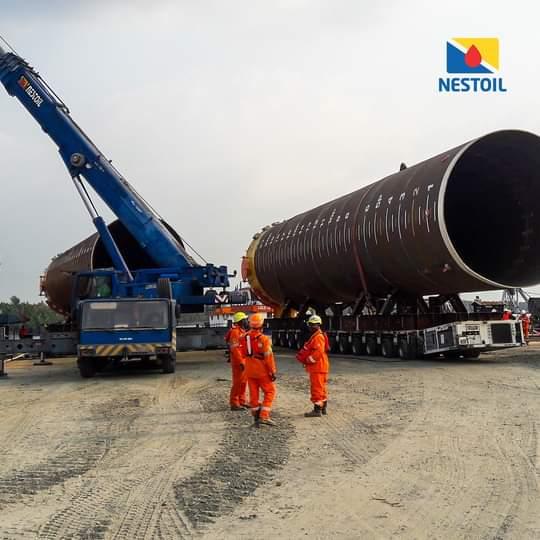
Dr. Ernest Azudialu-Obiejesi is the Chairman and Chief Executive Officer of Nestoil, a Nigerian indigenous Engineering, Procurement, Construction and Commissioning company operating in the oil and gas sector. Nestoil was incorporated in 1991 and has since developed capabilities spanning pipeline construction, engineering, fabrication, dredging, river crossing and related energy infrastructure services.
His professional significance is best understood through the business platform he has built. Nestoil began from a one-room office in Lagos and, according to Azudialu-Obiejesi's account of the company's development, set out to establish an indigenous business capable of competing in an industry dominated by international service companies with greater technical and financial resources.
More than three decades later, Nestoil describes itself as Nigeria's largest indigenous EPCC company in the oil and gas sector and a significant contributor to local content development. The group now operates through businesses covering engineering, fabrication, dredging and other energy-related capabilities.
Executive Snapshot
| Name | Dr. Ernest Azudialu-Obiejesi |
| Position | Chairman / Chief Executive Officer, Nestoil Group |
| Industry | Energy • EPC • Oil & Gas Infrastructure |
| Business Founded | Nestoil, 1991 |
| Major Operating Base | Abuloma, Port Harcourt |
| Core Capabilities | Engineering • Procurement • Construction • Commissioning • Pipeline Infrastructure • Fabrication • Dredging • River Crossing |
| Workforce | ~2,000 direct employees (Nestoil-stated) |
From Local Contractor to Industrial Platform
One of the defining features of the Nestoil story is the gradual expansion of capability. The company identifies 1997 as the year it secured its first major contract, Shell's waste-treatment plant project in Edjeba, Delta State. In 2013, it acquired 59 hectares in Abuloma, Port Harcourt, which became the site of its major operational facility. The Nestoil Tower in Lagos was completed in 2015.
The Abuloma base now incorporates a marine/load-out jetty, fabrication yard, workshops and storage facilities, giving the group physical infrastructure from which to support complex energy projects.
The Project Herald Intelligence
The important story is not simply the growth of one Nigerian company. It is the development of indigenous engineering and project-execution capacity inside Nigeria's energy economy.
That makes Azudialu-Obiejesi relevant to a broader question facing African infrastructure markets: Can indigenous companies build enough technical, financial and industrial capacity to compete for increasingly complex projects at regional scale?
Building the Execution Platform
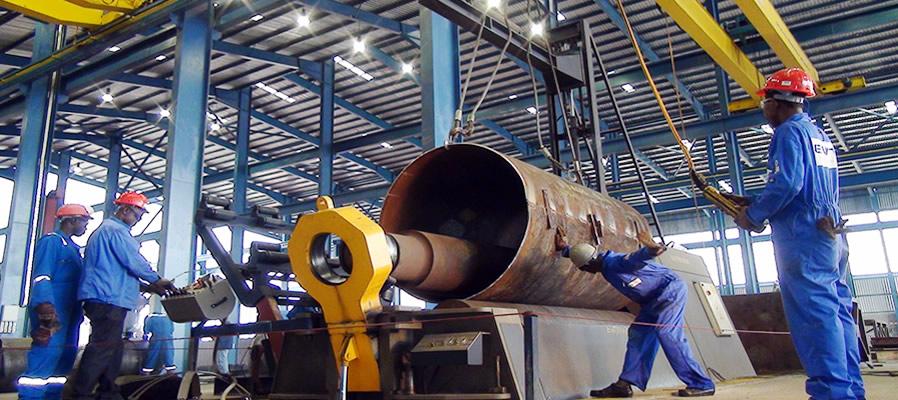
Nestoil's development under Azudialu-Obiejesi has been based on expanding beyond conventional contracting into a broader project-execution platform.
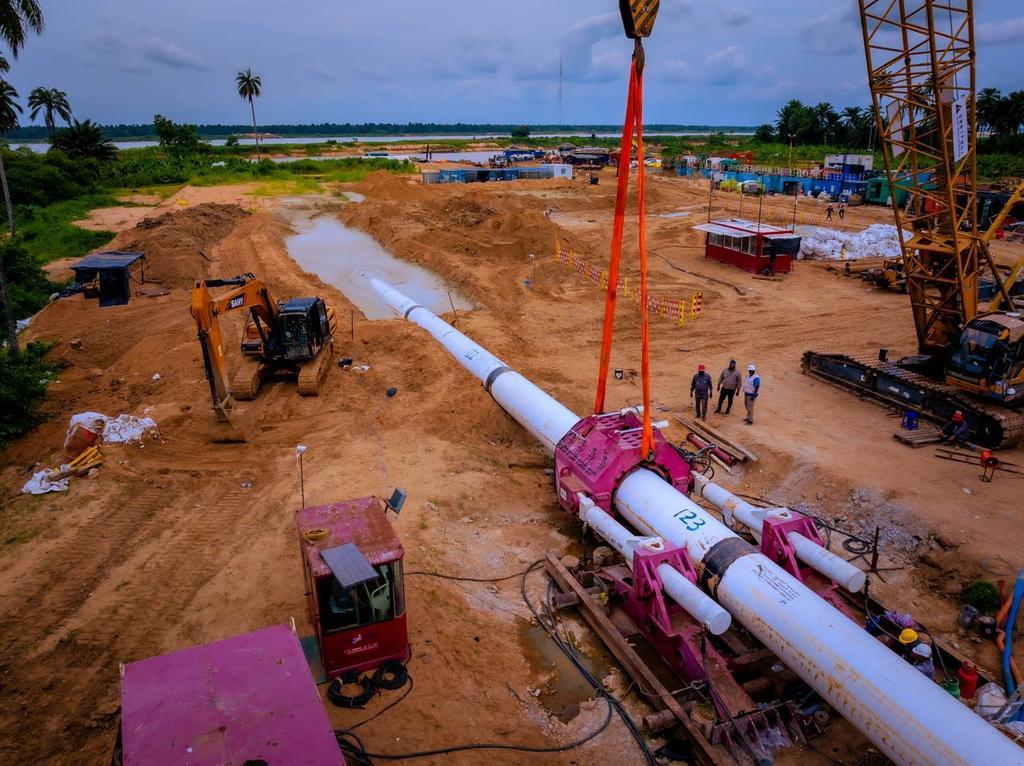
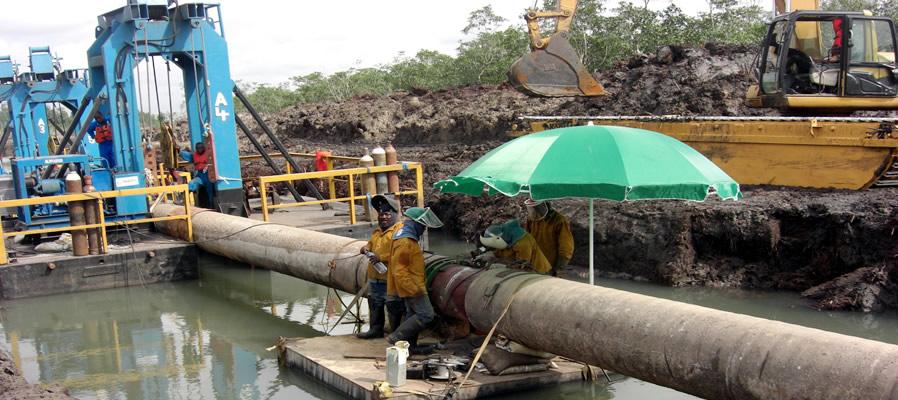
The company's stated capabilities include pipeline construction, repairs and maintenance, dredging, river crossing, shoreline protection, engineering and fabrication. Its Port Harcourt facility provides supporting physical infrastructure for this work. The wider Nestoil Group also includes Energy Works Technology, IMPAC Engineering, B&Q Dredging and Hammakopp Consortium, creating capabilities across several parts of the energy and infrastructure value chain.
Project Portfolio
Client/Partners: NNPC / Nestoil | Focus: Gas pipeline engineering management | Status: Current project listing
Client/Partners: SPDC / Alcon | Focus: Follow-on engineering | Status: Current project listing
Focus: Export pipeline rerouting and engineering | Status: Current project listing
Scope: 24-inch × 44 km pipeline | Status: Completed
Scope: 8-inch × 12.5 km delivery-line replacement | Status: Completed
Scope: 18-inch × 4 km and 24-inch × 0.6 km pipelines | Status: Completed
Partner: Samsung / EWT | Focus: Project support and fabrication | Status: Listed project
From Pipelines to Industrial Fabrication
The business has also expanded its technical footprint through fabrication and engineering. Nestoil's group structure includes Energy Works Technology, while the wider group has capabilities in pressure-vessel fabrication, industrial engineering and marine-related services. The company's own historical account describes its footprint as extending across dredging, marine logistics, industrial fabrication, engineering design, civil and maintenance engineering, dry docking and exploration and production.
This matters commercially because project execution increasingly depends on the ability to control more of the value chain rather than simply supplying labour.
Commercial Intelligence
Engineering capability + fabrication capacity + marine infrastructure + project experience creates a stronger platform for competing for complex energy and infrastructure work. The opportunity is therefore not limited to individual contracts — it is the creation of an industrial ecosystem capable of repeatedly executing projects.
The Scale Question
The evolution of Nestoil illustrates the capital and capability requirements involved in building a major indigenous EPC business.
Azudialu-Obiejesi has described the company's early challenge as competing against international service companies that possessed stronger technical experience, established track records and greater access to funding. He has also credited Nigerian banks, government institutions and local-content policy with helping indigenous companies develop.
Today, Nestoil's physical infrastructure, project record and group capabilities represent the accumulated investment required to participate in technically demanding energy projects.
Selected Milestones
Local Content as Industrial Strategy
Azudialu-Obiejesi has consistently argued that Nigerian local-content policy should move beyond simply ensuring Nigerian participation in projects.
In 2024, he argued for reforms that would enable Nigerian companies to export their capabilities to other African markets, pointing specifically to the opportunity presented by the African Continental Free Trade Area. He also argued that contract awards should place greater weight on proven technical capability rather than simply selecting the lowest bidder.
That position provides a useful framework for assessing the next stage of the business. Nigeria has developed a substantial base of indigenous oil and gas contractors. The bigger commercial opportunity is whether those companies can convert domestic experience into regional infrastructure businesses.
The Project Herald Intelligence Assessment
Nestoil has developed physical infrastructure covering fabrication, marine operations, workshops and storage, creating an execution platform beyond a conventional office-based contractor.
Its listed portfolio spans pipelines, gas infrastructure, engineering management, fabrication and other energy-related projects for major industry participants.
The company's development provides a case study in the progression of indigenous Nigerian participation from service contracting toward broader engineering and project execution.
The next challenge is not simply winning individual contracts. It is sustaining the equipment, facilities, technical workforce and financial capacity required to compete for increasingly large and complex projects.
Azudialu-Obiejesi's stated ambition of seeing Nigerian companies export their capabilities across Africa creates a potential next chapter for the business.
Outlook
Dr. Ernest Azudialu-Obiejesi's business record is ultimately a story about capacity.
From a company incorporated in 1991 to an industrial platform spanning EPC, pipelines, fabrication, dredging and related energy services, the Nestoil story reflects the broader evolution of Nigeria's indigenous project ecosystem. The next measure of that evolution will be scale: the ability to deploy Nigerian engineering, capital, equipment and expertise into larger projects and, potentially, across African markets.