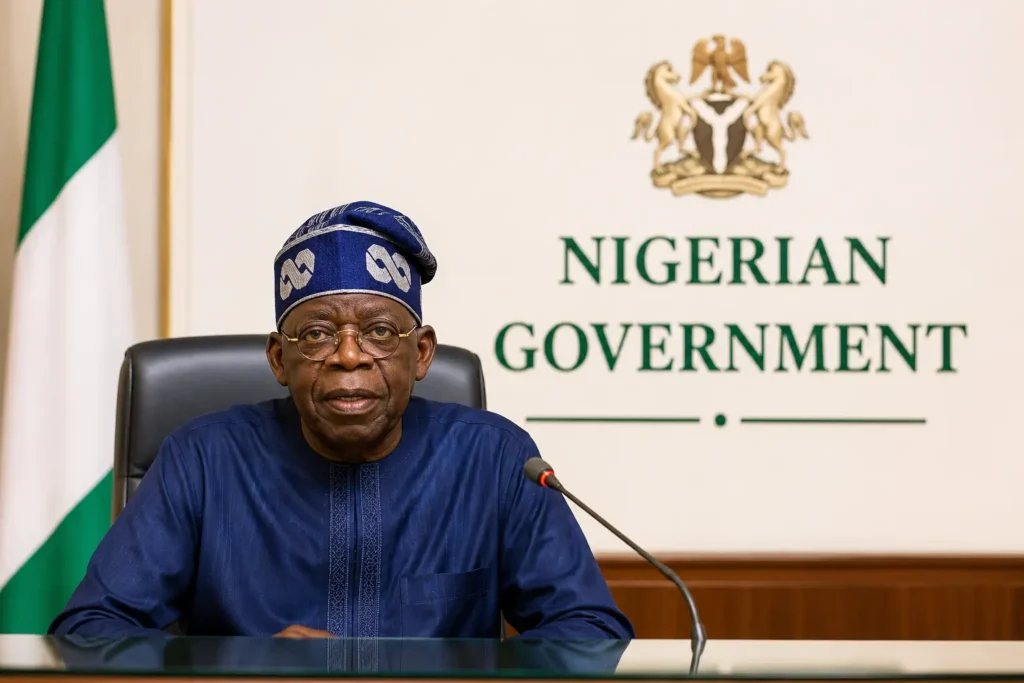
Development plans are easy to announce and hard to measure. Nigeria’s Renewed Hope Development Plan (2026–2030) — approved by the National Economic Council in August 2025 to succeed the expired 2021–2025 national plan, and formally unveiled by President Bola Tinubu in February 2026 — has spent most of its first year as a framework document: reform continuity, a $1 trillion GDP target by 2030, priority sectors in energy, agriculture, manufacturing, digital services and housing. What it has lacked until now is a scorecard.
That changed at the 17th National Council on Industry, Trade and Investment in Enugu, where Minister of Industry, Trade and Investment Dr Jumoke Oduwole presented the first substantive results tied to the reform agenda: more than $24.1 billion in capital importation and over $6.1 billion in non-oil export earnings, an 11.5% increase on the prior year. Export volumes rose from 7.29 million to 8.02 million tonnes, spread across 281 different non-oil products, led by cocoa and its derivatives, urea, cashew nuts, sesame seeds and gold doré.
Where the Non-Oil Growth Is Coming From
The product mix matters as much as the headline figure. Urea’s presence in the top exports ties directly to Nigeria’s fertiliser and gas-processing capacity build-out, while cocoa, cashew and sesame point to agricultural value chains that have historically underperformed their potential. Officials credited trade-facilitation infrastructure — the National Single Window, digital public infrastructure investment, and Nigeria’s implementation of the African Continental Free Trade Area (AfCFTA) — with lowering the operating friction that previously kept exporters out of formal channels.
That trade-finance infrastructure is not abstract policy language — it is a specific, trackable set of programmes. Nigeria’s Export-oriented SME Financing Program and the FSDH Merchant Bank Trade Finance Line of Credit and Transaction Guarantee facility are both structured specifically to get smaller exporters access to working capital and guarantees they previously couldn’t obtain — the kind of unglamorous financial plumbing that shows up in export volume statistics eighteen months later rather than in a press conference the week it’s signed.
The Capital Importation Side
The $24.1 billion in capital importation is the more consequential number for anyone tracking project financing, because it is the pool that infrastructure and industrial financing draws from. Digital infrastructure is a visible test case: Project BRIDGE, Nigeria’s plan to lay 90,000km of national fibre infrastructure, is backed by a $1.2 billion private capital mobilisation structure that blends private investment with development-finance co-financing — precisely the kind of blended capital instrument the Renewed Hope framework was designed to attract at scale. Guarantee institutions such as InfraCredit sit underneath transactions like this one, de-risking them enough for private capital to participate on commercial terms rather than concessional ones.
What This Means in Practice
First, this is the first Renewed Hope data point that can actually be tracked quarter to quarter. Companies and investors evaluating Nigeria exposure now have a concrete 2026 baseline — $24.1bn capital importation, $6.1bn non-oil exports — against which every future government claim about the plan’s progress can be measured, rather than taken on faith.
Second, the export product mix signals where trade-finance and logistics investment is likely to concentrate next. Cocoa, cashew, sesame and urea processing and export infrastructure are the sectors the government’s own data says are already responding to policy support — a stronger signal than sector priority lists alone.
Third, the capital importation figure raises the obvious follow-up question: how much of that $24.1 billion is flowing into bankable, trackable infrastructure like Project BRIDGE versus portfolio and short-term flows that can reverse quickly. That distinction will matter more than the headline number itself as the Renewed Hope Plan moves from its first-year framework phase into multi-year execution.
A development plan’s first year is usually about credibility — proving the framework can produce anything measurable at all. Nigeria’s Renewed Hope Plan has now cleared that bar. The next year will show whether $24.1 billion in capital importation turns into completed infrastructure or stays a number in a ministerial presentation.