The Business Behind the Name: Cassi Ezenwoke Nwosu Fronts The Project Herald Review's October Special Issue
From real estate brokerage to short-let operations, the October 2026 edition looks past the public profile to the ventures, decisions and ambitions at work
Lagos, Nigeria — November 1, 2026
The October 2026 Special Business Feature Issue of The Project Herald Review is out, and it is devoted to Cassi Ezenwoke Nwosu and the commercial interests that sit behind his name. The issue sets aside the conventional profile. Instead of building a portrait around recognition, it examines the work itself: the ventures already in operation, the decisions involved in building them, and the opportunities across real estate, entrepreneurship and financial markets.

Three lines of business
Mr Nwosu's activities span real estate brokerage, interior design and short-let property operations. The feature treats the short-stay segment most closely. His operations there link property ownership and management to a growing demand for furnished residential spaces. Listings are placed through platforms including Airbnb and Booking.com, alongside agent relationships. The issue argues the model shows what property services can earn beyond conventional sales and leasing.
The next step
The magazine also looks ahead. It considers Mr Nwosu's wider entrepreneurial interests and stated ambitions, among them real estate development and taking part in larger residential projects and strategic joint ventures. The edition describes a business with ventures in operation today and larger-scale development as its declared direction.
A business feature, not just a profile
The Project Herald Review is the business magazine of The Project Herald. Its special feature editions examine the people, enterprises and commercial decisions shaping business activity. The Nwosu edition brings his professional activities and business ambitions together in one publication.
The October 2026 Special Issue Is Out Now
Read the full feature in The Project Herald Review.
Africa Launches $5 Billion Energy Bank to Close Project Financing Gap
Afreximbank and APPO back the new lender as foreign banks retreat from fossil-fuel projects; real lending capacity still to be proven
Abuja, Nigeria — October 31, 2026
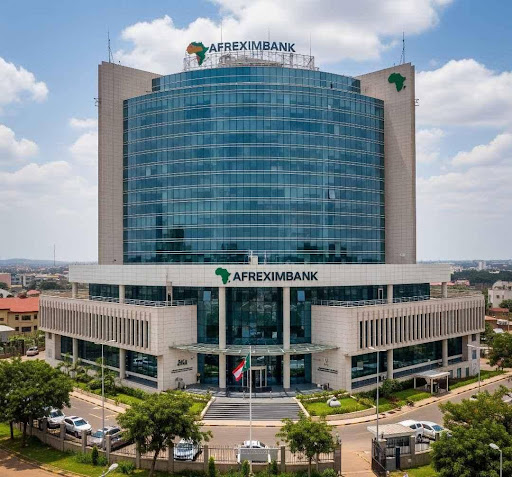
African financial institutions and petroleum-producing countries have formally established the Africa Energy Bank (AEB), a new lender with authorised capital of $5 billion, to ease funding constraints across the continent's energy industry. The launch was announced on Saturday at the bank's inaugural general meeting in Abuja. It is a joint effort of the African Export-Import Bank (Afreximbank) and the African Petroleum Producers' Organisation (APPO). The meeting appointed Helmy Ghazi as first president and constituted the first board of directors.
Why now
Long-term finance for African oil and gas projects is getting scarcer as traditional international lenders cut their fossil-fuel exposure. The announcement said the aim is for Africa to fund more of its own energy development, rather than lean on outside institutions whose priorities may not match the continent's needs. Africa's broader energy investment requirement is put at about $200 billion. The bank's longer-term ambition is an asset base of $120 billion.
What it will fund
The bank plans to finance oil and gas exploration, production, refining and distribution. That matters to countries seeking more domestic refining, gas infrastructure and energy security. It also targets projects with heavy upfront costs and long repayment periods, which often struggle to find commercial lenders. Nigeria remains one of Africa's leading producers, with large needs in upstream production, gas processing, pipelines and refining.
Commercial Implications
The bank could become a financing channel for energy developers, national oil companies, independent producers, refinery builders and engineering firms. Areas of interest include upstream development, refinery construction and rehabilitation, gas processing and transport, storage and distribution, EPC services and equipment supply.
The $5 billion is authorised capital, not money ready to disburse. Real lending power depends on capital mobilised, funding structure, governance and rollout.
Project Herald Intelligence
Nigeria side: the bank's inaugural meeting was held in Abuja, but no project, allocation or Nigerian borrower has been named. Global-investor side: the question is how much of the $5 billion authorised capital is subscribed and paid in, and on what lending terms. Confidence: Reported; capitalisation and lending criteria unconfirmed. Sources are Reuters and the Afreximbank announcement, October 31, 2026.
Nigeria's Export Earnings Rise 23.7% to $35.64 Billion in First Half as Refined Fuels Surge
Petroleum products exports jump 238.7%; oil and gas still make up 84.3% of the total
Nigeria — October 30, 2026
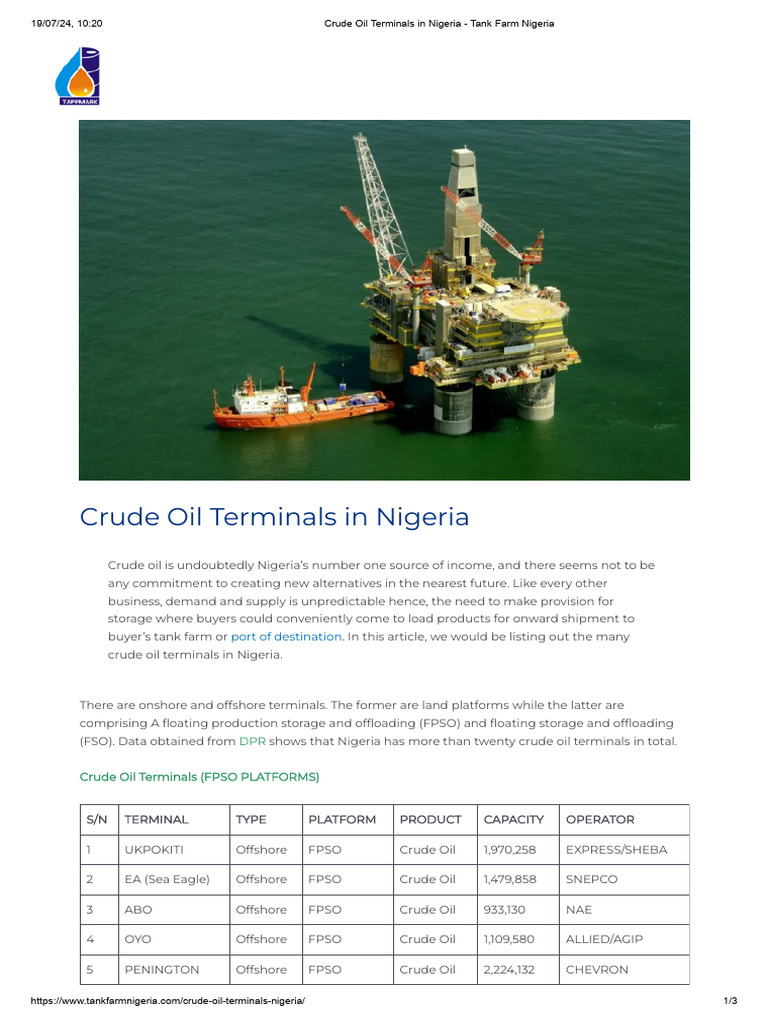
Nigeria earned $35.64 billion from exports in the first half of 2026, up 23.7% from $28.82 billion a year earlier, according to an analysis of the Central Bank of Nigeria's second-quarter statistical bulletin reported on Friday. The rise is $6.82 billion, and petroleum products supplied about 65% of it.
Petroleum product exports rose 238.7% to $6.31 billion from $1.86 billion. Crude oil stayed the largest category at $17.51 billion, up 7.7%. Gas rose 4.2% to $6.22 billion. Together, crude, gas and refined products earned $30.03 billion, about 84.3% of the total.
| Category | H1 2026 ($bn) | H1 2025 ($bn) | Change |
|---|---|---|---|
| Crude oil | 17.51 | 16.25 | +7.7% |
| Gas | 6.22 | 5.97 | +4.2% |
| Petroleum products | 6.31 | 1.86 | +238.7% |
| Non-oil | 5.60 | 4.74 | +18.2% |
| Total | 35.64 | 28.82 | +23.7% |
Non-oil grows, but loses share
Non-oil exports rose 18.2% to $5.60 billion, but their share slipped from about 16.5% to 15.7% because petroleum grew faster. The surge in refined products reflects higher earnings from processed exports, not crude alone, so refinery performance is worth following. Higher earnings are not proof of broader industrial capacity or diversification.
Commercial Implications
The figures bear on export logistics, refining and product distribution, gas processing, storage and marine transport, agricultural processing, trade finance and trade insurance. Rising non-oil earnings also underline the need for better processing and export infrastructure.
Project Herald Intelligence
Nigeria side: refined-product exports are growing fast from a low base, but earnings remain concentrated in crude and gas. Global-investor side: the question is whether product exports hold as refinery output and global prices move. Confidence: Reported; figures from an analysis of the CBN Q2 2026 bulletin. Source is Vanguard, October 30, 2026.
Manufacturing Credit Falls 33.8% Despite ₦4.65 Trillion Bank Recapitalisation
NESG says the problem is where capital goes, not how much exists
Lagos, Nigeria — October 31, 2026
Bank credit to Nigeria's manufacturers fell 33.8% between December 2024 and August 2026, from ₦8.53 trillion to ₦5.65 trillion. Manufacturing's share of total bank credit dropped to 8.7%, from 17.4% in December 2023. Tayo Aduloju, chief executive of the Nigerian Economic Summit Group (NESG), gave the figures on Saturday at the Chartered Institute of Bankers of Nigeria Fellowship Investiture Ceremony.
Recapitalisation, without the lending
The bank recapitalisation exercise, from March 2024 to March 2026, reportedly raised ₦4.65 trillion, and 33 of 37 banks met the new minimums. Yet average manufacturing credit fell 26% year on year in January to August 2026, to about ₦5.7 trillion, while credit to trade and commerce rose 49% to about ₦5.9 trillion.
Where the money went
Oil and gas held ₦18.15 trillion of bank credit and finance and insurance ₦11.46 trillion. Agriculture took 6.2% despite employing about 33.5% of the workforce. Credit to government rose 63% to ₦39.4 trillion in September, against 16% growth in private-sector credit to ₦83.9 trillion. Treasury bill yields near 16% give banks a safer alternative. The CBN cut its policy rate to 23% in September, but bank lending rates reportedly stayed between 19% and 32.6%.
The NESG's proposals
The NESG argues the problem is how existing resources are mobilised, not a lack of capital. It proposes a coordinated industrial financing framework linking banks, pension funds, insurers, the Bank of Industry, the Development Bank of Nigeria and credit guarantee institutions, with risk-sharing, guarantees, interest rebates and tax incentives. It also urges specialised industrial lending skills and alternative collateral such as digital cash-flow records.
Commercial Implications
The fall bears on factory expansion, machinery purchases, raw-material financing, working capital, agricultural processing and storage, and industrial energy infrastructure. It also leaves room for development finance institutions and specialised lenders to widen manufacturing products.
Project Herald Intelligence
Nigeria side: the NESG's framework is a proposal, not policy; no new financing programme has been announced. Industry side: the question is whether banks, or development lenders, move capital back toward long-term industrial loans. Confidence: Reported; figures come from an NESG presentation. Source is BusinessDay, October 31, 2026.
Cement Makers' Nine-Month Profit Jumps 37.8% to ₦1.71 Trillion
Dangote, BUA and HBM Nigeria post gains on margins and cost efficiencies; analysts point to pricing power
Nigeria — October 30, 2026
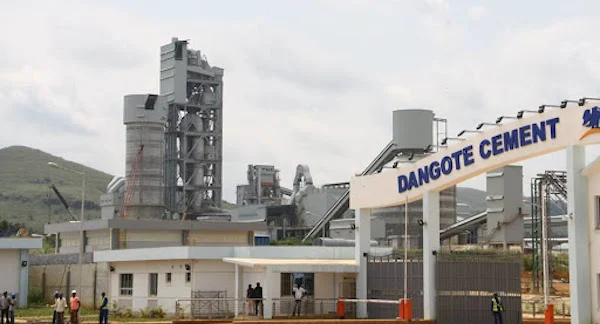
Nigeria's three major cement manufacturers increased their combined profit after tax by 37.8 percent to ₦1.71 trillion in the first nine months of 2026, a result BusinessDay linked to renewed construction activity and infrastructure investment. The three are Dangote Cement, BUA Cement and HBM Nigeria, the former Lafarge Africa.
Pricing power
A Nairametrics analysis published the same day described the sector as an oligopoly with pricing power. It noted a bag reportedly sells for more than ₦12,500, and that revenues rose by a fifth to a quarter while costs did not keep pace.
BUA stands out
BUA Cement raised its nine-month profit 60% to ₦463.1 billion, reported on Thursday. Nairametrics put its nine-month EBITDA margin at 53%, the highest of the three, and noted a tax rate of 17%, half its peers'. It also flagged that BUA paid ₦339 billion in dividends from ₦176 billion of free cash flow, with the difference borrowed.
Why it matters
The profits arrive as bank credit to manufacturers falls (page 4). Large, cash-rich producers can thrive while smaller industrial borrowers struggle for loans.
Commercial Implications
Contractors and developers face high bag prices. Equipment, logistics and energy suppliers to cement plants stand to benefit from expansion plans, and investors will watch dividends and tax treatment.
Project Herald Intelligence
Nigeria side: profit growth rests on volumes, prices and cost control; watch whether high bag prices curb construction demand. Global-investor side: the question is how durable margins are, given BUA's low tax rate and borrowing-funded dividends. Confidence: Reported; company results and analyst commentary. Sources are BusinessDay and Nairametrics, October 30, 2026.
BUA Foods Lifts Nine-Month Profit 11% to ₦450.47 Billion Even as Revenue Falls 19%
Cost cuts and a steadier naira widen margins; weaker prices and demand cut sales
Nigeria — October 30, 2026

BUA Foods Plc recorded an 11 per cent rise in profit after tax to ₦450.47 billion for the nine months ended 30 September 2026, up from ₦405.27 billion a year earlier, according to unaudited results released on Friday. Profit before tax also rose 11%, to ₦480.52 billion.
Sales down, margins up
Revenue declined 19% to ₦1.15 trillion on softer pricing and subdued consumer demand. But cost of sales fell 34% to ₦592.94 billion, which the company tied to lower costs and a more stable foreign exchange environment. Gross margin widened to 48.3% from 36.7%, and operating margin expanded to 43% from 31%. Operating expenses fell 20%. Reports on the results said sales of bakery flour and fortified sugar fell, while raw-material spending dropped 37.2%.
Management view
Managing Director Ayodele Abioye said the results show the resilience of the operating model and the benefit of disciplined cost and margin management. The company said it would keep investing in distribution and market presence.
Commercial Implications
Profit can grow while demand shrinks when input costs fall faster than prices. That offers little comfort on consumer spending: falling sales point to squeezed households.
Suppliers of sugar, wheat and edible-oil inputs face pressure on volumes, while distribution and logistics firms are in focus as the company invests in reach.
Project Herald Intelligence
Nigeria side: margin gains depend on lower input costs and a steadier naira; weak demand is the pressure point. Global-investor side: the question is whether profit can keep growing if revenue keeps falling. Confidence: Reported; figures are company-stated and unaudited. Sources are The Star and Pan African News Media, October 30, 2026.
OPay Pulls $304 Million US IPO Hours After NYSE Ceremony
Nigerian payments firm cites an unnamed foreign regulatory inquiry; says Nigerian operations unaffected
New York, USA — October 30, 2026
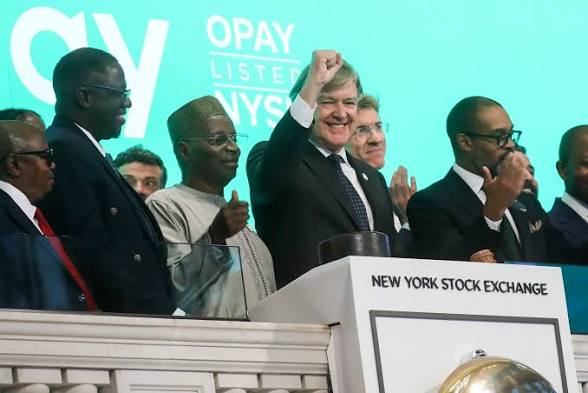
OPay, a Nigeria-focused digital financial services company, withdrew its planned $304 million US initial public offering on Friday over a regulatory inquiry by a foreign jurisdiction it did not identify. The company called the jurisdiction immaterial to its core operations and said the inquiry should not be read as a reflection on its business performance, financial condition or regulatory standing. It said the matter would not affect operations or customer service in Nigeria or its other markets.
A reversal within hours
The withdrawal followed an NYSE listing ceremony the same day, at which co-chief executive Lars Boilesen described the planned debut as a milestone for OPay and Nigeria. Pricing had been announced on October 30 at $19 per American depositary share for a base offer of 16 million shares, at the lower end of a $19 to $21 target range. The $304 million is the planned gross value of the base offering, not completed proceeds. The SoftBank-backed company had aimed for a market value above $4 billion, with Citigroup, Deutsche Bank, Standard Bank and CICC among the underwriters. Its prospectus put OPay at about 50 million monthly active users as of July 31.
The Stanbic link
A conditional private placement of up to $200 million to Stanbic Africa Holdings was tied to the IPO and subject to regulatory approvals, so its status now depends on what OPay does next.
Commercial Implications
The setback tests investor appetite for African fintech listings abroad, in a week when the Dangote refinery closed its own IPO at home. Payments, lending and embedded-finance players weighing US listings will watch how regulators treat Nigeria-linked issuers.
Watch the identity of the regulator, how quickly the inquiry resolves, whether OPay revives the US listing or considers a local one, and the fate of the Stanbic placement.
Project Herald Intelligence
Nigeria side: OPay says its Nigerian operations and regulatory standing are unaffected; no Nigerian regulator action has been reported. Global-investor side: the question is whether the unnamed inquiry resolves quickly enough to revive the listing. Confidence: Reported; the nature of the inquiry is undisclosed. Sources are Premium Times, TheCable, Okay News and Business Post, October 30–31, 2026.