Africa’s energy sector has spent the better part of a decade announcing projects. Two developments in the past several weeks suggest the cycle has shifted — from announcement to active procurement, and from policy to capital deployment. For contractors, equipment suppliers, developers and investors tracking the continent’s energy pipeline, the window for positioning is narrowing.
Nigeria: Two Programmes, One Moment
Nigeria currently has two energy programmes running in parallel that together represent over $1.25 billion in active or imminent procurement.
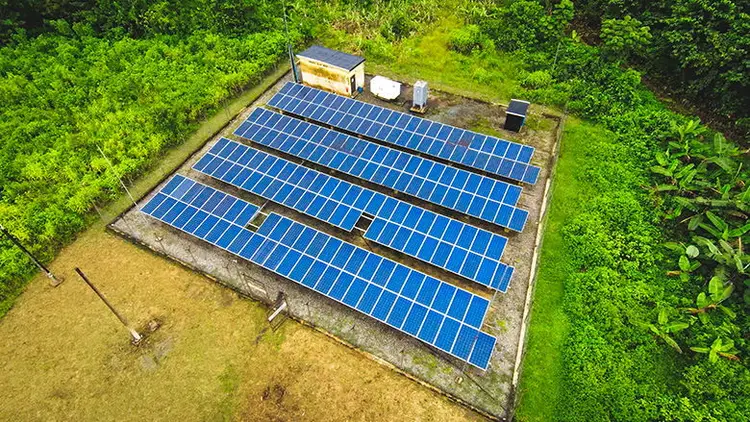
The first is DARES — the Distributed Access through Renewable Energy Scale-Up Project — a $750 million World Bank-backed programme targeting off-grid and underserved communities across the country. The programme is active, highly confirmed, and specifically structured to channel capital through private renewable energy companies rather than through utility-style offtakers. That structure matters commercially: it means the procurement pipeline flows toward private developers, equipment suppliers and local service providers, not through a single state entity. IFC and Norfund have separately committed up to $83.2 million in parallel financing to renewable energy companies operating within this space, which signals multilateral confidence in the programme’s execution pathway.
The second is the $500 million Power Distribution Programme, where a tender is currently open for smart meter procurement. This is not a future opportunity — it is open now. Nigeria’s distribution network has historically lost significant revenue to metering gaps, and this programme is a direct attempt to close that gap at scale. Smart meter manufacturers, systems integrators, installation contractors and local manufacturing partners all have reason to be watching this tender closely.
These two programmes are not isolated. They sit within a broader policy direction that has consistently pushed toward private sector delivery, decentralised energy access and commercialisation of distribution assets. That direction has survived changes in administration and continues to attract multilateral backing. The procurement activity now emerging is its downstream consequence.
South Africa: The IRP 2025 Framework Sets the Investment Terms
South Africa’s Integrated Resource Plan 2025 — gazetted and effective as of August 2026 — commits R2.23 trillion in electricity infrastructure investment across the planning horizon. That is not a budget line; it is the policy framework that determines which generation and transmission technologies get licensed, financed and procured over the coming decade.
The plan’s significance for the private sector is structural. South Africa already runs the IPP procurement programme — one of Africa’s most active tender pipelines — and the IRP sets the capacity targets that drive each procurement round. With the 2025 IRP now effective, the next round of IPP procurement windows has a clear policy basis. The Independent Transmission Projects programme, which is already active and pulling in private capital for transmission infrastructure, sits directly within this framework.
The South Africa Credit Guarantee Vehicle — a $500 million infrastructure capital platform — provides additional context. It signals that the financial architecture to support private participation in South Africa’s energy build-out is being assembled alongside the policy framework, not after it.
What This Means in Practice
Three things are worth tracking from here. First, Nigeria’s smart meter tender is live — companies with procurement capability in this space should be engaging now, not after shortlisting closes. Second, DARES will generate a sustained equipment and services pipeline over its implementation period; the companies best positioned will be those that have already established relationships with the off-grid developers being financed through the programme. Third, South Africa’s IRP 2025 has set the terms for the next several rounds of energy procurement — investors and developers who understand the capacity mix it targets are better placed to structure bids when windows open.
Africa’s energy investment narrative has long suffered from a gap between announced ambition and bankable opportunity. What is visible in the database right now — confirmed programmes, open tenders, effective policy — represents the part of that pipeline where the gap has closed.