For most of the last three years, the Lobito Corridor has been discussed as a geopolitical argument first and an operating asset second — the West’s answer to a Chinese-financed logistics footprint across the DRC and Zambia’s Copperbelt. That framing is now behind the facts. The corridor has moved past the ceremony stage into the messier, more useful stage: it is running trains, generating revenue, absorbing shocks, and attracting the kind of financing that only shows up once a lender believes the volumes are real.
What the Railway Actually Moved
Lobito Atlantic Railway (LAR) — the consortium of Trafigura, Mota-Engil and Vecturis operating the 1,289km Angolan section under a 30-year concession — completed its first full year of commercial operation in 2025. Across that year, LAR moved more than 200,000 tonnes of cargo through the Port of Lobito, with December 2025 setting a monthly record of roughly 37,000 tonnes of combined domestic and international traffic. January 2026 followed with around 30,000 tonnes. Those are modest absolute numbers next to the corridor’s eventual ambition, but they mark the difference between an infrastructure promise and an infrastructure that ships.
The more commercially significant milestone landed in March 2026: Trafigura, German copper producer Aurubis and Kamoa Copper completed the first sale of low-carbon refined copper moved via the Lobito railway, with a shipment of 99.7%-purity copper anodes departing the Kamoa-Kakula complex on 24 March. A smelter and a trader writing a contract around a route is a different signal than a government MOU — it means the corridor has cleared the commercial bar that determines whether cargo owners actually reroute their volumes.
The Financing Just Caught Up
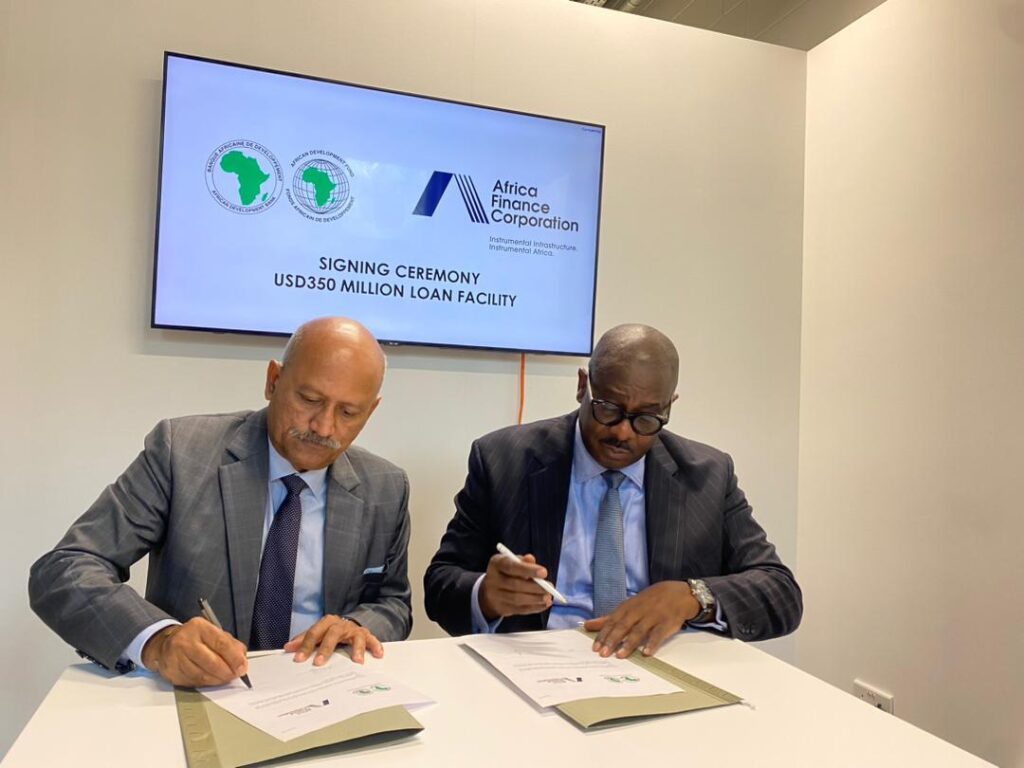
On 7 July 2026, Africa Finance Corporation announced financial close on the Lobito Corridor Railway Project, with AFC and Eaglestone acting as co-financial advisers structuring the package for LAR. The financing totals roughly $753–786 million, combining $553 million from the U.S. International Development Finance Corporation and $200 million from the Development Bank of Southern Africa. The proceeds are earmarked for 1,555 new wagons and 35 locomotives on the Angolan side, alongside upgrades to track infrastructure, workshops and signalling — the physical capacity needed to move the railway from a proof of concept to a scaled export route. Training centres already established in Huambo and Lobito are being positioned to support the workforce expansion that comes with that build-out.
The Stress Test
2026 also gave the corridor its first real test of resilience. Severe flooding in Angola’s Benguela province halted rail operations, and DRC copper trains only resumed in June 2026 after roughly two months out of service. For a single-line railway feeding a single port, a two-month outage is a meaningful vulnerability — it is the kind of event that would have quietly killed confidence in a project still at the MOU stage. Instead, the corridor absorbed the disruption, restarted service, and closed three-quarters of a billion dollars in financing within weeks of trains running again. That sequencing — shock, recovery, capital commitment — is itself a data point about how lenders are now pricing the corridor’s operational risk, a risk that the underlying US-EU financing framework backing the corridor was designed to absorb.
What Is Still Missing
The corridor’s current advantage is concentrated in the DRC. Congolese copper from Kolwezi and the Kamoa-Kakula complex is already moving on the railway with a roughly seven-day inland transit to the coast. Zambian copper is not yet in the same position: cargo originating in Zambia still requires a road leg to reach the railhead, because the greenfield rail extension from Angola into Zambia’s Copperbelt remains in earlier-stage development, alongside the separate rehabilitation of the DRC’s Dilolo–Kolwezi–Lubumbashi section under a PPP structure. For shippers with material in Zambia, the corridor is still a forward-looking option rather than a booking they can make this quarter.
What This Means in Practice
First, the $753 million financial close will translate into a concrete procurement wave — rolling stock, signalling systems, track materials and workshop equipment — layered on top of the wagon-supply relationships the project has already built with suppliers like Galison Manufacturing in South Africa. Companies positioned to bid into rail equipment, construction and logistics services should be tracking this now, not after tenders clear.
Second, the copper shipment with Trafigura, Aurubis and Kamoa Copper is a template other DRC and Zambian producers will be watching. Once one major offtake relationship proves the route commercially, the incentive for competitors to stay on slower, more congested export corridors weakens.
Third, the flood disruption is a reminder that a single-line, single-port corridor carries concentrated operational risk that scaled financing does not eliminate on its own — it is a factor investors and offtakers should be pricing into contracts and insurance, not treating as a one-off.
Three years ago, the Lobito Corridor was a signature on a memorandum. Today it is a railway with a fleet order, a financing close, a proven offtake relationship and a survived flood. That is what a development corridor looks like once it stops being a plan.