The Federal Government has defended the engineering design of the Lagos-Calabar Coastal Highway following public concerns over stagnant water observed on sections of the road after recent downpours.
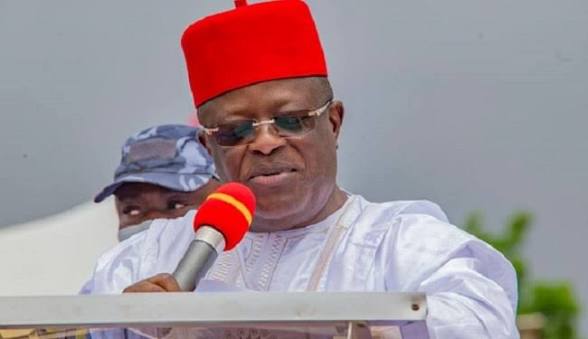
Minister of Works, Senator Dave Umahi, said the temporary accumulation of water on parts of the highway was not a result of poor construction or inadequate drainage but was caused by blocked underground channels and human activities along the corridor.
Speaking during an inspection of ongoing works, Umahi insisted that the coastal highway remains one of the country’s most technically advanced road projects and assured Nigerians that all major legacy road projects initiated by the administration would be completed by 2031.
‘The Highway Was Built With Extensive Underground Drainage’
Responding to criticism that surfaced on social media after videos showed water pooling along some completed stretches of the road, the minister explained that the project incorporates an extensive underground drainage network specifically designed to handle stormwater.
According to him, the drainage system stretches approximately 750 kilometres on either side of the highway, amounting to nearly 1,500 kilometres in total.
Umahi said many people questioning the drainage design were unaware of the infrastructure concealed beneath the road surface.
“People say there is no drainage system. I don’t know why people delight in false information, but it is very damaging,” he said.
He maintained that the road was designed to withstand the environmental realities of the coastal terrain and that engineers supervising the project had adhered to internationally accepted standards.
Refuse Dumping, Vandalism Worsening Water Retention
The minister attributed the temporary flooding primarily to indiscriminate refuse disposal and acts of vandalism.
He noted that drainage openings and manholes constructed along the corridor had been clogged with waste materials, preventing free movement of water.
“The flooding of the coastal highway was because our underground channel was blocked with refuse,” Umahi said.
“This is the basic reason why we even have flooding in most cases in Lagos, where people carry their daily refuse and put it inside the manhole.”
He also disclosed that protective installations erected along the project have been repeatedly tampered with.
According to him, green security fencing installed to preserve the aesthetics of the highway has been cut and stolen in several locations, while some metallic components used in the construction have also been vandalised.
Umahi appealed to residents and road users to safeguard public infrastructure, stressing that damage to government facilities ultimately increases maintenance costs and delays project delivery.
Legacy Road Projects to Be Delivered by 2031
Beyond addressing concerns over the coastal highway, the minister reiterated the Federal Government’s commitment to completing its flagship infrastructure projects within the current administration’s timeline.
He said the Ministry of Works inherited more than 2,000 ongoing projects in 2023 but has prioritised funding for strategic corridors capable of boosting economic activities and improving connectivity.
Umahi expressed confidence that the four presidential legacy projects, including the Lagos-Calabar Coastal Highway, would be delivered by 2031.
The Lagos-Calabar Coastal Highway is expected to run for about 700 kilometres, linking nine coastal states and opening up new opportunities for trade, tourism, real estate development and industrial investment.
The project has remained one of the most debated infrastructure initiatives of the present administration, drawing praise from supporters who see it as transformational and criticism from others concerned about cost, environmental impact and long-term sustainability.
For Umahi, however, recent images of water retention on sections of the highway do not undermine the integrity of the project.
“No one is God. No human being on earth is doing anything in perfect order,” the minister said.
“But we are doing everything possible to ensure value for money and to deliver quality infrastructure for Nigerians.”
Read more News: https://www.theprojectherald.com/inside-the-global-race-to-build-the-cities-of-the-future/