- The Missing Safety Valve
- How the Fire Escalated
- The 167 Lives Lost
- The Cullen Inquiry
- HSE Intelligence
IN THIS ISSUE
Piper Alpha: The Night the Platform Burned
This issue of The Failure File examines Piper Alpha as a case study in offshore engineering, process safety and corporate accountability: how a routine maintenance condition became an ignition event, how an ignition event became a platform-wide emergency, and what the Cullen Inquiry changed.
The Case
COVER STORY
Piper Alpha: The Night the Platform Burned
EDITOR’S NOTE
The Disaster That Changed Offshore Safety
The Disaster
THE NIGHT OF 6 JULY 1988
A Routine Operation Becomes a Catastrophe
THE PLATFORM THAT BECAME A SYSTEM
Piper Alpha, Offshore Production and the Risk of Interconnected Infrastructure
The Chain of Failure
THE MAINTENANCE DECISION
The Condensate Pump, the Missing Safety Valve and the Permit-to-Work Failure
THE HANDOVER THAT FAILED
How Critical Information Was Lost Between Maintenance and Operations
THE FIRST EXPLOSION
The Release of Condensate and the Breakdown of Process Containment
WHEN THE FIRE FOUND MORE FUEL
Pipelines, Connected Platforms and the Escalation of the Disaster
Emergency and People
THE EMERGENCY THAT THE PLATFORM COULD NOT CONTAIN
Fire Protection, Escape Routes and the Limits of Emergency Preparedness
THE HUMAN COST
The 167 Lives Lost and the Workers Who Faced Impossible Choices
The Reckoning
INSIDE THE CULLEN INQUIRY
What the Investigation Revealed About Management and Safety
THE REGULATORY RECKONING
106 Recommendations and the Birth of the Offshore Safety Case Regime
THE COMMERCIAL COST OF FAILURE
Asset Integrity, Business Continuity, Liability and Investor Exposure
Lessons and Verdict
HSE & PROCESS SAFETY INTELLIGENCE
What Project Owners and Operators Must Verify Before Work Begins
THE FINAL ASSESSMENT
When Procedures Exist but the System Still Fails · Sources & References
Safety must be demonstrated, not assumed.
THE PROJECT HERALD REVIEW
Projects • Capital • Products & Policy
EDITOR’S NOTE
The Disaster That Changed Offshore Safety
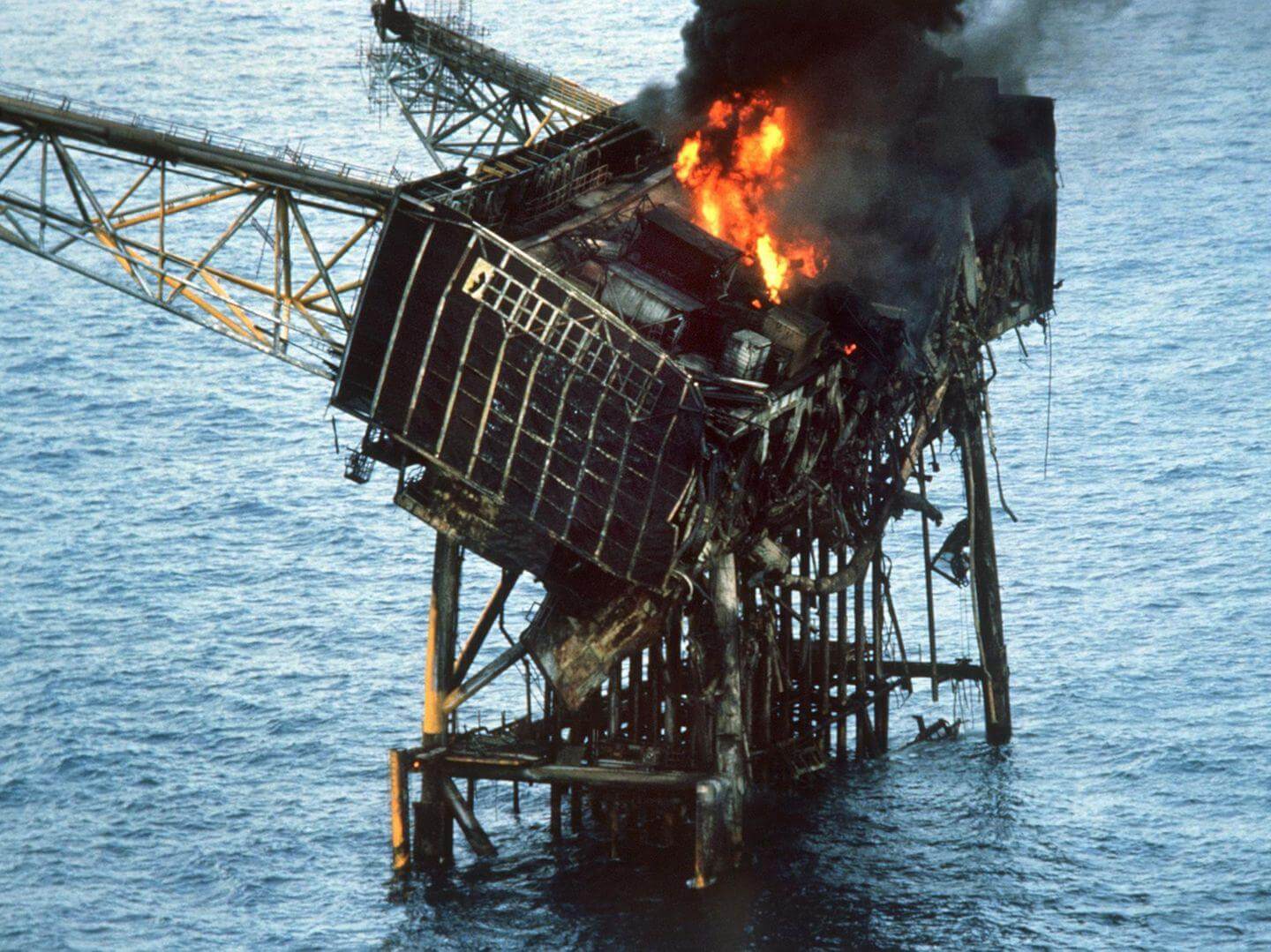
On the night of 6 July 1988, Piper Alpha was operating in the North Sea as part of the United Kingdom’s offshore oil and gas industry. By the end of the disaster, the platform had been devastated by explosions and fire, and 167 people had lost their lives.
The tragedy was not simply an industrial accident in which a dangerous substance ignited. It exposed a more difficult question: what happens when the systems intended to control a hazardous operation fail to communicate with one another?
A maintenance job was incomplete. A safety valve had been removed. The equipment’s condition was not adequately communicated to the personnel responsible for operating the system. When another pump became unavailable, the pump under maintenance was brought into service. Condensate escaped and ignited.
MORE THAN AN EQUIPMENT DEFECT
That sequence describes the immediate mechanism of the initial explosion. It does not, by itself, explain the scale of the catastrophe that followed.
Piper Alpha was a major offshore installation connected to a wider production network. Once the first explosion damaged the platform, the presence of large quantities of hydrocarbons, connected pipelines and inadequate protection against escalating events turned a local failure into a disaster that overwhelmed the installation.
The distinction matters. A single equipment defect may initiate an incident, but the eventual consequences depend on the condition of the wider system: how work is authorised, how information is transferred, how process equipment is isolated, how fire and explosion risks are assessed, and whether emergency arrangements remain usable when normal access routes are destroyed.
A safety system cannot be judged by the quality of its documents alone.
WHY IT BELONGS IN THE FAILURE FILE
The subsequent public inquiry, led by Lord Cullen, examined these questions in detail. Its report made 106 recommendations addressing safety management, installation design, emergency arrangements, workforce participation and regulation. The reforms that followed helped reshape the United Kingdom’s offshore safety regime.
Piper Alpha therefore belongs in The Failure File for more than its scale. It is a case study in the difference between having safety procedures and operating a system in which those procedures reliably control risk.
For project owners, contractors, engineers, financiers and regulators, the lesson is uncomfortable but necessary: a safety system cannot be judged by the quality of its documents alone. It must be judged by what happens when equipment is unavailable, information is incomplete, assumptions are wrong and several protective layers are challenged at once.
This issue examines the chain of decisions, technical conditions and institutional weaknesses that made Piper Alpha possible. It also considers the commercial consequences of treating safety as a collection of separate tasks rather than a single, continuously managed responsibility.
THE CENTRAL QUESTION
The central question is not whether the industry knew that hydrocarbons could burn. It is whether the people and organisations responsible for Piper Alpha had adequately understood how routine work, process hazards and emergency failure could combine.
The answer changed offshore safety.
It should continue to shape how major projects are designed, operated and governed.
William Bankole
Editor-in-Chief, The Project Herald
Adaora G. Lawrence
Editor, The Project Herald
THE PROJECT HERALD REVIEW
Projects • Capital • Products & Policy
THE NIGHT OF 6 JULY 1988
A Routine Operation Becomes a Catastrophe
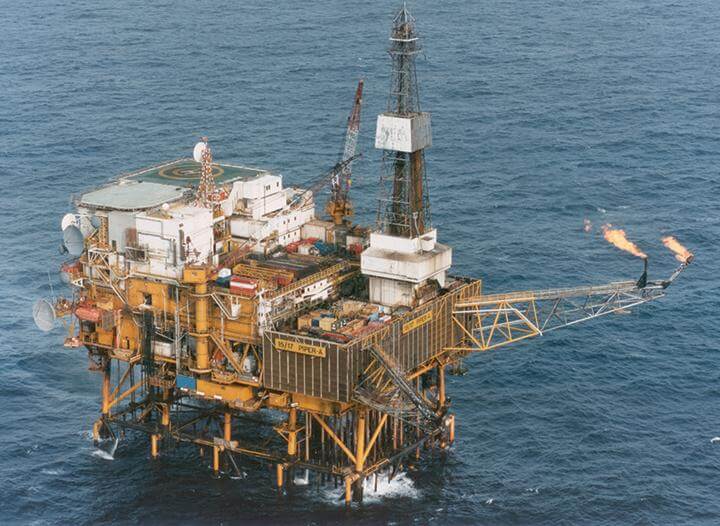
Industrial disasters rarely begin with the scale of the event that eventually defines them. They begin inside ordinary operations: maintenance, equipment change-out, a temporary shutdown, a handover between shifts, or a decision to return a system to service.
Piper Alpha was no exception.
A PUMP IN THE WRONG CONDITION
On the evening of 6 July 1988, the offshore installation was producing hydrocarbons when a condensate pump became unavailable. The operational team needed to maintain production, and another pump was considered for use. The problem was that the pump selected for operation had been taken out of service for maintenance and was not in the condition its operators believed it to be.
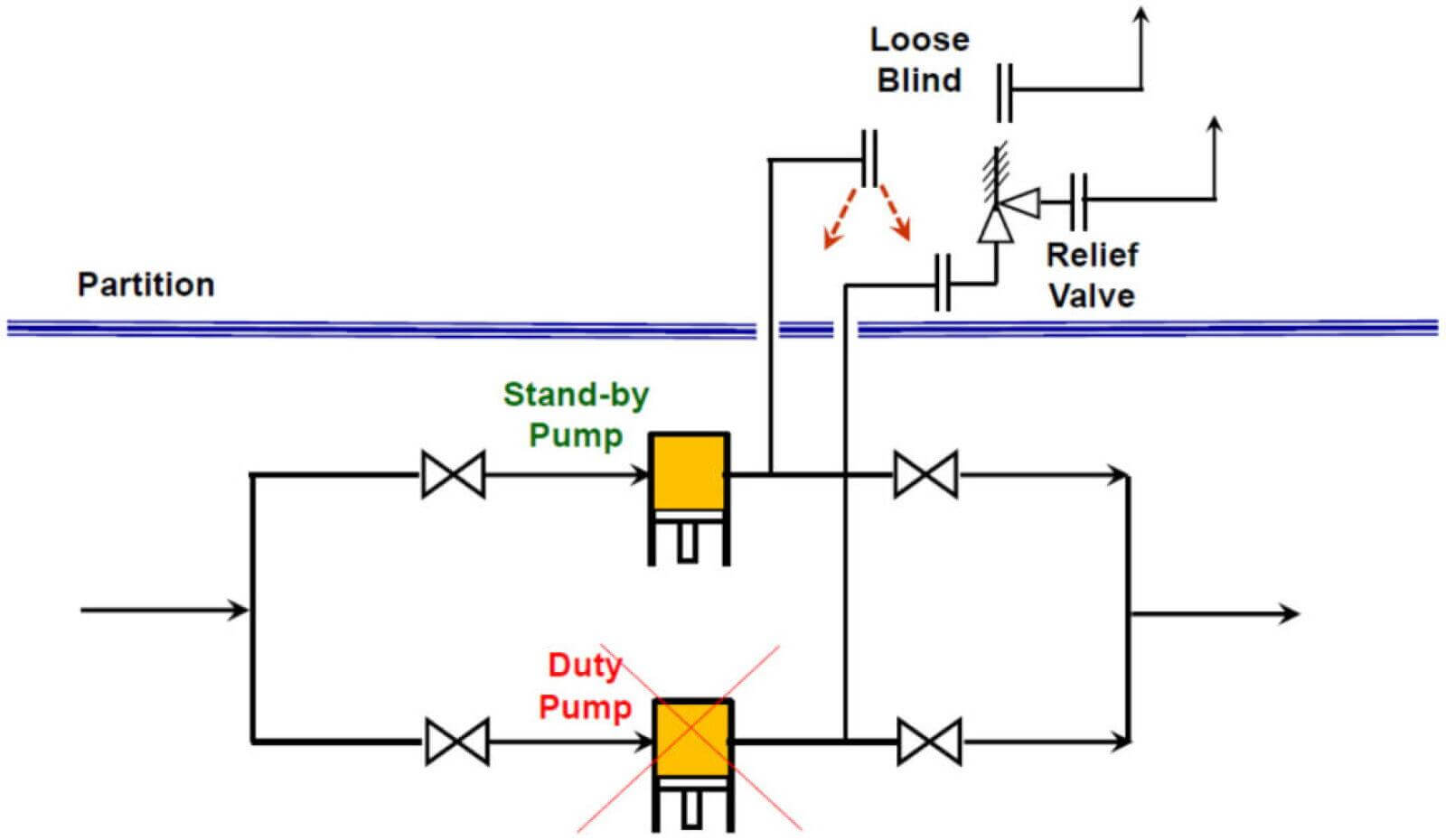
A pressure safety valve associated with the pump had been removed. The maintenance work was incomplete, and the valve had not been restored. A temporary blind flange assembly had been fitted in its place. The installation’s permit-to-work arrangements were supposed to control this condition and prevent the equipment from being operated until it was safe to do so.
That control did not work as intended.
When the pump was started, condensate escaped through the inadequately sealed temporary arrangement. The released hydrocarbon formed a flammable cloud. It ignited, producing the first major explosion in the platform’s C module.
THE FIRST EXPLOSION WAS ONLY THE BEGINNING
The first explosion was devastating, but it was only the beginning.
Fire spread, equipment was damaged and the installation’s ability to control its process systems deteriorated. The platform’s location within a connected offshore production network meant that the initial event could not be treated as an isolated equipment failure. Hydrocarbons continued to present a major hazard, including supplies associated with connected pipelines.
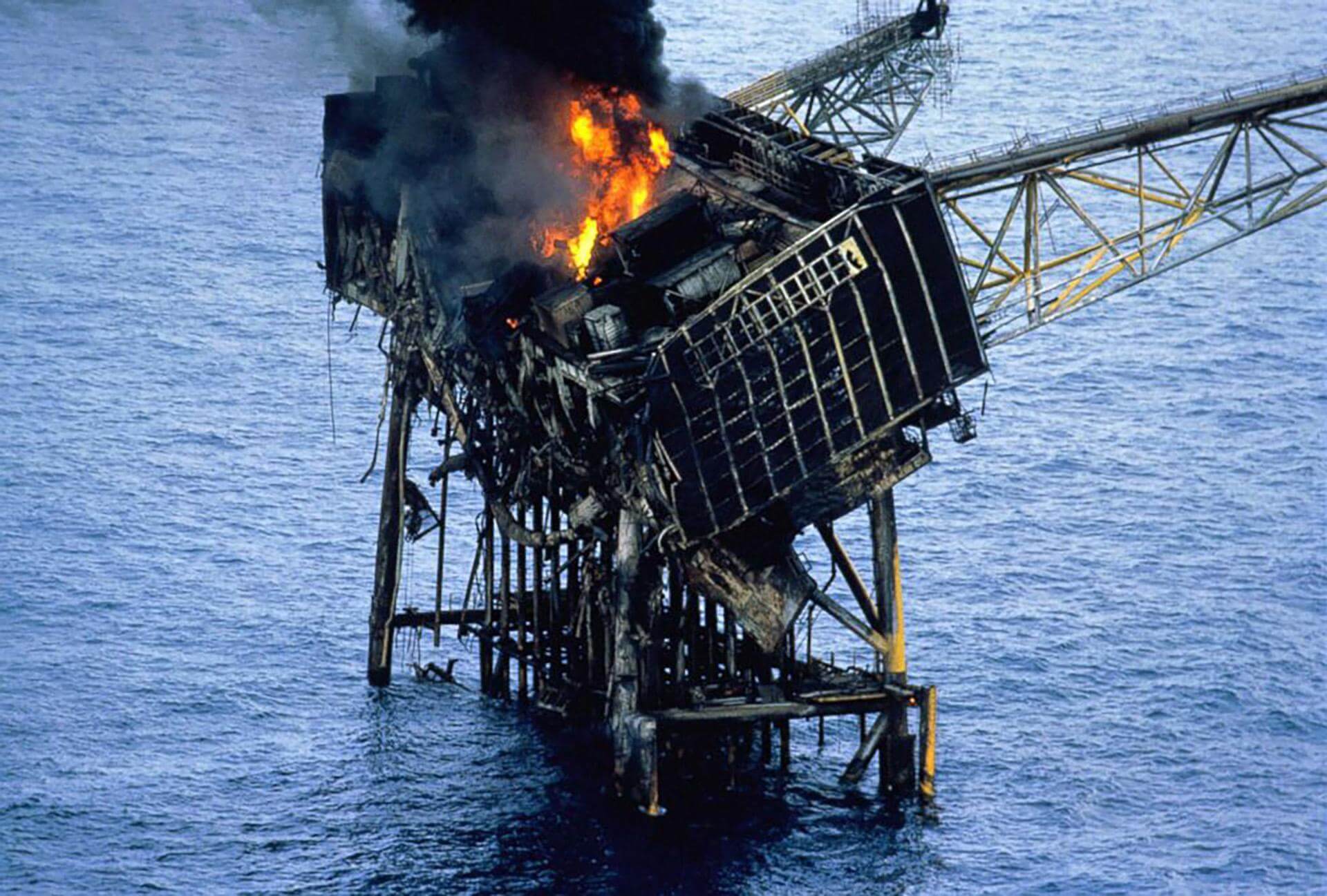
As the incident escalated, additional explosions and fires followed. The platform was progressively overwhelmed. Some workers were trapped or cut off from escape routes; others sought refuge in accommodation areas while smoke and heat made movement increasingly dangerous. The conditions that should have supported an orderly emergency response were themselves being compromised by the disaster.
By the time the platform was lost, 165 people on Piper Alpha had died. Two crew members of a rescue vessel also died during the rescue effort, bringing the total death toll to 167.
The disaster began with a pump. It became a catastrophe because the risks surrounding that pump were embedded in a much larger operating system.
INITIATION AND ESCALATION
The figures are not simply a measure of the disaster’s magnitude. They represent the consequences of a system in which a manageable maintenance condition became an ignition event, and an ignition event became a prolonged, escalating emergency.
The timeline also demonstrates why the first explosion cannot be treated as the entire explanation. The initial release and ignition were crucial, but the subsequent destruction depended on additional conditions: the quantities of hydrocarbons available to feed the fires, the damage to safety systems, the platform’s design and configuration, the interaction between connected infrastructure and the effectiveness of emergency response.
The distinction between initiation and escalation is central to major-hazard analysis.
A process safety investigation asks more than what failed first. It asks what allowed the first failure to progress, what barriers should have prevented each subsequent stage, and why those barriers did not provide sufficient protection.
Piper Alpha’s history shows the danger of treating these as separate questions.
The disaster began with a pump. It became a catastrophe because the risks surrounding that pump were embedded in a much larger operating system.
THE PROJECT HERALD REVIEW
Projects • Capital • Products & Policy
THE PLATFORM THAT BECAME A SYSTEM
Piper Alpha, Offshore Production and the Risk of Interconnected Infrastructure
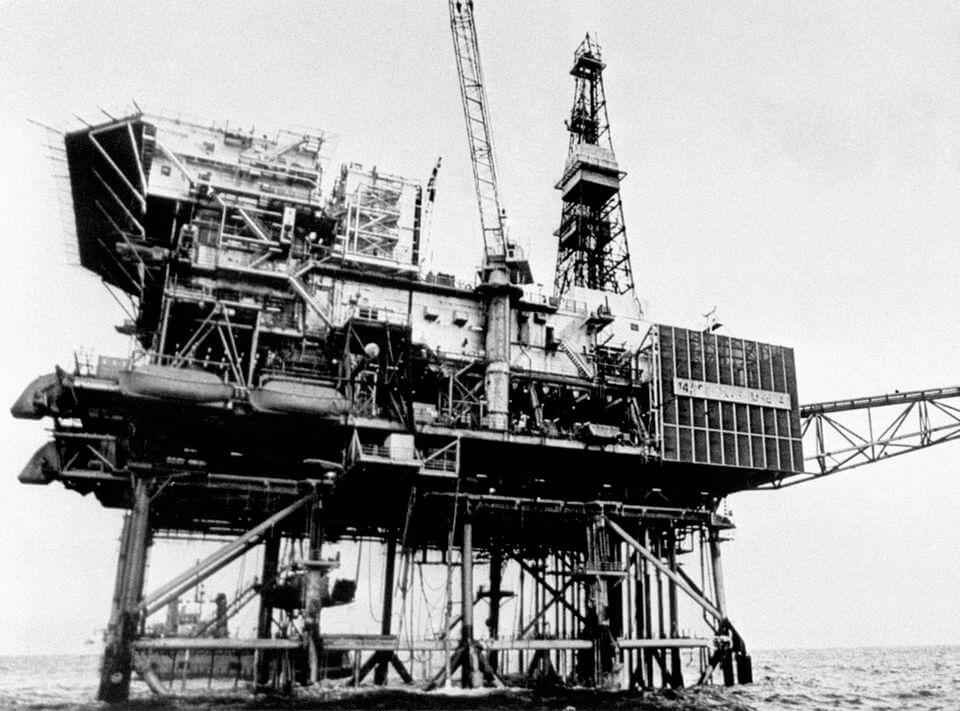
Piper Alpha was not an isolated piece of machinery sitting above the sea. It was a major offshore production installation operating within a network of fields, pipelines, processing equipment and other platforms.
That distinction is fundamental to understanding the disaster.
Offshore production facilities are engineered around the movement and treatment of hydrocarbons. Oil, gas and associated liquids move through equipment designed to separate, compress, pump, measure and export them. The system’s commercial value comes from keeping those flows controlled and available. Its principal process safety challenge is that the same materials can release enormous energy when containment is lost and ignition occurs.
WHEN A PLATFORM CHANGES ROLE
Piper Alpha’s role evolved during its operating life. As gas-related facilities and connections were added to an installation initially developed for oil production, the platform became part of a more complex network. Such changes can increase productive capacity, but they also change the installation’s hazard profile.
A modification that appears commercially rational can create new interactions between equipment, operating procedures, emergency systems and neighbouring assets. The relevant safety question is not simply whether each new component works as designed. It is whether the installation remains safe as a whole after the change.
This is the purpose of a major-hazard assessment: to consider credible accident scenarios across the complete system, rather than evaluating individual pieces of equipment in isolation.
Hydrocarbons move through the system as a whole. Risk must be managed at the same level.
THE PIPELINES THAT CONNECTED THE RISK
The platform’s connected pipelines were especially important during the disaster. They represented sources of hydrocarbon inventory beyond the equipment located directly around the initial explosion. When a major incident damages process systems, the ability to stop or isolate incoming supplies becomes critical. If connected sources continue to feed a fire, the incident can persist and intensify even after the original equipment has ceased to function.
The design and operating philosophy of connected offshore facilities therefore matters as much as the condition of any single pump or valve. Isolation arrangements must be appropriate to the hazards, capable of functioning during credible emergencies, and supported by clear authority and procedures for shutting down connected operations.
AGEING, MODIFIED INFRASTRUCTURE
Piper Alpha also illustrates the challenge of managing ageing or modified infrastructure. Over a facility’s life, equipment changes, operating conditions evolve, new systems are integrated, and maintenance work accumulates. Drawings, operating instructions and emergency assumptions can become unreliable if changes are not properly assessed and incorporated into the installation’s safety documentation.
The danger is not that every modification creates unacceptable risk. It is that a series of individually manageable changes can create a system whose combined risks are no longer adequately understood.
For operators, the commercial imperative to increase capacity, maintain production or integrate new infrastructure must be balanced against the need to reassess the installation’s full risk profile. A modification is not complete simply because it has been mechanically installed and commissioned. It is complete when the operational and safety implications have been evaluated, the relevant safeguards are in place, and the people who operate the facility understand the new conditions.
Piper Alpha remains a powerful warning against fragmented responsibility. A process system may be divided among departments, contractors, maintenance teams and operators, but the hazard does not respect those organisational boundaries.
Hydrocarbons move through the system as a whole. Risk must be managed at the same level.
THE PROJECT HERALD REVIEW
Projects • Capital • Products & Policy
THE MAINTENANCE DECISION
The Condensate Pump, the Missing Safety Valve and the Permit-to-Work Failure
The immediate chain of events at Piper Alpha centred on a condensate pump and a pressure safety valve that had been removed during maintenance.
A pressure safety valve is a protective device intended to relieve pressure when a system exceeds its specified limits. Its removal changes the conditions under which the equipment can safely operate. That is why maintenance on safety-critical equipment requires more than a work order and a technician with the right tools. It requires a controlled process that identifies the equipment’s condition, restricts its use when necessary, and ensures that the restriction remains effective until the work is complete and the system is formally returned to service.
A CONTROL THAT DID NOT HOLD
At Piper Alpha, the valve had been removed and a temporary blind flange assembly fitted in its place. The maintenance work was incomplete. The permit-to-work system was meant to ensure that this status was known and that the pump was not operated in an unsafe condition.
The system failed to provide that protection.
When the pump normally in service became unavailable, the other pump was selected. The personnel making that operational decision did not have an adequate understanding of the maintenance condition that made the pump unsafe to start. Once activated, the temporary arrangement failed to contain the pressurised condensate.
The technical lesson is direct: a piece of equipment cannot be declared safe for operation merely because it appears ready or because a maintenance activity has reached a particular administrative stage. Its actual physical condition, the status of protective devices, and the completion of all required checks must agree.
This is the difference between paperwork compliance and operational assurance.
A missing safety device is not simply a maintenance defect. It is a changed risk condition that must be controlled until the system is restored.
WHAT A PERMIT IS FOR
A permit-to-work system is designed to coordinate hazardous tasks. It identifies the equipment and work scope, establishes necessary precautions, communicates restrictions and provides a formal route for suspending, extending or closing work. Its value depends on accurate information and the ability to prevent incompatible activities from proceeding.
The permit is not a substitute for safe engineering. Nor is it a document that can be completed independently of the physical work. If a safety valve has been removed, the system must make that condition visible to anyone who might attempt to operate the affected equipment. If work remains incomplete, the equipment must remain under an effective control that prevents an unsafe return to service.
This requires coordination between maintenance, operations and supervisory personnel. It also requires clear identification of the equipment involved, the status of isolations, the condition of temporary fittings, and the authority required to restore the system.
In a high-hazard facility, the operational question should never be only, “Is the pump available?” It must also be, “Is this pump safe to operate in its current configuration, and can that conclusion be verified?”
BEYOND OFFSHORE OIL AND GAS
The distinction has consequences far beyond offshore oil and gas. It applies to power stations, chemical plants, refineries, mines, manufacturing facilities and large construction projects where equipment is maintained, isolated, tested and returned to service.
A missing safety device is not simply a maintenance defect. It is a changed risk condition that must be controlled until the system is restored.
At Piper Alpha, the failure to control that condition helped initiate a disaster whose consequences extended far beyond the maintenance job itself.
THE PROJECT HERALD REVIEW
Projects • Capital • Products & Policy
THE HANDOVER THAT FAILED
How Critical Information Was Lost Between Maintenance and Operations
A safety-critical fact is useful only if it reaches the person who needs it before that person makes a decision.
Piper Alpha exposed the consequences of breaking that chain.
Maintenance work and production operations often run in parallel on complex installations. One team may be repairing equipment while another is managing process flow. A pump may be unavailable because a component has been removed; an adjacent system may remain live; another item of equipment may be prepared for use. Each activity can be reasonable when properly coordinated. Together, they can become dangerous when the condition of one system is not understood by the people controlling another.
MORE THAN A CLERICAL PROBLEM
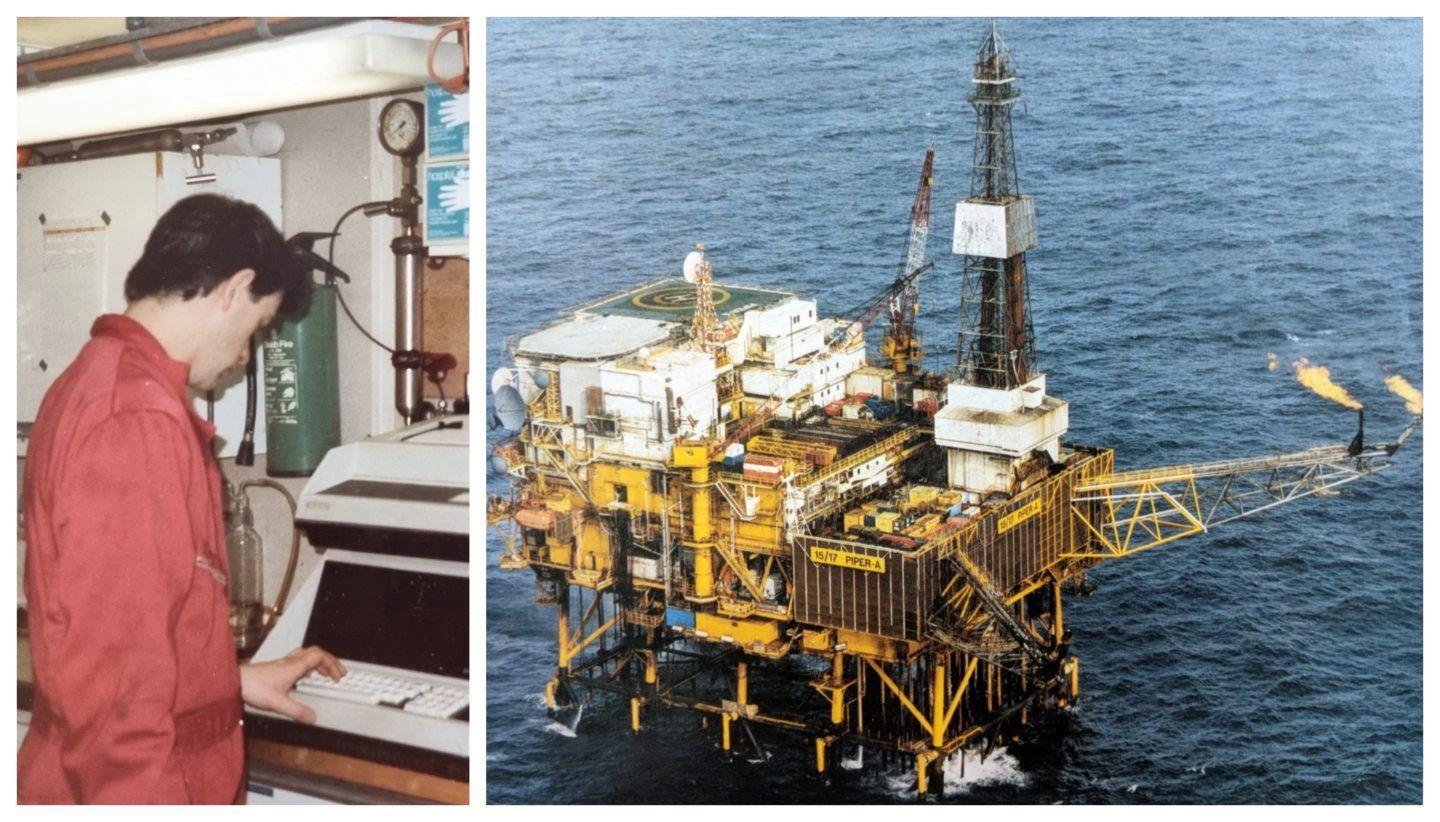
The permit-to-work arrangement at Piper Alpha did not reliably communicate that the condensate pump remained unsuitable for operation. The maintenance work had not been completed, yet the operational decision to start the pump was made without adequate awareness of the critical restriction.
This was more than a clerical problem.
A handover is a safety control. It transfers knowledge about the state of equipment, outstanding work, temporary changes, isolations and hazards between people, shifts and departments. Where the installation operates continuously, the quality of that transfer can determine whether an otherwise routine decision is safe.
A weak handover can leave a dangerous gap between the physical state of a system and the information available to its operators.
The problem becomes more difficult when multiple records exist. A work permit may be held in one location, maintenance records in another, and operating decisions made from a control room or shift log. If those records do not reconcile, personnel may believe they have a complete picture when they do not.
A handover is a safety control.
A CONTROLLED PROCESS, NOT MERELY A RECORD
Modern digital systems can improve visibility, but technology alone does not eliminate the underlying problem. A digital permit can still contain incomplete information. A dashboard can still show a status that has not been verified against the equipment. An electronic approval can still be granted without a shared understanding of the risk.
Effective handover therefore requires a controlled process, not merely a record.
The status of safety-critical equipment must be explicit. Outstanding work must remain visible across shifts. Temporary configurations must be identified and assessed. Conflicting information must be resolved before operation proceeds. Where uncertainty remains, the equipment must not be returned to service until the uncertainty has been removed.
The organisation must also make it easy for workers to stop an operation when the available information is inadequate. A production target, a schedule or the inconvenience of keeping equipment offline must never become an informal reason to bypass a safety restriction.
EVERY INTERFACE IS A POINT OF FAILURE
Piper Alpha demonstrates how easily responsibility can become fragmented. Maintenance personnel may assume that operations know the equipment’s status. Operations may assume that the maintenance system would prevent an unsafe start. Supervisors may believe the relevant permit has been communicated. Each group can believe that another control is functioning.
Yet the hazard remains physically present.
For project managers and contractors, this is one of the most transferable lessons from the disaster. Every interface between teams is a potential point of failure: design to construction, construction to commissioning, commissioning to operations, contractor to client, and one shift to the next.
The question is not whether information was recorded somewhere. It is whether the right information reached the right decision-maker, was understood, and changed the decision when necessary.
At Piper Alpha, the answer was tragically inadequate.
THE PROJECT HERALD REVIEW
Projects • Capital • Products & Policy
THE FIRST EXPLOSION
The Release of Condensate and the Breakdown of Process Containment
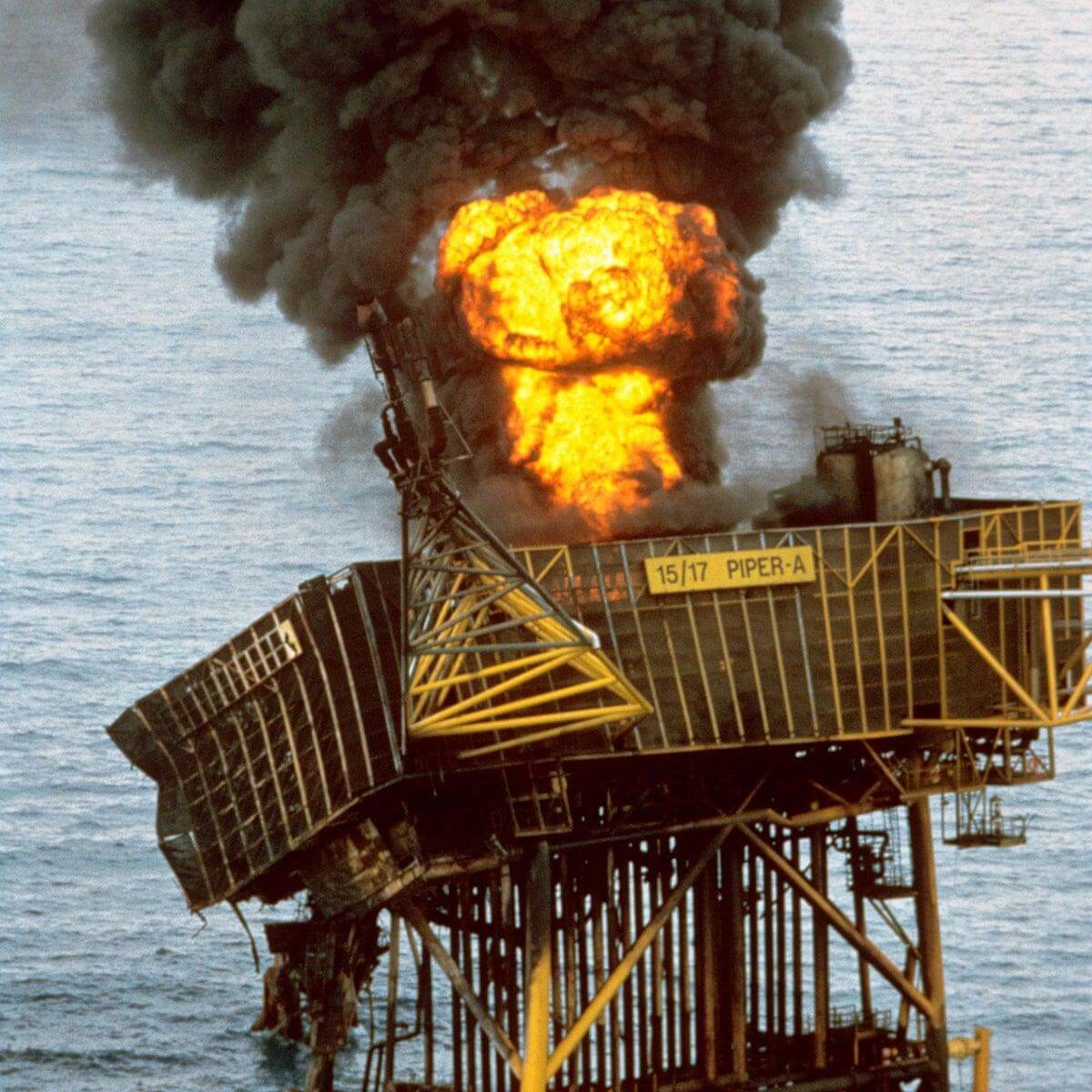
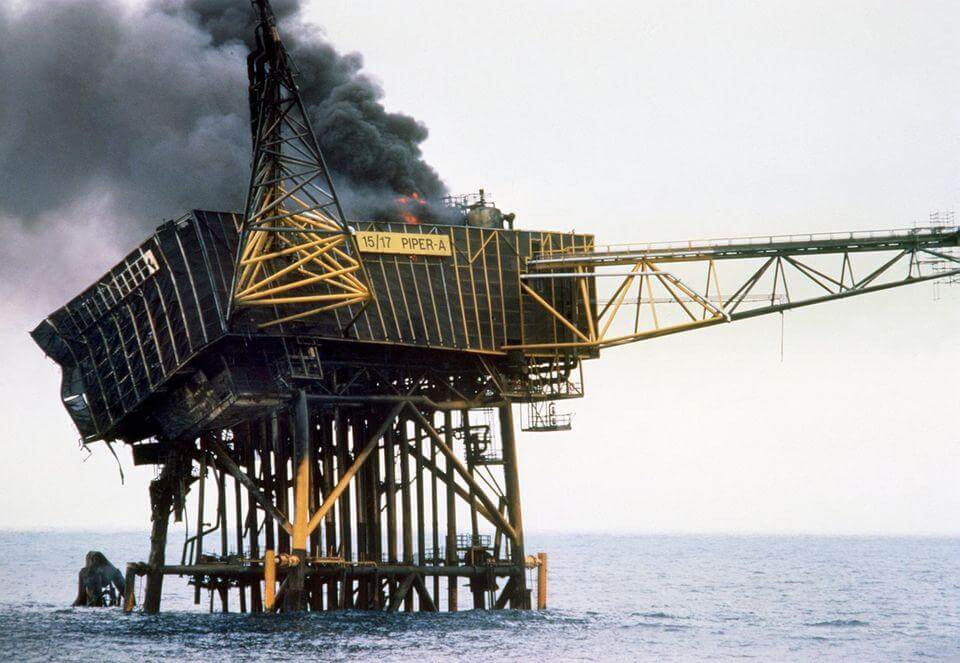
At approximately 10 p.m. on 6 July 1988, the first explosion occurred in Piper Alpha’s C module after condensate escaped from the pump that had been brought into operation.
Condensate is a hydrocarbon liquid associated with natural gas production. Under the conditions present in a pressurised process system, a release can rapidly produce flammable vapour. If that vapour reaches an ignition source within the appropriate concentration range, the result can be a flash fire or explosion.
The release at Piper Alpha followed the failure of the temporary arrangement installed where the pump’s pressure safety valve had been removed. The leak produced a flammable cloud that ignited, causing the initial explosion.
CONTAINMENT IS A SYSTEM
The event exposed the most fundamental requirement of process safety: hazardous materials must remain contained, and the systems intended to protect containment must be maintained in a safe and verified condition.
Containment is not a single device. It depends on the integrity of pipework, flanges, valves, seals, pressure protection, isolation systems and the procedures governing how the equipment is maintained and operated. A weakness in one component may be manageable if other protective layers function correctly. The danger grows when those layers depend on the same incomplete information or when the failure of one control exposes weaknesses in others.
The first explosion at Piper Alpha was the initiating event. It was not the whole disaster.
CONSEQUENCES BEYOND THE POINT OF RELEASE
The initial explosion damaged the platform and disrupted the environment in which personnel were trying to respond. In a major hydrocarbon incident, the consequences can extend beyond the point of release. Pressure waves may damage adjacent equipment; fire can impair cables, instruments and control systems; smoke and heat can obstruct escape; and the failure of utilities can reduce the effectiveness of emergency measures.
This is why major-hazard assessment must consider the physical consequences of an explosion, not simply the probability of a leak.
The location of equipment matters. So do separation distances, blast resistance, fire protection, the routing of process lines, the positioning of control facilities and the ability to isolate hazardous inventories after an event. If a release occurs in a location where its effects can disable other protective systems, the incident may escalate through several stages.
THE LIMITS OF THE FIRST LINE OF DEFENCE
The first explosion at Piper Alpha was the initiating event. It was not the whole disaster.
That distinction is central to the investigation. Preventing the initial release was essential, but the platform also needed to withstand and control a major incident if prevention failed. The question was whether its protection systems, physical design and emergency arrangements could prevent a local event from becoming a platform-wide catastrophe.
The later destruction showed the limits of the existing arrangements.
In high-hazard engineering, no credible design should rely on a single assumption that everything will work as intended. Equipment can fail. Human decisions can be made with incomplete information. Maintenance can introduce temporary conditions. A safety system must therefore be designed to prevent foreseeable failures and to limit their consequences when prevention is unsuccessful.
Piper Alpha demonstrates the cost of relying too heavily on the first line of defence without sufficient protection against escalation.
THE PROJECT HERALD REVIEW
Projects • Capital • Products & Policy
WHEN THE FIRE FOUND MORE FUEL
Pipelines, Connected Platforms and the Escalation of the Disaster
The first explosion did not end the supply of hydrocarbons to the area. Piper Alpha’s connections to other offshore facilities meant that the platform remained exposed to the hazards of a wider production network.
This was one of the most consequential features of the disaster.
The platform’s destruction was driven not only by the condensate release that initiated the event, but also by subsequent fires and explosions involving hydrocarbons associated with connected infrastructure. The inquiry examined the role of incoming pipeline supplies and the decisions made by operators of linked facilities as the incident developed.
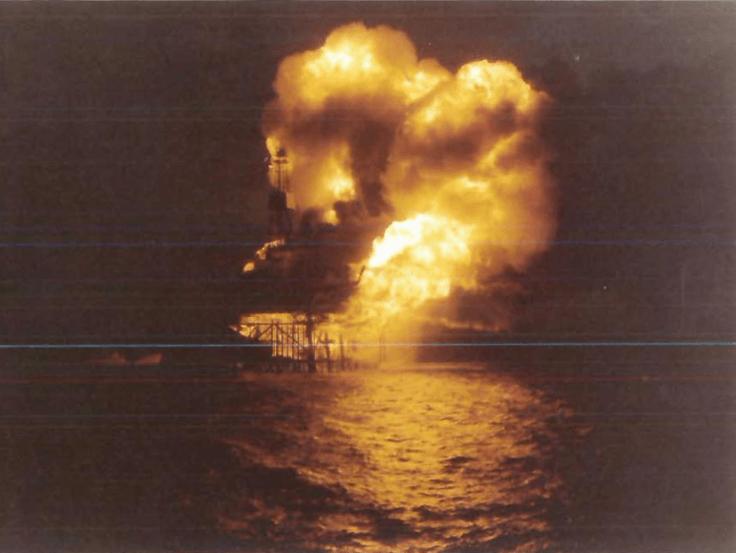
PIPELINES ARE NOT PASSIVE ASSETS
In an offshore network, pipelines are not passive assets. They contain hazardous inventories and connect operations that may depend on one another commercially. Their safety must be considered in terms of both normal operation and credible emergency conditions.
When a major incident occurs, connected systems can create a difficult operational problem. Shutting down production may interrupt supply, affect other installations and impose substantial commercial costs. Yet if continued flow feeds a fire or increases the amount of hydrocarbon available to a damaged facility, the consequences of delay can be catastrophic.
Emergency isolation therefore requires clear authority, reliable communication and procedures that anticipate the loss of normal control.
The critical question is not simply whether an operator can stop a pipeline under ordinary conditions. It is whether the network’s isolation strategy remains effective when the receiving installation has suffered major damage, communications are disrupted and the true state of the process is uncertain.
Interdependence creates efficiency, but it also creates pathways through which failure can spread.
HOW HAZARD PROPAGATES
Piper Alpha showed how the consequences of a platform accident can extend beyond its physical boundaries. The hazard can propagate through shared infrastructure, connected production systems and decisions made by people who may be located on another installation.
This is a problem familiar to modern infrastructure. Electricity networks connect generators, substations and transmission lines. Gas networks connect production, processing, storage and distribution. Ports depend on access channels, utilities, terminals and logistics systems. Industrial facilities may share pipelines, power supplies, control systems or emergency services.
Interdependence creates efficiency, but it also creates pathways through which failure can spread.
THE SHUTDOWN DECISION
A robust design must identify those pathways before an emergency. It must determine which inventories can continue to feed an incident, what isolation points are available, how quickly they can be activated, who has authority to order shutdown, and what happens if communications or remote controls fail.
It must also consider the consequences of shutting down. Emergency procedures should not leave personnel uncertain about whether production continuity takes precedence over isolation when a major hazard is unfolding.
The commercial value of an operating network can make shutdown decisions difficult. However, the relevant comparison is not between continued production and a short interruption alone. It is between the controlled cost of stopping an operation and the potentially catastrophic consequences of allowing an uncontrolled event to continue.
Piper Alpha remains a case study in why connected infrastructure must be assessed as one safety system. A platform cannot be treated as safe if its emergency survival depends on decisions, pipelines or protective measures that have not been adequately integrated into the wider network.
THE PROJECT HERALD REVIEW
Projects • Capital • Products & Policy
THE EMERGENCY THAT THE PLATFORM COULD NOT CONTAIN
Fire Protection, Escape Routes and the Limits of Emergency Preparedness
An installation’s emergency arrangements are often tested through drills, written procedures and equipment inspections. Piper Alpha demonstrated why those measures must be judged against the conditions of a real major accident.
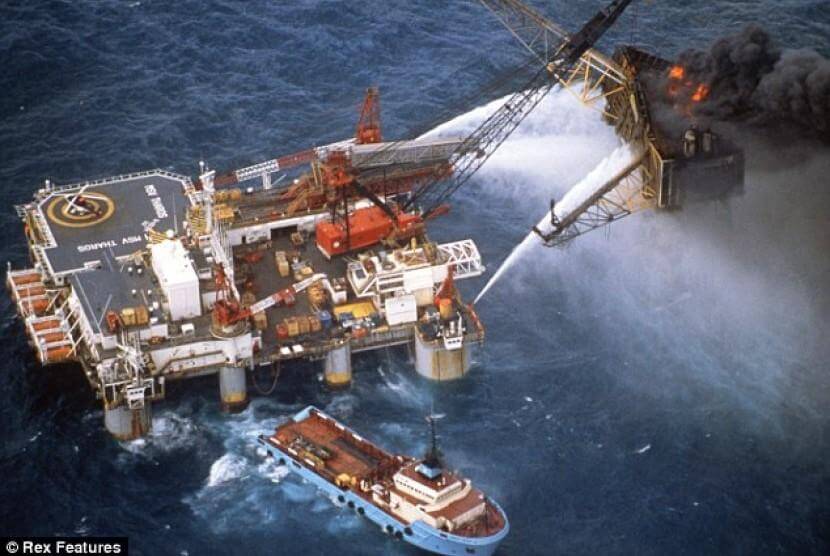
Following the first explosion, fire and damage spread through the installation. The platform’s ability to control the incident deteriorated, and the conditions required for safe movement and evacuation became increasingly difficult to maintain.
A PLAN THAT MUST SURVIVE THE EVENT
An emergency plan is only effective if it remains usable after the initiating event. Routes may be blocked by debris or fire. Lighting, communications and control systems may fail. Smoke can make familiar areas inaccessible. Personnel may be separated from their teams or unable to reach the equipment and locations assumed in the plan.
In an offshore emergency, these problems are intensified by the surrounding sea. A worker cannot simply leave the site and reach a road. Escape depends on the installation’s layout, the availability of safe routes to the sea, the suitability of evacuation equipment, the condition of rescue arrangements and the ability of personnel to reach them.
Piper Alpha’s emergency response was complicated by the speed and severity of the escalation. The public inquiry examined the platform’s fire protection, emergency systems, escape and rescue arrangements, as well as the preparedness of management and workers for a major emergency.
Emergency response is not a document prepared after design. It is part of the design itself.
EMERGENCY PLANNING IS DESIGN
The wider lesson is that emergency planning cannot be separated from installation design.
Fire protection must be appropriate to the hazards and capable of operating under the conditions for which it is required. Emergency shutdown systems must be considered alongside the hazards they are intended to control. Safe refuge areas must be evaluated for their ability to protect personnel during credible scenarios. Escape routes must remain viable for as long as the evacuation strategy assumes they will be needed.
The design must also account for the possibility that a major accident disables more than one protective system at the same time. An emergency plan that assumes power, communications, access and fire protection will all remain available may fail when the incident damages the infrastructure supporting them.
Training is essential, but training cannot compensate for a fundamentally inadequate physical arrangement. Workers must understand their responsibilities and practise emergency actions, while the installation itself must provide a realistic chance of survival.
TESTED AGAINST THE WORST CASE
The same principle applies to the authority to shut down operations. Personnel must know who can make critical decisions, how instructions are communicated and what actions are required when the normal chain of command is disrupted. In a rapidly developing event, uncertainty can consume time that workers do not have.
Emergency arrangements should also be tested against credible worst-case scenarios rather than only routine incidents. A small contained fire and a rapidly escalating hydrocarbon release present very different challenges. Plans must reflect the possibility of widespread damage, loss of safe access and failure of the systems that normally support the workforce.
Piper Alpha revealed a gap between the existence of emergency arrangements and their ability to protect people during a catastrophic event.
That gap is a central concern for every high-hazard operator: emergency response is not a document prepared after design. It is part of the design itself.
THE PROJECT HERALD REVIEW
Projects • Capital • Products & Policy
THE HUMAN COST
The 167 Lives Lost and the Workers Who Faced Impossible Choices
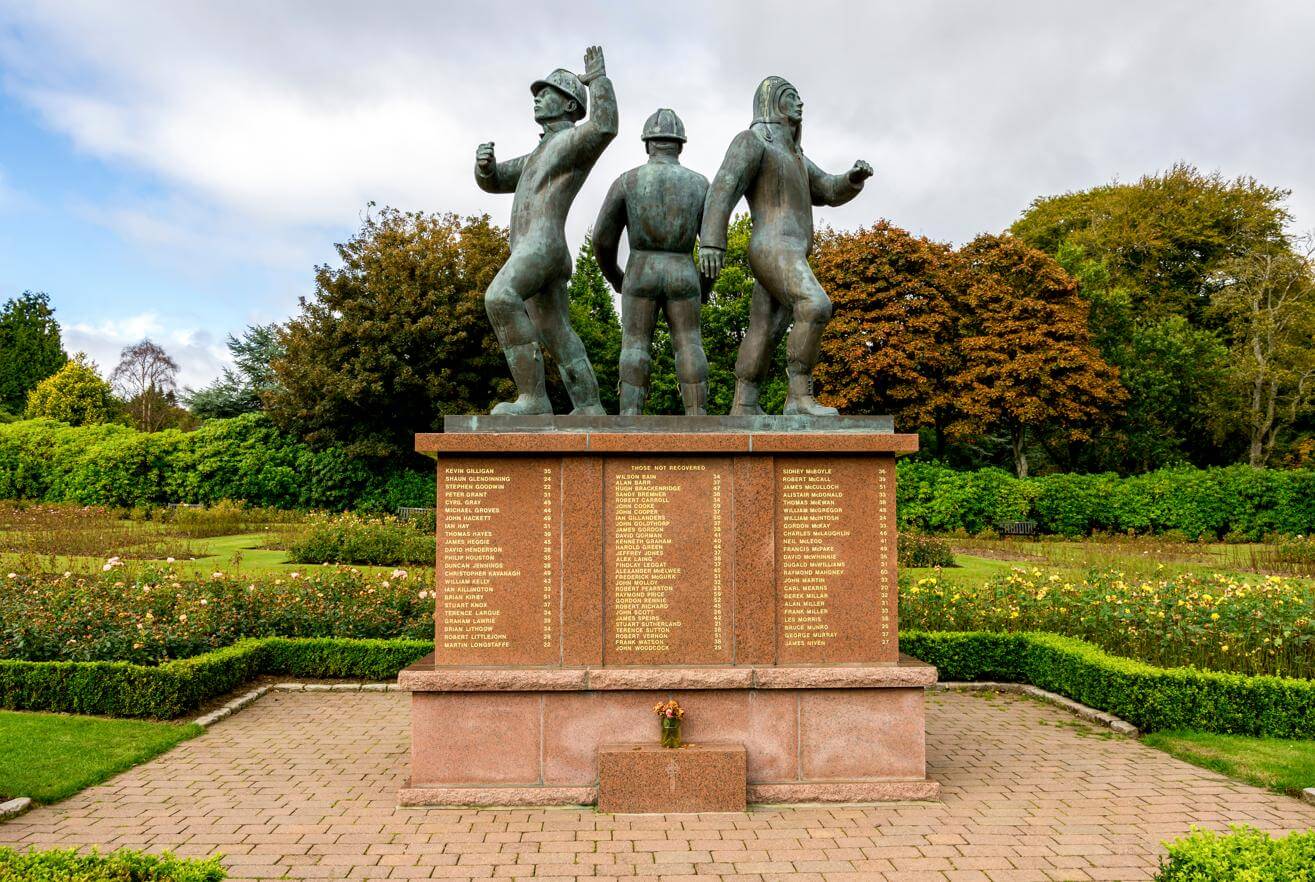
The final death toll from Piper Alpha was 167. Of those, 165 were people on the platform and two were crew members of a fast-rescue vessel who died during the rescue effort.
Behind that number were workers who had gone offshore to perform technical, operational, maintenance and support roles. They were part of an industrial system designed to produce and transport energy. Few could have anticipated that a routine operating decision would become the opening stage of a disaster that would destroy the installation.
The loss of life cannot be understood only through the mechanics of the first explosion. It must also be understood through the conditions that followed: the spread of fire, the destruction of parts of the installation, the loss of safe access, the disruption of emergency arrangements and the difficulty of escaping from a platform surrounded by the North Sea.
THE FINAL RECIPIENTS OF RISK
In major industrial accidents, the workforce often becomes the final recipient of risk created by decisions made across an organisation. Engineers determine system configuration. Managers approve operating arrangements. Maintenance teams work under permit systems. Contractors perform specialist tasks. Operators make production decisions. Regulators set and enforce requirements.
The people physically present when an accident occurs may have limited knowledge of the full risk picture and little control over the design decisions that shaped their exposure.
This is why safety accountability cannot be reduced to asking whether an individual followed a procedure. Investigators must also determine whether the procedure was adequate, whether the person had accurate information, whether the equipment was safe, whether supervision was effective and whether the organisation had created conditions in which safe decisions were realistically possible.
A worker cannot make a sound decision from information that has not been communicated. A control-room operator cannot reliably assess a system whose actual condition is obscured by incomplete records. An emergency plan cannot protect personnel if its escape assumptions do not survive the event it was meant to address.
Safety is an organisational responsibility before it becomes an individual action.
BEYOND THE PLATFORM
The consequences of Piper Alpha extended beyond the platform. Families lost relatives. Colleagues lost friends. Communities and the offshore workforce were confronted with the reality that a highly productive industrial environment could become fatal with extraordinary speed.
The public inquiry and the reforms that followed were important responses, but no regulatory change can reverse the loss of life.
The human cost also challenges the way project performance is measured. Production rates, asset utilisation, schedule adherence and cost control are visible and frequently quantified. The quality of risk control can be less visible until something goes wrong. When commercial performance becomes the dominant measure of success, organisations may fail to recognise that safe operation is not a competing objective. It is a condition of sustainable operation.
THE SYSTEM FAILED THEM
The workers on Piper Alpha depended on the system around them to control hazards they could not individually eliminate. The system failed them.
For today’s project owners and operators, the obligation is clear: workers must not be expected to compensate through personal vigilance for weaknesses in design, management or safety assurance.
Safety is an organisational responsibility before it becomes an individual action.
THE PROJECT HERALD REVIEW
Projects • Capital • Products & Policy
INSIDE THE CULLEN INQUIRY
What the Investigation Revealed About Management and Safety
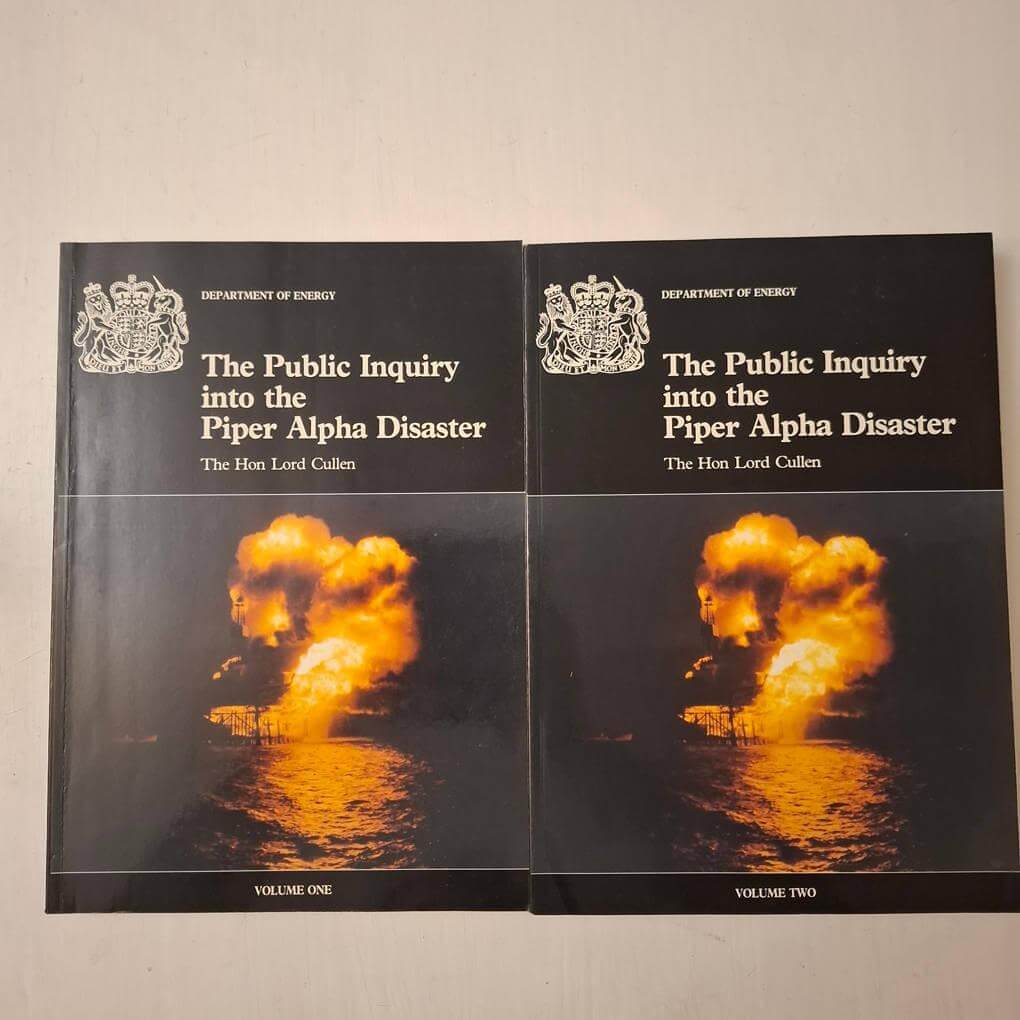
The Piper Alpha disaster led to a public inquiry chaired by Lord Cullen. The investigation examined the events of 6 July 1988 and the wider arrangements governing offshore safety, including management systems, equipment, emergency planning and regulatory oversight.
Its importance lay in the breadth of the examination. The inquiry did not stop at identifying the pump, the missing safety valve or the initial release of condensate. It considered the conditions that allowed the incident to occur and the reasons the consequences became so severe.
The findings challenged the assumption that compliance with existing rules and routine inspection was sufficient to demonstrate that a major-hazard installation was safe.
THE SAFETY CASE PROPOSAL
The UK Government’s statement to Parliament on 12 November 1990 described the report’s central proposal: operators should retain primary responsibility for safety and be required to prepare a comprehensive safety case, while the regulator should review that case. The report made 106 recommendations covering safety management, installation design and equipment, emergency planning, evacuation, escape and rescue, workforce involvement and regulation. UK Parliament, 12 November 1990.
The significance of this approach was substantial. Rather than relying mainly on a regulator to inspect compliance with individual requirements, the operator would need to demonstrate that the risks associated with its installation had been identified and controlled.
That is a more demanding form of accountability.
It requires the operator to understand the hazards arising from the installation’s design, equipment, operating conditions and connected systems. It requires the organisation to demonstrate that the safety management system is adequate, that major risks are controlled, and that personnel can be protected in the event of a serious emergency.
The safety case concept also recognises that offshore installations are not identical. A control appropriate to one platform may not adequately address the risks of another. The safety case must therefore be grounded in the characteristics and hazards of the particular installation rather than treated as a generic document.
The central principle was that safety must be demonstrated, not assumed.
MANAGEMENT RESPONSIBILITY
The inquiry also brought management responsibility into sharper focus. Senior leadership cannot assume that safety is being maintained simply because procedures exist, inspections occur or a safety department is present. Management must have credible assurance that the controls on which the organisation depends are functioning in practice.
That assurance requires evidence. It includes reliable maintenance systems, effective permit-to-work arrangements, competent personnel, clear operating responsibilities, suitable emergency arrangements and audits that test the reality of operations rather than the completeness of records.
Regulatory oversight is essential, but it cannot replace the operator’s responsibility to run a safe installation. Equally, operator assurances cannot replace independent scrutiny. The system requires both: an operator accountable for understanding and controlling its hazards, and a regulator with the authority and competence to assess whether that responsibility is being discharged.
THE INQUIRY’S LEGACY
The Cullen Inquiry’s legacy was therefore not limited to a set of technical recommendations. It helped establish a different relationship between industry, management and regulation.
The central principle was that safety must be demonstrated, not assumed.
THE PROJECT HERALD REVIEW
Projects • Capital • Products & Policy
THE REGULATORY RECKONING
106 Recommendations and the Birth of the Offshore Safety Case Regime
The Cullen Inquiry produced 106 recommendations. They addressed the management of safety, platform design and equipment, emergency planning, evacuation, escape and rescue, workforce participation and the regulation of offshore installations.
The recommendations helped drive a fundamental change in the United Kingdom’s offshore safety framework.
THE MOVE TO A SAFETY CASE REGIME
A central reform was the move towards a safety case regime. Under this approach, an operator must prepare a formal assessment demonstrating that the major hazards associated with an installation have been identified and that adequate measures are in place to control them. The safety case must address the installation’s safety management arrangements, the control of major risks and the provision made for personnel during a major emergency.
The government accepted the inquiry’s conclusions and recommendations. Subsequent reforms placed greater emphasis on the operator’s responsibility to demonstrate safety and on independent regulatory scrutiny. Offshore safety responsibilities were transferred to the Health and Safety Executive, and the safety case framework became a defining feature of the UK’s offshore regime.
The change was important because it addressed a weakness in a purely prescriptive approach.
WHY RULES ALONE ARE NOT ENOUGH
Rules and technical standards remain necessary. They establish minimum requirements, define responsibilities and provide a basis for enforcement. But a high-hazard installation may contain combinations of equipment, operating conditions and hazards that cannot be adequately managed by checking compliance with a list of individual rules alone.
A safety case asks whether the complete installation has been assessed as a system. It requires the operator to explain the major hazards, identify the measures used to control them and demonstrate that those measures are adequate for the specific facility.
This does not remove the need for detailed engineering standards or routine inspections. It changes the way they fit into the larger assurance process. A compliant component is not sufficient if the system around it remains unsafe. An approved procedure is not sufficient if the organisation cannot show that it is consistently followed. A risk assessment is not sufficient if its assumptions no longer match the operating reality.
The reforms also reinforced the importance of emergency arrangements, workforce participation and the assessment of design risks. These are not peripheral topics. They form part of the evidence needed to show that an installation can prevent major accidents and limit their consequences.
If it becomes a paper exercise, the central lesson of Piper Alpha has been lost.
LESSONS BEYOND THE NORTH SEA
The safety case approach has relevance beyond the North Sea. Any jurisdiction overseeing complex industrial facilities faces the challenge of ensuring that the operator understands the risks of the specific asset, that controls are appropriate to those risks, and that the regulator can test the operator’s claims.
For countries developing offshore petroleum resources, gas infrastructure, refineries, industrial parks and major energy projects, the lesson is not to copy a foreign framework mechanically. It is to ensure that the regulatory system can demand credible, installation-specific evidence of safety, backed by competent oversight and meaningful enforcement.
The most important reform after Piper Alpha was not simply the introduction of another document. It was the principle that the organisation responsible for a hazardous installation must be able to demonstrate how it understands and controls the risks.
A safety case has value only when it reflects the actual facility, is maintained as conditions change, and informs decisions throughout the asset’s life.
If it becomes a paper exercise, the central lesson of Piper Alpha has been lost.
THE PROJECT HERALD REVIEW
Projects • Capital • Products & Policy
THE COMMERCIAL COST OF FAILURE
Asset Integrity, Business Continuity, Liability and Investor Exposure
Piper Alpha was a human tragedy first. It was also a warning about the commercial consequences of failing to control major industrial hazards.
A major offshore disaster can destroy the asset itself, interrupt production, damage connected infrastructure, disrupt supply commitments, trigger investigations and litigation, and force an industry to reconsider its technical and regulatory assumptions. Its financial consequences may extend well beyond the operator responsible for the installation.
THE EXPOSURE BEYOND THE ASSET
The direct costs are only one part of the exposure. A major accident can create liabilities for compensation, clean-up or recovery where applicable, legal defence, regulatory action, reconstruction and changes to operating arrangements. Insurance may respond to some losses, but coverage depends on policy terms, exclusions, limits and the circumstances of the incident. It cannot be assumed to remove the economic consequences of failure.
The wider commercial effect can include lost production, delayed projects, higher compliance costs, reduced asset availability and increased scrutiny from lenders, insurers, investors and regulators. Suppliers and contractors may also be affected when a major incident changes procurement requirements, operating schedules or industry expectations.
The precise financial consequences of Piper Alpha should not be reduced to a single headline figure without a clearly defined source and scope. The more important commercial point is structural: the cost of a major-hazard event is rarely confined to the failed component or the organisation’s immediate repair budget.
WHAT INVESTORS AND CONTRACTORS MUST ASK
This has direct implications for project finance and investment analysis.
An asset’s commercial value depends not only on its expected production or revenue, but also on the credibility of its risk controls. Investors and lenders assessing a major industrial project need to understand whether the operator has a robust maintenance strategy, reliable asset-integrity data, effective process safety management, competent personnel and a realistic plan for emergencies.
The same applies to contractors bidding for work on hazardous facilities. Procurement decisions that focus narrowly on price and delivery schedules can create exposure if they do not adequately assess technical competence, quality assurance, safety performance and the capacity to execute work under the required controls.
The lowest initial cost is not necessarily the lowest lifecycle cost.
The lowest initial cost is not necessarily the lowest lifecycle cost.
RISK TRANSFERRED INTO THE FUTURE
Deferred maintenance, inadequate inspection, weak handovers or incomplete safety documentation may appear to protect short-term budgets. But if these conditions leave major hazards inadequately controlled, the apparent saving is achieved by transferring risk into the future.
That risk can emerge as unplanned shutdowns, equipment failure, contract disputes, regulatory intervention or catastrophic loss.
For project owners, the commercial response should include stronger assurance at the points where risk is introduced: design changes, equipment procurement, contractor selection, maintenance planning, commissioning, handover and return to service. These are the stages at which incomplete information or weak control can become embedded in an operating asset.
For financiers and investors, safety assurance should not be treated as a peripheral environmental, social and governance document. It is part of the evidence used to judge whether the asset can operate reliably, meet its obligations and protect the capital committed to it.
Piper Alpha shows that safety failure can become a business-continuity failure, a governance failure and a capital-protection failure at the same time.
The commercial lesson is not that every incident can be prevented at any cost. It is that major-hazard risks must be identified, controlled and independently scrutinised before they threaten lives and destroy value.
THE PROJECT HERALD REVIEW
Projects • Capital • Products & Policy
HSE & PROCESS SAFETY INTELLIGENCE
What Project Owners and Operators Must Verify Before Work Begins
Piper Alpha’s most enduring lesson is operational: safety-critical controls must remain effective when equipment is unavailable, maintenance is incomplete, information changes hands and production decisions must be made under pressure.
For project owners and operators, this means testing the integrity of the whole control system rather than assuming that individual procedures are sufficient.
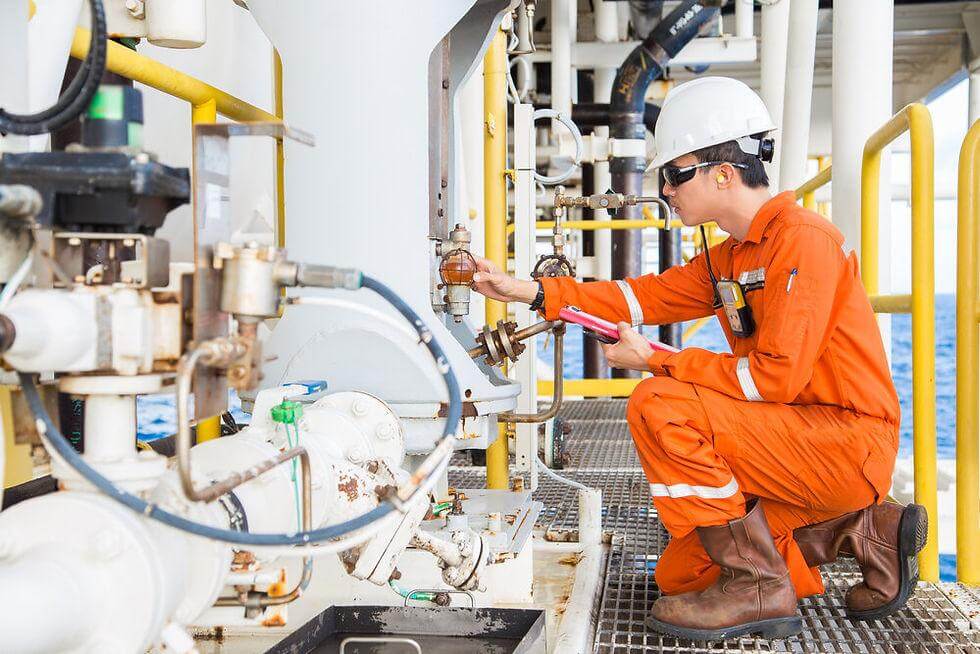
1 · VERIFY THE PHYSICAL CONDITION OF SAFETY-CRITICAL EQUIPMENT
A maintenance record should correspond to the actual state of the equipment. If a valve, instrument, trip system or protective device has been removed or impaired, that condition must be identified, assessed and controlled. Equipment should not return to service until the required work, inspection and authorisation are complete.
2 · TREAT PERMIT-TO-WORK AS AN OPERATIONAL BARRIER
The permit system must identify the equipment, the work scope, the hazards, the necessary isolations and the restrictions that remain in force. Suspended or incomplete permits must be visible to personnel who may operate the affected equipment. The system should prevent incompatible work and unsafe operation, not merely document that a task was authorised.
3 · MAKE HANDOVER A FORMAL SAFETY ACTIVITY
Shift changes, maintenance-to-operations handovers and contractor interfaces must transfer the actual status of equipment and outstanding work. Critical information should be confirmed, not assumed. Where records conflict or the equipment’s condition is uncertain, the affected operation should remain restricted until the discrepancy is resolved.
4 · REASSESS RISK AFTER CHANGES
Modifications to process equipment, operating conditions, production routes or connected infrastructure can alter the installation’s hazard profile. Management-of-change procedures should assess those implications before the change is implemented. Updated drawings, operating instructions, training and emergency assumptions must reflect the new configuration.
5 · ASSESS ESCALATION, NOT ONLY INITIATION
Risk assessments should examine how a leak, fire or explosion could damage adjacent equipment, disable protection systems or expose the installation to additional hydrocarbon inventories. The assessment should identify which barriers prevent escalation and whether they remain effective under credible accident conditions.
What is the actual condition of the equipment?
6 · CONFIRM EMERGENCY ISOLATION ARRANGEMENTS
Operators should know which systems can continue to supply hazardous materials during an emergency, where isolation can occur, how isolation is initiated and who has authority to order it. These arrangements must account for communication failure, loss of control systems and the possibility that the installation itself has been severely damaged.
7 · TEST EMERGENCY ARRANGEMENTS AGAINST REALISTIC SCENARIOS
Drills should challenge the assumptions on which evacuation and rescue depend. Can personnel reach the intended safe areas if smoke blocks a route? Can emergency systems function after a loss of power? Are responsibilities clear if normal communications fail? Are workers trained for the conditions they may actually face?
8 · REQUIRE EVIDENCE OF MANAGEMENT ASSURANCE
Senior leaders should receive credible information about overdue safety-critical maintenance, impaired safeguards, unresolved audit findings, process safety events and repeated failures in work control. A high-level dashboard is useful only if the underlying data is accurate and management acts when it reveals unacceptable risk.
9 · EXAMINE CONTRACTOR AND INTERFACE RISKS
The operator must understand how its own procedures interact with those of maintenance contractors, specialist service providers and connected facilities. Responsibility for safety cannot be allowed to disappear between contracts, departments or organisations.
10 · KEEP THE SAFETY CASE ALIVE
A safety case must evolve as equipment ages, operating conditions change, modifications are introduced and new evidence becomes available. It should inform real decisions about whether the asset can continue operating safely. It must not be treated as a static submission prepared solely to satisfy a regulator.
THE PROJECT ASSURANCE QUESTIONS
Before a safety-critical job begins, project owners and operators should be able to answer:
- What is the actual condition of the equipment?
- Which safety barriers are unavailable, impaired or temporarily modified?
- Who knows about those conditions, and how has that knowledge been confirmed?
- What prevents the equipment from being operated before it is safe?
- What could happen if the first protective barrier fails?
- Can the incident be isolated before connected systems feed it?
- Can personnel survive and escape if several safeguards fail together?
- What evidence shows that management controls are working in practice?
These questions are not a replacement for engineering standards, competent risk assessment or regulatory requirements. They are a practical test of whether the organisation understands the risks it is managing.
AT EVERY TRANSITION
For major projects, the critical assurance points are often transitions: design into construction, construction into commissioning, commissioning into operations, maintenance back into service, and one shift into the next.
At every transition, the organisation must ensure that the physical condition of the asset, the documentation describing it and the decisions made about it remain aligned.
Piper Alpha shows what can happen when they do not.
THE PROJECT HERALD REVIEW
Projects • Capital • Products & Policy
THE FINAL ASSESSMENT
When Procedures Exist but the System Still Fails
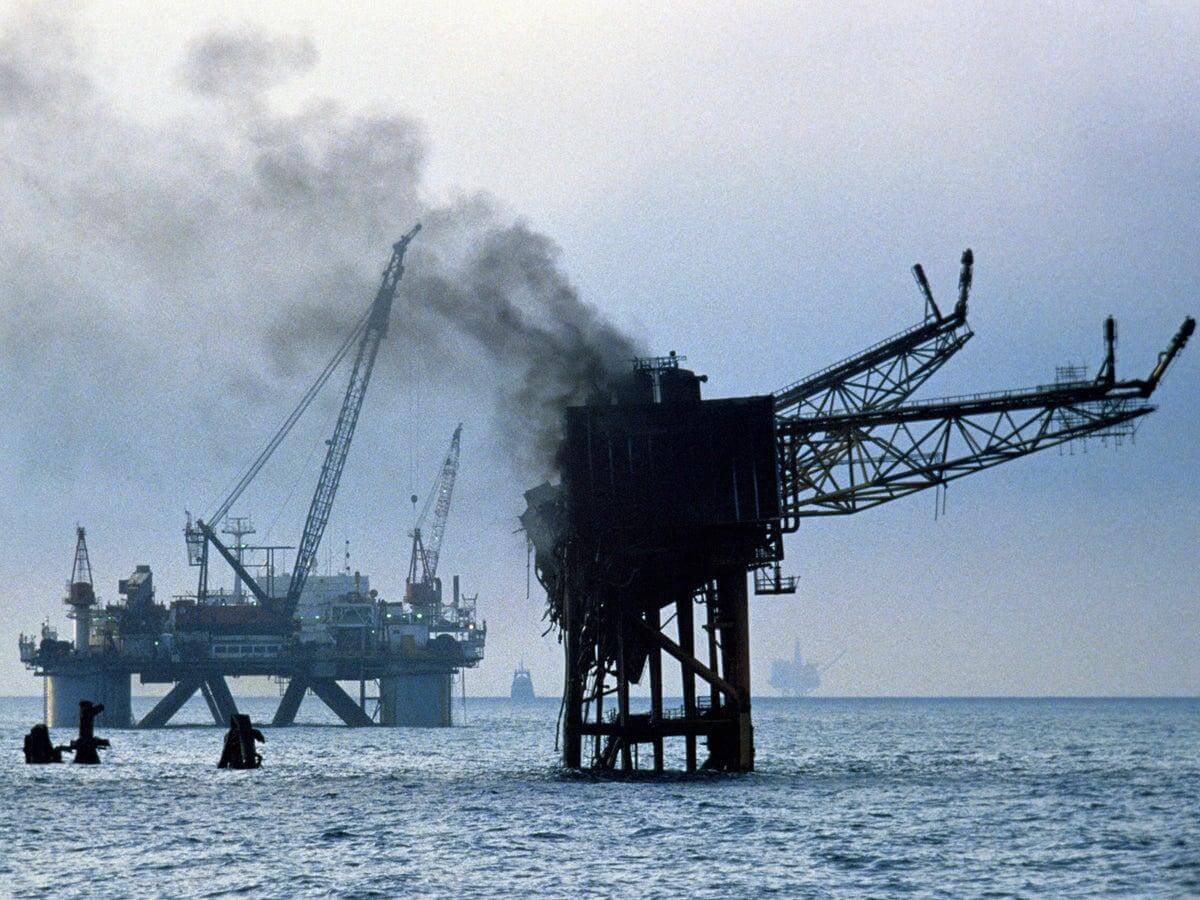
Piper Alpha did not become a disaster because the offshore industry lacked an understanding of fire, pressure or hydrocarbons. It became a disaster because the controls governing a hazardous operation did not adequately prevent the initial release or contain the consequences when the release ignited.
The removal of a pressure safety valve during maintenance created a dangerous equipment condition. The permit-to-work and handover arrangements failed to ensure that the operational team understood the restriction. The pump was started, condensate escaped and the first explosion occurred.
What followed exposed a wider set of weaknesses. Fire and explosions escalated through the installation. Connected hydrocarbon supplies contributed to the unfolding emergency. The platform’s protective and escape arrangements were unable to prevent the catastrophic loss of life.
A SYSTEM, NOT A SINGLE CAUSE
The lesson is not that a single worker, one document or one piece of equipment explains the disaster. The lesson is that major accidents emerge from interactions between technical conditions, human decisions, organisational controls and the physical design of a facility.
A permit may be signed while the equipment remains unsafe. A maintenance job may be properly described but inadequately communicated. A platform may meet individual requirements while its overall emergency strategy remains insufficient for the hazards it faces. A regulator may conduct inspections while the wider system of management assurance remains weak.
Safety depends on these elements working together.
The Cullen Inquiry’s 106 recommendations marked a turning point in the United Kingdom’s approach to offshore safety. Its emphasis on operator responsibility, comprehensive safety assessment and regulatory scrutiny reflected a central conclusion: the organisation controlling a major-hazard asset must demonstrate that it understands the risks and has adequate measures in place to control them.
That principle remains relevant wherever complex projects combine hazardous materials, expensive equipment, contractors, connected infrastructure and pressure to maintain production.
Piper Alpha remains a warning against confusing a procedure with a functioning control.
HOW FAR COULD IT ESCALATE?
For investors, it means that safety assurance is part of asset quality. For project owners, it means that modifications, maintenance and handovers require the same seriousness as initial design. For contractors, it means that work must be controlled within the real operating conditions of the facility. For regulators, it means that written compliance must be tested against operational reality.
Above all, Piper Alpha demands that organisations consider not only how an incident might begin, but how far it could escalate.
A safe system does not depend on every person having perfect information at every moment. It is designed to make critical information visible, prevent unsafe actions when conditions are uncertain, and limit the consequences when a barrier fails. It includes the capacity to stop work, isolate hazards, protect personnel and recover from abnormal conditions.
The purpose of safety management is not to create confidence that an accident is unlikely. It is to establish defensible evidence that major hazards are understood and controlled, and that the organisation is prepared for failures that cannot be ruled out.
Piper Alpha remains a warning against confusing a procedure with a functioning control, an inspection with assurance, or a production target with successful operation.
THE FINAL QUESTION
On 6 July 1988, a maintenance condition became an ignition event. An ignition event became a platform-wide emergency. The emergency became one of the deadliest disasters in the history of offshore oil production.
The people who died cannot be brought back by the reforms that followed. But the record of what happened can still be used to challenge weak systems, test management assumptions and strengthen the way major projects are governed.
The final question for every operator is therefore simple:
When the next routine task changes the condition of a safety-critical system, will the organisation know—and will it prevent that system from being operated until it is safe?
Piper Alpha’s legacy depends on whether the answer is demonstrated in practice.
Sources & References
The inquiry record, regulatory material and supporting sources.
- UK Health and Safety Executive (HSE). The Public Inquiry into the Piper Alpha Disaster. Official archive containing the Cullen Inquiry report, Volumes 1 and 2. hse.gov.uk
- UK Parliament, House of Commons Hansard. Piper Alpha, 12 November 1990. Government statement on the Cullen report, the 106 recommendations and the proposed safety case approach. hansard.parliament.uk
- UK Parliament, House of Commons Hansard. Piper Alpha (Cullen Report), 7 March 1991. Parliamentary discussion of the safety case framework and implementation of the inquiry’s recommendations. hansard.parliament.uk
- UK Parliament, House of Commons Hansard. Offshore Safety Bill (Lords), 10 February 1992. Parliamentary account of the initial condensate release, the maintenance condition and the permit-to-work communication failure. api.parliament.uk
- UK Health and Safety Executive. Using a Report of an (Offshore) Oil and Gas Incident (ROGI) Form. Background on offshore hydrocarbon-release reporting, including the reporting scheme introduced following a Cullen recommendation. hse.gov.uk
THE PROJECT HERALD REVIEW
Projects • Capital • Products & Policy